The taste of copper clung to the back of Kenji's tongue, a mingling of thick saliva and cement dust seeping through the respirator's slits. Before him, a mass of reinforced concrete blocks sealed the tunnel's mouth with the authority of a colossal tombstone. Rebar protruded like charred ribs from a common pit. No telephone signal had reached them for three kilometers. The phone screen was a black rectangle reflecting the tight, gaunt grimace of his own face.
—Are you sure about this? —Tatsuya asked, his voice strangled by the narrow channel of the mask. His hands gripped a one‑meter steel lever, white knuckles pressing against the cold metal.
Kenji did not answer. He merely laid his gloved palm against the rough surface of the gray block. A dull vibration, like the pulse of a burrowing animal, ran from his hand to his forearm. It was a sickly heat, alien to Fukuoka's cold mountain. They pushed together. The first block gave way with a muffled crack, a lament of old mortar crumbling into fine dust. A dense stench of stagnant moisture, rotting flesh, and half‑century‑old rotting leaves burst from the fissure like a crypt's yawning mouth.

I. The Valley Without Beats
They crossed on tiptoe through the open gap. The darkness beyond was not a lack of light; it seemed a physical substance, a viscous fluid that clung to their clothes and impeded progress. They walked with headlamps on, beams bouncing off smoldering rock walls until, suddenly, the mountain gave way.
The air changed instantly. The afternoon breeze vanished, replaced by a heavy, motionless weight scented with the sweet perfume of withered fig blossoms. Before them lay a valley shrouded in low mist. The houses of a feudal village clustered in the hollow, their black‑sod roofs sagging under the weight of years, walls of cracked clay. The unsettling was not abandonment but the contrary certainty: gray smoke curled from stone chimneys. Life existed, but an anomalous, soundless life.
Kenji pulled out his digital camera to document the find. The screen flickered three times to an electric hum, and the battery drained from ninety percent to absolute zero in a matter of seconds. Simultaneously, the mechanical watch on his left wrist emitted a metallic snap and its hands froze, pointing to a quarter past three in the morning, even as the afternoon sun poured a pallid, ash‑colored light over the roofs.
Time here does not flow, Tatsuya. It rots.
Tatsuya did not listen. His eyes had settled on the road‑sign pole marking the entrance to the village's main path. The metal speed‑limit plate was entirely splattered with thick blotches of dry, blackish, crusty blood that still dripped onto the tall grass. Around the pole, dozens of pocket watches hung from the branches of dead cherry trees, all oiled with rust, all with hands twisted inward.
II. The Sickle‑Shaped Hedges on the Roofs
The valley's silence was broken by a dry crack. It did not come from the ground, but from above. Kenji lifted his lantern. On the thatch roof of the nearest house, a hunched silhouette cut against the leaden sky. It was a human figure draped in gray linen rags that smelled of damp cellar. It held a wide, curved sickle, its dulled steel gleaming with a jaundiced reflection.
Beside him, another figure emerged from the gloom. Then another. Within seconds, the surrounding roofs were filled with identical silhouettes. Hundreds of white eyes, opaque as glass beads, fixed on the two intruders with an unbearable stare. None blinked. None breathed. The chests of the figures stayed motionless beneath the dirty rags.
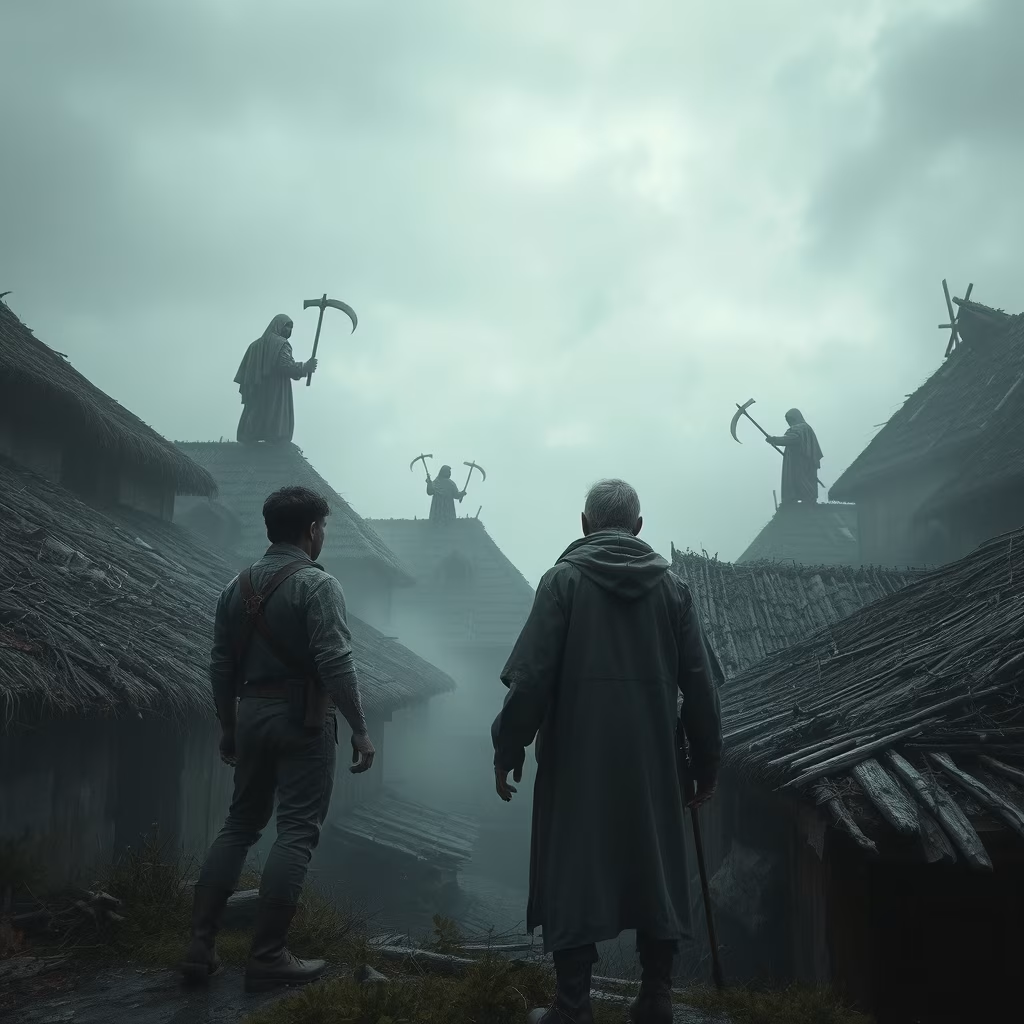
Tatsuya took a step back, tripping over a knobby root that seemed to cling to his ankles like an arthritic hand. He tried to run toward the tunnel, to seek the concrete's refuge, but when he turned he found that the gap they had entered through no longer existed. In its place loomed a continuous wall of living rock and gray blocks, cold and compact as if it had never been opened.
The figures on the roofs began to slide downward with mechanical, angular motions, the creak of joints echoing in the stagnant air like dry branches snapping. Kenji felt cold sweat cling to his shirt against his spine. His fingers trembled so violently that the self‑defense spray in his pocket slipped into the mud. No one uttered a word. The only sound was the metallic scrape of the sickles sharpening against the roof stones, a rhythmic, relentless, hungry cadence that heralded the end of any hope of rescue.
📜Investigation • Frequently Asked Questions
Documentary Archive and Analysis of the Occult • Relatando.com
On what myth or dread reality is this tale based?
It draws inspiration from the Legend urbana japonesa del túnel de Inunaki en Fukuoka, un sitio famoso por supuestas maldiciones y crímenes violentos.
Are there documented real cases similar to this story?
The real tunnel was sealed by authorities after vandalism and a brutal murder that occurred in the area in the late 1980s.
What does the ending of the story mean?
Representa la trampa definitiva de lo desconocido, donde la transgresión de los límites prohibidos conduce a la anulación de la realidad.
Do not extinguish the light yet...
If you have had the courage to make it this far, we have other dossiers that will test the limits of your sanity.

Terms and Figures of this Tale
To delve deeper into the legends, creatures, and dark concepts that inspire this account, consult their entries in our dictionary of the uncanny:
