The hairs on your arms stand upright without a breath of wind, the temperature plummets instantly against the back of your neck, and the air suddenly assumes a metallic, suffocating density. You are not alone. It is not your imagination. It is neither the shadow of a coat rack nor the whimsical reflection of the moon on window glass. It is something deeper, darker, and entirely physical.
I. The Fracture in Reality
Let us make it clear from the outset, without beating around the bush or offering comforting euphemisms: an apparition is not simply seeing things. It is not your brain playing tricks on you in the fatigue of midnight. An apparition is, in its rawest definition, an intrusion. It is a microscopic fracture in the fabric of the real, a moment when the physical and mathematical laws holding our universe together take a breather, and something—or someone—from the Other Side crosses the border.
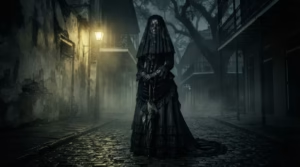
It can manifest in multiple ways: a human figure you gaze upon with your own eyes in the dark hallway of your home, a whispered voice close to your ear when no one is within a radius of miles, the rancid smell of dampness and wet earth invading a sterile room, or an invisible pressure on your chest that robs you of breath. The crucial difference, the dividing line between the dread mundane and genuine terror, is that when you experience a true apparition, your entire body knows it. The nervous system collapses, electronic devices go mad, and the surroundings yield to an undeniable presence.

An apparition is living proof that the world we touch is merely a fragile stage set, and that on the other side of the canvas, eyes are watching us.
II. Etymology of the Occult: From Gods to Terror
The word itself carries a millennial weight. It stems from the Latin apparitio, derived from apparere, which means 'to become visible' or 'to prepare to be seen.' In its classical genesis, the term was entirely devoid of the macabre weight we attribute to it today. For the ancients, an apparition could be the towering arrival of an Olympian god, an angel bearing a celestial message, or a benevolent spirit.
However, as humanity accumulated centuries of unsettling encounters in the gloom, the word darkened. Today, when we utter the phrase "I saw an apparition," our minds do not fly to winged beings with harps, but toward ambiguous entities, shadows that defy optics, and blood-chilling presences. It is vital to distinguish it from the common concept of the Phantom: whereas the ghost is traditionally pigeonholed as the lingering remnant of the dead, the apparition is the ultimate umbrella term. It spans everything from tormented souls to projections from dimensions our minds cannot even process without shattering.
III. The Hidden History of Humanity
We have been contemplating the impossible since the dawn of time. Deep within the caves of Lascaux and Altamira, etched into the rock over fifteen thousand years ago, there are not only bisons and horses; there are humanoid silhouettes with impossible proportions, hybrid entities that seem to keep watch from the darkest recesses of the stone. Were they shamanic visions, the reflection of altered states of consciousness, or genuine encounters with creatures that already inhabited this world before us? We will never know with certainty, but the trace is there, indelible.
Moving forward through time, Ancient Egypt did not understand divine manifestations as mere literary metaphors. For the priests and pharaohs, Ra blinding the temples with pure light or Anubis emerging in the mortuary gloom were physical events, as real as the stone of the pyramids. The same holds true in the pages of sacred scriptures across multiple cultures, where the border between this world and the angelic or demonic domains constantly dissolved beneath the crushing weight of the miraculous.
During the Middle Ages, apparitions became the daily bread of a society obsessed with salvation. Saints, virgins, and demons populated monasteries and fields alike, forcing ecclesiastical institutions to become the earliest forensic agencies of the paranormal, attempting to discern whether that which tormented the monks within their cells originated from heaven, hell, or simply the abyss of human desperation.
IV. The Threshold of the 19th Century and the Modern Awakening
With the dawn of the 19th century and the fervor of spiritualism, apparitions abandoned the clandestine shadows of convents and deep forests to take root in bourgeois parlors. Seances and photographic plates sought to capture the incorporeal. Some were fraudulent—crude staging meant to fleece a public starved for mystery; but others, those recorded in the private diaries of respectable folk, continue to defy logic.

Because in the end, to confront an apparition is to understand that our fragile, everyday safety is an illusion. When space warps and something crosses over, there is no turning back. The world keeps spinning, yes, but you have already seen what lies behind the curtain.
📜Investigation • Frequently Asked Questions
Documentary Archive and Analysis of the Occult • Relatando.com
What exact difference lies between a traditional ghost and an apparition?
A ghost is associated specifically with the spirit or echo of a deceased person. An apparition, however, is a much broader umbrella term encompassing any visual, auditory, or sensory manifestation of unknown origin, including entities that were never human or interdimensional projections.
What are the physical portents that accompany a true apparition?
Witnesses frequently report a sudden drop in ambient temperature, piloerection (hair standing on end), the sensation of an invisible yet oppressive presence, chest pressure, sudden electronic malfunctions, and strange odors with no apparent source.
How do science and psychology interpret phenomena of this nature?
Science frequently attributes apparitions to pareidolia, hypnagogic hallucinations (the twilight states between sleep and wakefulness), altered electromagnetic fields affecting the temporal lobes of the brain, or episodes of extreme post-traumatic stress.
Why did ancient civilizations document apparitions as tangible, physical occurrences?
Cultures such as the ancient Egyptians or medieval societies did not view these experiences as mere mental illusions or spiritual metaphors, but as tangible, real interactions with divine, demonic, or underworld forces that altered their physical surroundings.
Do not extinguish the light yet...
If you have had the courage to make it this far, we have other dossiers that will test the limits of your sanity.

Terms and Figures of this Tale
To delve deeper into the legends, creatures, and dark concepts that inspire this account, consult their entries in our dictionary of the uncanny:





Tu correo no se publica ni se comparte con terceros: solo sirve para notificar la respuesta.