I. Etymology, Folk Roots, and Oral Tradition
In the rotting annals of myth contemporary horror, few fictions have mutated with such feral speed into the category of Legend enshrined urban legend as the grim chronicle known as The Russian Sleep Experiment. Although its textual genesis took shape in the anonymous crucibles of digital forums at the close of the first decade of the twenty-first century—conceived as a short horror narrative or creepypasta— its symbolic architecture sinks its roots into a far older and gloomier substratum: the atavistic distrust of the Soviet Union's military hermeticism and the secular suspicion that a secularized science is capable of desecrating the biological limits set by nature.
From an anthropological perspective, the tale operates as the mechanistic modernization of ancient myths about forced wakefulness and the descent into the underworld. In Slavic folklore, the deprivation of rest bound the individual inexorably to chthonic forces; the chronic insomniac was considered easy prey for the dévats or spirits of delirium. This secular tradition, fed by the suspicions of the Iron Curtain, the Stalinist purges, and the real echoes of detention centers such as the infamous NKVD Laboratory 12 —where toxic gases and poisons were tested on Gulag prisoners—, endowing the tale with an irresistible patina of historical verisimilitude. The digital fable did not invent fear: it unearthed the archetypal horror of secrets buried in reinforced concrete bunkers, there where human morality capitulates before raison d'État.
II. Morphology, Signs, and Phenomenology
The phenomenology associated with this case file describes a progressive degradation that transcends clinical decomposition to enter fully into the domains of physical possession and teratology. The mutation does not come about suddenly, but through a ritual of environmental and somatic degradation, carefully choreographed within a hermetically sealed confinement chamber.

The chronicles of phenomenon record an atmosphere choked with organoleptic anomalies severe. As the stimulant gas displaced the usual oxygen and sleep deprivation surpassed the first five days, the air within the enclosure began to saturate with a characteristic stench: a dense mixture of premature cellular decomposition, acidified sweat, and the ferrous breath of coagulated blood mingled with the excrement that the subjects used to blind the reinforced glass viewports. The chamber's acoustics offered their own liminal horror; the initial days of tearing screams — until the physical rupture of the vocal cords — gave way to a spectral silence, an abnormal, dense stillness that observers mistakenly interpreted as the onset of brain death.
Morphologically, the transformation of the subjects culminated in a carnal atrocity. Deprived of the capacity to rest, the bodies entered a phase of self-inflicted cannibalism. Skin was torn away with their own nails; the muscle mass of chest and limbs was wrenched off to be consumed, exposing ribs, abdominal viscera, and blood vessels that throbbed with demented vigor. Far from succumbing to hypovolemia or septic shock, the subjects manifested hypertrophic physical strength, accompanied by a constant facial grimace: a rictus smile, stripped of upper lip or cheeks, where bloodied teeth testified to the definitive loss of the human condition.
III. Period Chronicles and Testimonial Cases
The core of the tale is set in the waning days of 1947, in a clandestine facility carved into the bowels of the Ural Mountains. Five political prisoners, classified as enemies of the people, were confined in an hermetic chamber with the promise of freedom if they managed to survive thirty days fed on an experimental gaseous cocktail of nitrogen oxides. The fictitious yet narratively rigorous logbooks that accompany this legend describe with surgical precision the psychic disintegration of the trial.
"On the ninth day the shrieking ceased entirely. There was no commotion, no plea. The internal pressure monitor indicated that the five men were still consuming oxygen in quantities incompatible with rest; their breathing was a mechanical panting, like the bellows of a forge lit in the depths of the earth."
By the fifteenth day of confinement, faced with a sepulchral silence that threatened the integrity of the experiment, the military officers decided to break the isolation protocol. They opened the valves to purge the gas and admit armed soldiers. What the conscripts found were not docile corpses, but waking monstrosities clinging to their agony with suicidal ferocity. The subjects tore several soldiers apart with their bare hands, shrieking pleas to restore the supply of the poisonous gas. They could not tolerate medical sedation: when massive doses of morphine were administered to operate on their exposed organs, their hearts simply burst from the effort of staying conscious.
The climax of the chronicle, preserved in apocryphal military reports, lies in the final confrontation between the last surviving prisoner and a terrified Soviet general. When interrogated as to what malignant nature they harbored in their entrails, the subject breathed his famous last words, articulating the voice of the atavistic shadow:
"Have you forgotten us so soon? We are yourselves. We are the madness that seethes inside all of you, begging to be released at every moment from your deepest animal mind. We are what you hide from in your beds each night. We are what you silence and paralyze when you take refuge in the sanctuary of sleep."
IV. The Anatomy of Fear: Psychological and Symbolic Dimension
The inextinguishable glow of the Russian Sleep Experiment in the collective imagination does not answer to a mere morbid relish for explicit gore; it appeals to a far deeper psychological mechanism: the sacred terror of the annulment of restorative rest. Since classical antiquity, Sleep (Hypnos) and Death (Thanatos) have been depicted as twin brothers, guardians of the truce necessary for mortal consciousness. To rob a human being of the possibility of dreaming is not the same as keeping them awake: it means stripping them of the filter that contains the primordial unconscious.
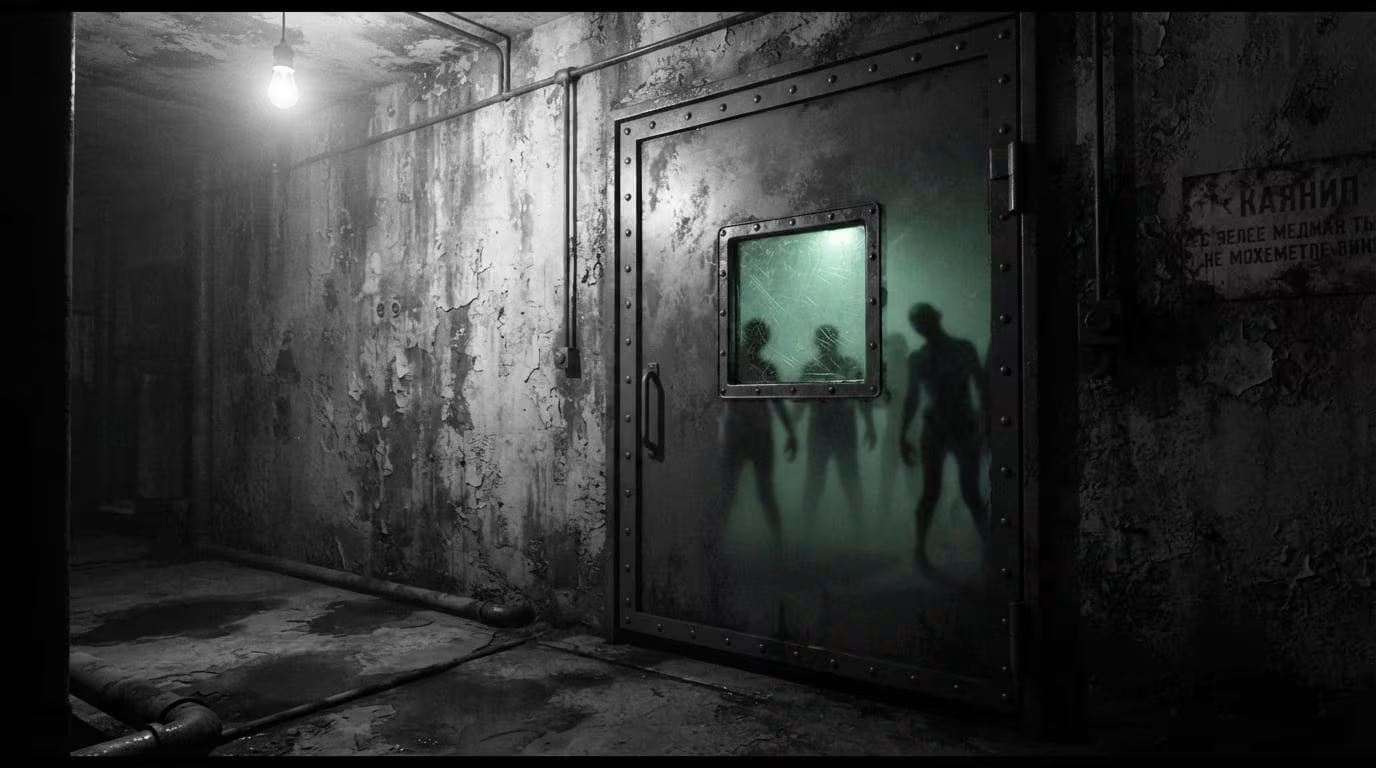
In Jungian terms, the sealed concrete chamber is the alchemical womb where the psyche rots upon itself. When the ego's protective barrier collapses after hundreds of hours without rest, the shadow no longer projects outward, but devours the individual himself. The subjects' self-mutilation symbolizes the rejection of their own carnal envelope, the desperate attempt to tear apart the biological prison that holds the rampaging beast. It is the horror of recognizing that, if the physiological mechanisms of civilization are switched off, the human being finds neither peace nor pure reason, but an abyss of self-consuming cruelty.
Equally, the motif of the smiling, eviscerated figures channels contemporary paranoia straight into the machinery of scientific totalitarianism. It embodies the creeping dread that human flesh will be stripped down to a mere biological commodity at the whim of faceless bureaucrats. Ultimately, the monster watching us from the other side of the reinforced glass does not come from another galaxy nor does it rise from tectonic trenches: it is the precise result of stripping away the only blessing that keeps us sane against the vastness of time: the humble necessity of closing one's eyes and forgetting.
📜Investigation • Frequently Asked Questions
Documentary Archive and Analysis of the Occult • Relatando.com
In what way does the contemporary myth of the Russian Sleep Experiment manage to hybridize the oral tradition of digital forums with the historical terrors of the twentieth century?
The tale serves as a hinge between digital folklore and the traumatic memory of the Iron Curtain. By setting the plot in the basements of the Soviet Union and evoking real precedents such as the NKVD's experiments in Laboratory 12, the creepypasta capitalizes on atavistic distrust of state secrecy, transforming bureaucratic and totalitarian fears into an urban legend of global reach.
What is the anthropological function of extreme sleep deprivation within the imagery surrounding the descent into the underworld and chthonic forces?
From an anthropological perspective, forced wakefulness operates as a doorway into the desecration of natural biological limits. In Slovak tradition and within the universal mythic substrate, prolonged insomnia fractures sanity and binds the individual to chthonic entities or spirits of delirium, transforming the confinement chamber into a modern underworld where human reason capitulates.
What elements of sensory phenomenology and teratology define the physical degradation of the subjects inside the sealed chamber?
The phenomenology of the case file describes a somatic degradation that transcends the clinical to graze the threshold of teratological possession. It manifests through severe organoleptic anomalies: a dense stench compounded of cellular decomposition, acidified sweat, and coagulated blood, along with an acoustic transition that begins with lacerating screams and arrives at a spectral, deeply unsettling silence that heralds absolute horror.
Why does the symbolic architecture of this encyclopedic narrative resonate so forcefully in the contemporary collective psyche compared to others urban legends?
Its persistence lies in the fact that the fable did not invent the dread, but rather unearthed an archetypal dread of secrets buried within concrete bunkers. The narrative exploits the existential anguish that secularized science, devoid of ethics and sheltered by reason of state, might unleash forces entirely beyond human control.
Do not extinguish the light yet...
If you have had the courage to make it this far, we have other dossiers that will test the limits of your sanity.

Terms and Figures of this Tale
To delve deeper into the legends, creatures, and dark concepts that inspire this account, consult their entries in our dictionary of the uncanny:

Tu correo no se publica ni se comparte con terceros: solo sirve para notificar la respuesta.