The Ciguapa is a mythical and elusive creature figure of Dominican folklore, described as a woman of captivating beauty, possessing long black hair that conceals her nudity and unsettling backward-pointing feet—an anatomical detail designed to outwit those attempting to track her steps through the dense thickets of the Central Cordillera.
The Origin of the Myth and the Earliest Chronicles
Friends of Relatando.com, to venture into the folds of Caribbean mythology is not merely to leaf through an old book of children's tales; it is to open a door into the dark recesses of our own psyche. When we speak of the Ciguapa, we step into a territory where colonial history, Taíno syncretism, and African memory merge beneath the damp canopy of the Dominican forests. Ever since I can remember, having devoted my days to investigating the strangest corners of mystery, I have come to understand that legends are never born of nothing. There is an urgent need in the human being to explain the inexplicable, to give face and silhouette to the dangers that lurk beyond the safe limits of the village.
The Chronicles of the Indies and travelers' accounts from the 18th and 19th centuries already spoke of this wild woman with a tone of astonishment and suspicion. She was not a mere Phantom ether-bound apparition, but a carnal, almost bestial entity dwelling deep within the bowels of the virgin jungle. Chroniclers recorded the terrified testimony of mountain hunters and peasants who swore they had seen bizarre footprints in the damp mud of the woods: tracks where the heel marked the forward path while the toes pointed menacingly back toward the starting point. Imagine the scene for a moment. Walking alone through the dense thicket, with the drone of insects deafening your thoughts, only to stumble upon a trail that defies all geometric and anatomical logic. Terror, dear readers, is not an abstract construct; it is that ice-cold sensation crawling down your spine when you realize the predator hunting you knows the forest's tricks far better than you do.

The etymological and cultural origin of the Ciguapa remains a subject of debate among anthropologists and historians. Some suggest she stems from minor deities of Taíno mythology—protective spirits of nature and freshwater sources that punished reckless intruders. Others, however, find deep roots in the traditions of runaway maroon slaves who sought refuge in the most inaccessible mountains of Hispaniola. For these men and women fighting for survival, the creation or maintenance of a myth such as the legend of the Ciguapa functioned as a flawless defense mechanism. A way to keep overseers and colonizers away from the secret trails leading to the hidden maroon settlements. Who would dare venture into the darkness of the night knowing that a demonic woman, capable of confounding the finest trackers, lies in wait among the giant ferns?
Signs, Encounters, and Documented Testimonies
Over the years at the helm of my investigations, I have gathered dozens of testimonies from people who claim to have had a close encounter with this Caribbean enigma. I am not speaking of distant anecdotes told by forgotten grandfathers in remote villages, but of accounts passed down by flesh-and-blood people, peasants hardened by field labor who gain absolutely nothing by inventing stories that jeopardize their reputation for sanity. An old coffee grower from Jarabacoa told me, his gaze lost in the bottom of his cup of black coffee, how on a moonless night he heard a pitiful wailing that seemed to come from the crown of a leafy tree. When he turned on his flashlight and aimed it at the branches, he discovered a female figure watching him with shining eyes, devoid of malice but laden with a profound and magnetic sadness.
The wild has its owners, boy. And the Ciguapa is not evil if you respect her, but woe to him who tries to hunt her or trap her with ill intentions, for her backward feet will lead you straight to the bottom of the abyss without your body ever being found.
This testimony perfectly encapsulates the duality with which the creature is perceived. She is not a monster a man-eater in the vein of European gargoyles or the skinwalkers of North American myth. The Ciguapa is a reflection of untamed nature: beautiful, elusive, perilous when cornered, yet fundamentally harmless if granted her due respect. The descriptions align with a chilling consistency: diminutive in stature, copper or dusky skin, a mane of hair so long it serves as her natural cloak, and feet turned backward—ensuring that any pursuit ends in absolute ruin for the hunter. How does one track a creature whose footprints always point away from the direction of her travel? It is a psychological trap, a relentless reminder of the frailty of human senses when we dare to decode the rules of a world that refuses to claim us.
The locals also warn of her nocturnal habits. It is said the Ciguapa emerges only at sunset, wandering the fields in search of wild fruits, tender maize, or fresh water. Those who have attempted to capture her using mirrors—an old folk ruse believed to hypnotize her upon seeing her own reflection—end up regretting it bitterly. The creature emits a guttural sound, a lament that bleeds into the whistling wind through the pines, before vanishing with implausible speed into the undergrowth. In my discussions with local researchers, I always emphasize a crucial point: the persistence of such sightings well into the 21st century proves that folklore is not a static fossil, but a living current that continues to nourish our most intimate fears.
Why Does This Enigma Both Fascinate and Frighten Us?
Let us pause a moment to reflect on this. Why does a creature so specific to the Dominican landscape continue to exert such a powerful seduction over us? We inhabit a hyper-connected age, where satellites scrutinize every corner of the planet and artificial intelligence promises to solve all our scientific riddles. And yet, we desperately need to believe in the Ciguapa. We need there to be dark corners where logic fails. The figure of the woman with backward-facing feet represents an inversion of the established order, a violent rupture with the laws of physics and imposed morality.
She is the incarnation of the wild in its purest state. In a society that has historically sought to dominate, deforest, and domesticate the natural landscape, the Ciguapa stands as an implacable guardian, a reminder that the earth holds memory and has invisible owners. Her inverted anatomy is not merely a narrative device to confuse the tracker; it is a perfect metaphor for the inversion of values. What the colonizer viewed as a monstrous anomaly, the original inhabitant of the mountain saw as tangible proof that nature operates under dimensions that elude rational understanding. In the end, my friends, we fear the Ciguapa because, deep down, we recognize in her our own inability to control the savage impulses we harbor within.
Investigating the mystery of the Ciguapa is, ultimately, an exercise in intellectual humility. It compels us to look beyond the glowing screens of our devices and to listen to the rustle of dead leaves beneath centenarian trees. Perhaps we will never capture a definitive photograph or unearth forensic proof to satisfy the laboratory skeptics. But the true magic lies precisely there: in the enduring vitality of the myth, in the shared shiver felt whenever a countryman swears to have seen a set of impossible footprints pressed into the mud after a tropical storm.
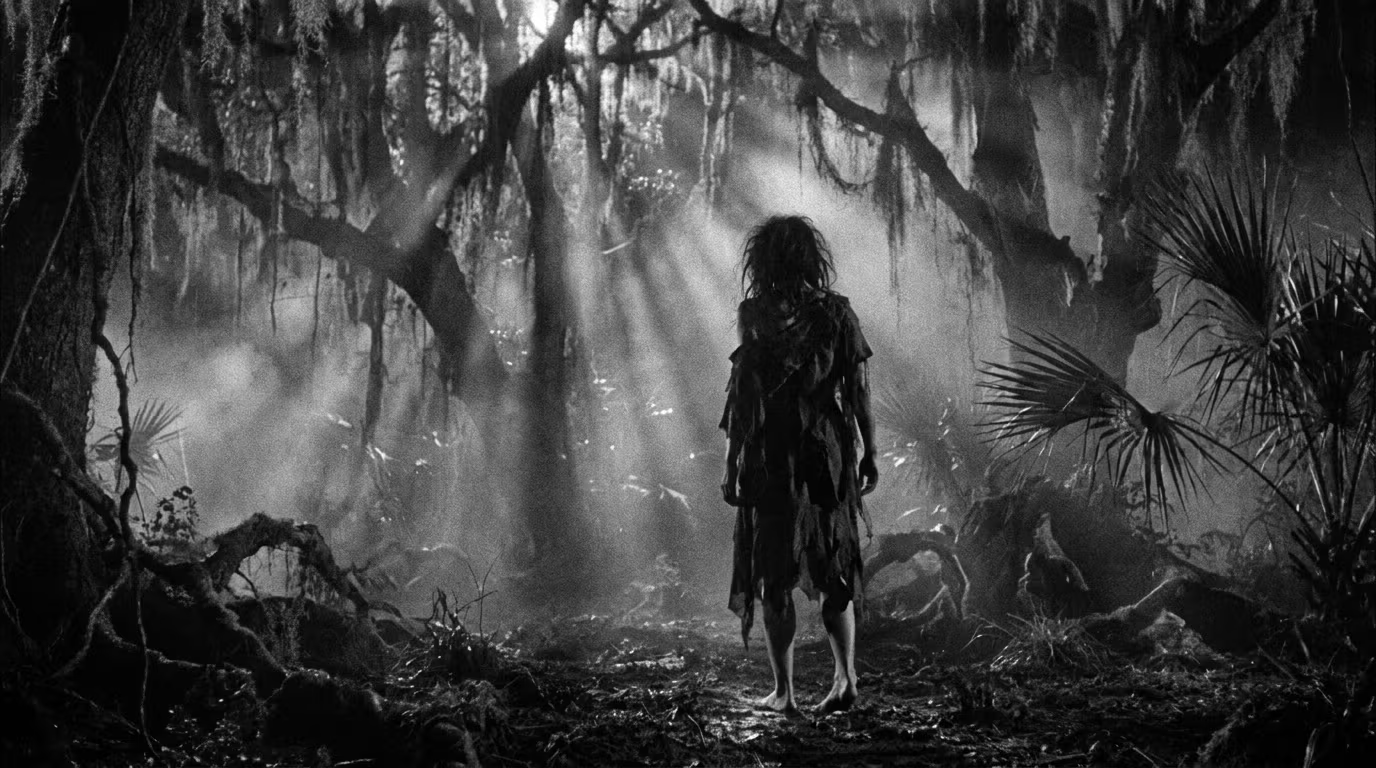
So, the next time you find yourselves before the green immensity of a tropical jungle, think twice before stepping forward without looking back. The forest harbors ancient secrets, and some of them walk with inverted feet, waiting patiently for us to discover them.
📜Investigation • Frequently Asked Questions
Documentary Archive and Analysis of the Occult • Relatando.com
What is the documented historical or folkloric origin?
The myth weaves together influences from the nature-protecting Taíno deities and the traditions of maroon slaves who utilized the Legend to safeguard the hidden paths leading to their mountain refuges across Hispaniola.
How does it manifest, or what are its primary characteristics?
She is described as a woman of great natural beauty, possessing exceptionally long hair and the anatomical anomaly of having her feet turned backward, a trait that misleads any tracker attempting to follow her trail.
What cultural or psychological hypotheses account for this myth?
She represents an ancestral fear and respect for untamed nature, functioning also as a metaphor for the inversion of the established order and resistance against colonial control.
What contemporary accounts or chronicles exist on the subject?
There are numerous accounts from farmers and mountain guides in regions such as Jarabacoa and the Cordillera Central, who swear to have heard nocturnal wails and discovered impossible tracks impressed in the mire.
Do not extinguish the light yet...
If you have had the courage to make it this far, we have other dossiers that will test the limits of your sanity.

Terms and Figures of this Tale
To delve deeper into the legends, creatures, and dark concepts that inspire this account, consult their entries in our dictionary of the uncanny:

Tu correo no se publica ni se comparte con terceros: solo sirve para notificar la respuesta.