Respiration becomes an invisible thread, a mechanism refusing to obey the mind's desperate commands. Your eyelids drag open, heavy as tombstones, and before you the room warps into a menacing twilight. You try to scream, but only a choked whisper escapes your throat—a useless echo amid absolute silence. And then, you feel it: an implacable weight pressing upon your chest, a crouched presence lingering at the edge of your vision, come to claim every fiber of your will.
I. The Threshold Between Worlds
Welcome to Relatando.com. I am Carlos Nieto, and today we descend into one of the most intimate and universal abysses of the human psyche. What modern science clinically defines with cold detachment as a dysfunction of muscular atonia during the REM cycle, history and universal folklore have always interpreted as something infinitely darker. The sleep paralysis is not merely a biological glitch; it is the accursed bridge where consciousness wakes while the body remains imprisoned in the realm of Morpheus.
The word "paralysis" derives from the Greek paralýsis, meaning "set aside." A poetic and terrifying definition for the state we find ourselves in when our minds are stranded in no-man's-land. It is at this exact juncture that time grinds to a halt and reality fractures, giving way to hypnagogic and hypnopompic hallucinations—the visceral manifestations of our deepest dread.

Upon the threshold between sleep and waking, the mind ceases to be a safe haven, transforming instead into the theater of our most harrowing nightmares.
II. The Chronicles of the Shadow
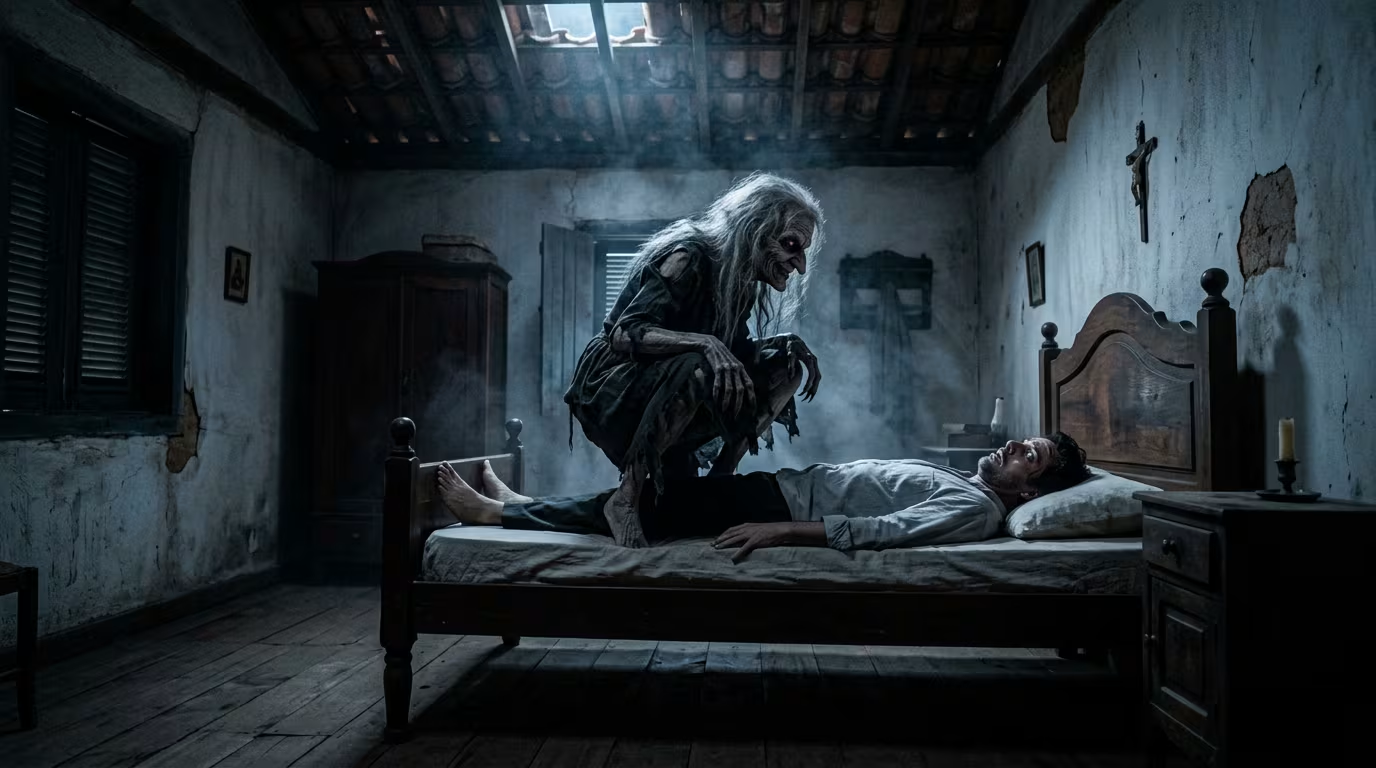
Since the dawn of civilization, mankind has tried to give a face to this invisible oppression. In ancient Mesopotamia, cuneiform tablets already spoke of Lilith, the nocturnal entity that settled upon the chests of sleepers to steal their breath. In the medieval Middle East, the terror bore a specific name: Al-Kabus, the malignant spirit from whom we inherit our word "nightmare," infamous for suffocating its victims in the pitch black.
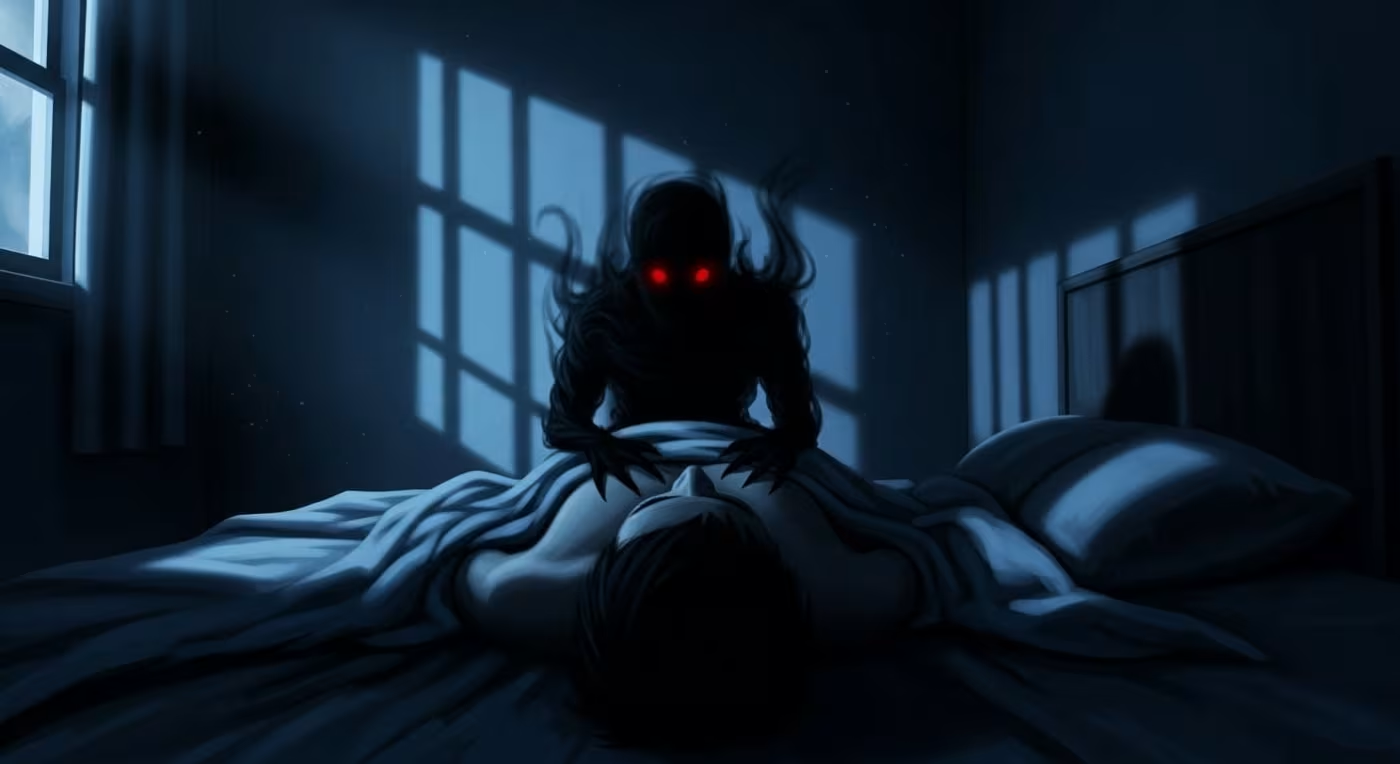
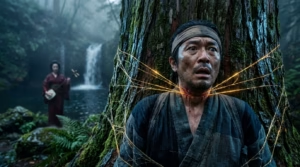
Crossing the oceans to Japan, the phenomenon acquires the name of Kanashibari, translated literally as "bound with chains of metal." The descriptions are unsettlingly identical across all latitudes: a suffocating pressure upon the chest, a sensation of glacial cold creeping down the spine, and, crowning it all, the presence of a dark, shapeless silhouette crouched in the corner of the room or suspended directly above the sleeper's face.
III. Anatomy of a Physiological and Ancestral Terror
Although science offers us a neurological map of this process—explaining how the brain interrupts motor signals to keep us from physically acting out our dreams—the subjective experience defies any comforting logic. The figures that manifest in these episodes rarely interact in an active manner; their power lies precisely in their menacing passivity. They watch you. They know you are trapped. They know you are incapable of moving a single muscle.
The duration of an episode can be measured in seconds or drag on for what seems like an eternity to the victim. Entire minutes of absolute vulnerability where panic feeds the hallucination, creating an infinite loop of psychological terror. The evolution of this myth through the centuries demonstrates an inescapable truth: before the inexplicable, human beings have always preferred to attribute a malevolent will to whatever terrifies us in the dark.
Do not extinguish the light yet...
If you have had the courage to make it this far, we have other dossiers that will test the limits of your sanity.

Terms and Figures of this Tale
To delve deeper into the legends, creatures, and dark concepts that inspire this account, consult their entries in our dictionary of the uncanny:



Tu correo no se publica ni se comparte con terceros: solo sirve para notificar la respuesta.