Soy Carlos Nieto, y en las profundidades de Relatando.com nos adentramos hoy en los oscuros meandros del río Magdalena para desenterrar una de las legends más aterradoras y fascinantes del folclore colombiano: el Hombre Caimán de Plato y la oscura pócima roja del hechicero. A la orilla del caudaloso río, donde el calor de la sabana se mezcla con la brisa húmeda de la ciénaga, se gestó una historia de pasiones prohibidas, pactos con la magia negra y una metamorfosis monstruosa que desafía los límites de la naturaleza y de la propia condición humana. Saúl Montenegro, un hombre consumido por el vicio de espiar los cuerpos desnundos de las mujeres que se bañaban en las aguas, no sabía que su obsesión lo condenaría a habitar para siempre en el umbral entre la bestia y el hombre, portando un cuerpo escamoso y un apetito insaciable que aterroriza a generaciones enteras.
Classified File
- Origin: Municipality of Plato, Department of Magdalena, Colombia, on the banks of the Magdalena River.
- Nature: A hybrid entity, a man transmuted into a reptile through shamanic alchemy and dark draughts.
- Hazard Level: Moderate to High (Lethal threat to careless fishermen and nocturnal bathers along the riverbanks).
- Weaknesses: The tears of a pure woman, the ingestion of alcohol laced with cane rum, and the ritual consumption of goat meat or fresh cheese to distract his voracity.
Origin and Etymology
The myth del Hombre Caimán hunde sus raíces en la tradición oral de la Costa Caribe colombiana, específicamente en el municipio ribereño de Plato, Magdalena. La etimología popular y los relatos de los antiguos pobladores identifican a esta creature bajo nombres como ‘El Caimán de Plato’ o simplemente ‘El Hombre Caimán’, una denominación tautológica que refleja la dualidad de su existencia. El origen de la Legend se remonta a los relatos míticos de transformación corporal, un arquetipo antropológico presente en diversas culturas chamánicas, donde el ser humano pierde sus atributos racionales para fundirse con la fauna local a través de brebajes prohibidos. En esta región, la confluencia entre el misticismo indígena, las creencias africanas traídas durante la colonia y el catolicismo popular dio forma a un relato donde la transmutación es el castigo supremo a la transgresión moral. La pócima roja, elemento central del mito, representa el vehículo alquímico que opera el cambio físico, elaborada según la leyenda por un hechicero de la Alta Guajira o de las riberas selváticas que comerciaba con las fuerzas del inframundo. Este brebaje no solo alteraba la piel humana, convirtiéndola en gruesas escamas blindadas, sino que corrompía el alma del sujeto, atrapándolo en un estado perpetuo de vigilia bestial.
Anatomy and Appearance
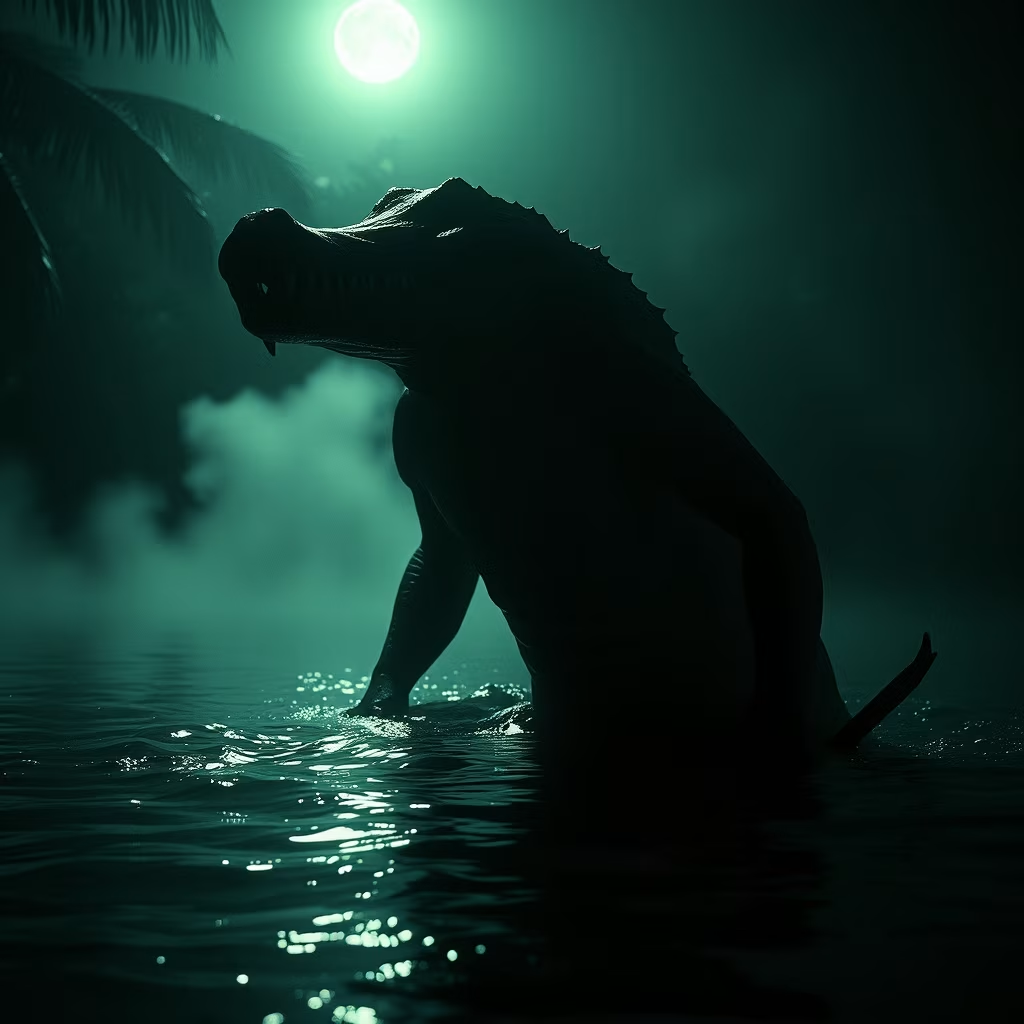
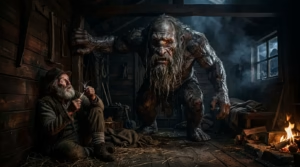
The physical description of the Caiman Man of Plato defies the logic of conventional zoology, presenting a grotesque and deeply unsettling anatomy. Historical accounts from fishermen and boatmen of the Magdalena River describe a creature of titanic proportions, with a body that retains a partially human structure in the torso but extends into a powerful reptilian tail, covered in bony plates and scales of a dark, almost blackish green that swallow the moonlight during the marsh’s thickest dawns. His head, however, is the most terrifying element: an elongated snout bristling with conical, hyper-sharp teeth, identical to that of a great Magdalena caiman, yet possessed of a singularity that curdles the blood of any who stare. Instead of the dull, cold eyes of an ordinary beast, the Caiman Man’s eyes burn with a glint of profound melancholy, human intelligence, and despair, revealing that beneath the armored shell and predatory instinct, the tormented consciousness of Saúl Montenegro still pulses. His upper limbs combine formidable claws with the remnants of human hands, capable of gripping wooden canoes with lethal strength to overturn them amidst the treacherous currents.

Modus Operandi and Powers
The Caiman Man’s modus operandi is intrinsically linked to his original obsession and his amphibious nature. By day, the creature remains submerged in the turbid waters of the Magdalena River or lies camouflaged among the floating vegetation of the Plato marsh, becoming practically invisible to unsuspecting voyagers. At nightfall, driven by a mixture of ancestral hunger and the nostalgic memory of his life as a man, he emerges silently toward the sandy shores and artisanal docks. His primary method of stalking involves floating inert, mimicking a simple log adrift in the current—a natural camouflage tactic that unnerves his prey. When a solitary fisherman or a distracted laundress ventures too close to the bank, the creature strikes with lightning speed, using his immense physical strength to drag the victim into the aquatic depths. Among his supernatural powers are the ability to breathe indefinitely underwater, a superhuman resistance to any conventional firearm due to the impenetrable thickness of his dorsal scales, and a startling agility in the water that far exceeds the prowess of any human swimmer.
Weaknesses and Protective Rituals
A pesar de su apariencia temible y su aparente invulnerabilidad en las aguas del río, el Hombre Caimán posee flaquezas específicas que los antiguos habitantes de Plato aprendieron a utilizar para sobrevivir a sus apariciones. La debilidad más célebre de la criatura radica en su irrefrenable apetito por los licores fuertes, especialmente el ron de caña, y por alimentos muy específicos como el queso fresco y la carne tierna de cabra. Los pescadores más ancianos solían dejar ofrendas de comida y alcohol en las orillas de la ciénaga para saciar el hambre del monster y evitar así ataques a las embarcaciones. Sin embargo, el método definitivo para neutralizar o conmover al ente involucra un elemento emocional y místico: las lágrimas de una mujer pura y enamorada. Según la tradición oral, si una doncella de corazón limpio llora genuinamente por el destiny trágico de Saúl Montenegro y se atreve a enfrentarlo en la ribera portando crucifijos y rezos, la criatura experimenta un dolor tan intenso en su conciencia humana que se retira vencida a lo más profundo del abismo fluvial, o bien acepta su destino final, permitiendo que la maldición se disuelva lentamente entre las aguas del Magdalena.
Documented Cases and Famous Legends
The most celebrated tale surrounding the Caiman Man is, without a doubt, the foundational chronicle of Saúl Montenegro, passed down through generations in the municipality of Plato and immortalized in the compositions of Colombian folk music, such as the famous porro performed by various Caribbean ensembles. The story tells that Saúl, weary of being unable to freely watch the women who bathed naked in the river, commissioned a sorcerer from La Guajira to brew a two-colored draught: a crimson one, which turned him into a caiman so he could spy on them undetected, and a white one, which his friend the apothecary was to apply to his head to restore his human form once the deed was done. However, on the fateful day, the apothecary, terrified by the animal’s monstrous appearance, dropped the vial of the white draught and fled in a panic. Only a few drops fell upon Saúl’s head, transforming his body into a permanent hybrid and leaving his caiman head intact. Since then, the wretched man-beast was swept away by the river currents until he reached the Caribbean Sea, wandering through the coastal ports and becoming a living legend that is honored and remembered every January 20th at the Festival of the Caiman Man in Plato, Magdalena.
Comparative Analysis
When contrasting the Alligator Man of Plato with other mythological entities of global folklore, fascinating parallels and crucial divergences emerge, enriching the study of cryptozoology and cultural anthropology. Unlike the European lycanthrope or werewolf—whose shifting form is governed by lunar cycles and an involuntary blood curse—the Alligator Man is born of a purely terrestrial and voluntary transgression, fueled by voyeurism and forged through the shamanic alchemy of a crimson potion. Likewise, while the The Peuchén myth has been shaped by the interaction between Mapuche cosmology and colonial narratives, creating a synthesis that reflects cultural resistance and adaptation. While the Mapuches initially described it as a winged serpent devouring souls, Spanish chroniclers introduced the element of the fire serpent, aligning it with European folkloric phantoms. This process of syncretism reveals a dynamic dialogue between knowledge systems, where indigenous identity is reaffirmed through the incorporation of external elements without losing its symbolic core. Thus, the evolution of the myth constitutes a living testimony to cultural resilience in the Araucanía. of the Mythology algonquina encarna el canibalismo y el frío extremo de los bosques boreales, consumiendo el alma de quienes ceden al hambre voraz en la nieve, el Hombre Caimán es una criatura anclada al calor tropical del gran río Magdalena, donde la humedad, la exuberancia de la flora acuática y el erotismo de las riberas configuran un escenario de pasiones humanas muy terrenales. Otra diferencia notable radica en su grado de maldad: el Hombre Caimán no es un demon sediento de sangre indiscriminada, sino un alma en pena atrapada en un cuerpo monstruoso, cargando con el peso eterno de su propia imprudencia y buscando en el fondo de las aguas un atisbo de redención que nunca llega a materializarse por completo.
📜Investigation • Frequently Asked Questions
Documentary Archive and Analysis of the Occult • Relatando.com
¿Dónde se originó la leyenda del Hombre Caimán?
The legend was born in the municipality of Plato, nestled in the department of Magdalena, along the banks of the Magdalena River in Colombia’s Caribbean region.
¿Para qué servía la pócima roja del hechicero?
The crimson potion was an alchemical brew used by Saúl Montenegro to transform his human form into that of a caiman, allowing him to spy upon the women bathing in the river.
¿Cómo se puede debilitar o ahuyentar al Hombre Caimán?
He may be appeased by offering cane rum and fresh cheese upon the shore, or confronted with the sincere tears of a woman of pure heart.
Don't douse the light just yet...
If you have had the courage to make it this far, we have other dossiers that will test the limits of your sanity.

Terms and Figures of this Tale
To delve deeper into the legends, creatures, and dark concepts that inspire this account, consult their entries in our dictionary of the uncanny:


Tu correo no se publica ni se comparte con terceros: solo sirve para notificar la respuesta.