In the dark, damp alleys of Jakarta and deep within the rural expanses of Java, the line between economic destitution and the most abject occultism blurs into one, thanks to a creature born of Asian folklore's deepest terrors: the Toyol. As an investigator of the unknown, delving into this corner of Indonesian lore means accepting that human desperation can breed monstrosities—invisible to ordinary eyes, yet devastating to one's wealth. It is a child spirit, an aborted or black-magic-harvested fetus, reanimated by a sorcerer or a master ravenous for overnight riches. Imagine waking every midnight to the sound of dripping water, only to realize it is the furtive padding of an incorporeal infant coming to hollow out your savings. This is the definitive chronicle of the Malay archipelago's most merciless Faustian pact, a phenomenon where stolen innocence becomes the engine for the most grotesque and supernatural capitalist greed.
Classified File
- Origin: Indonesia (Java and Bali), rooted in insular mysticism and dark shamanism.
- Nature: An infant spirit artificially tethered to the earthly plane through necromancy and blood pacts.
- Hazard Level: Moderate to high on financial and psychological planes; rarely kills directly, but shatters families and breeds collective hysteria.
- Weaknesses: Mirrors, pools of water, children's toys, marbles scattered across the floor, and blessed salt.
Origin and Etymology
The term ‘Toyol’ originates from the local dialects of the island of Java, its etymological roots intrinsically bound to concepts of unnatural infancy and wandering spirits. Historically, the myth arises within the agrarian and mercantile communities of Southeast Asia, where grinding poverty and the desperate press for economic survival drove certain men to seek forbidden shortcuts. Far from being an ancient deity or a monster classic mythological figure of the pre-Islamic or pre-Hindu era, the Toyol is a modern product of mercantile desperation, perfectly tailored to the hunger for material wealth.
The genesis of the Toyol demands a macabre ritual involving a shaman (known locally as dukun) and a desperate client. According to legends passed down through generations, the process begins with the exhumation of an unborn human fetus, or the procurement of the corpse of an infant who died prematurely. Through arcane chants, blood offerings, and the confinement of the spirit inside an earthen jar, a bottle, or a carved wooden box, the dukun tethers the infant's essence to the world of the living. This pact transforms the innocent soul into an eternal servant, a spectral slave whose sole, imposed drive is blind obedience to its human master, in exchange for a feeding ritual as macabre as the entity's own genesis.

Anatomy and Appearance
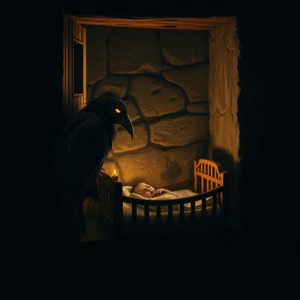
Physically, eyewitnesses and practitioners of the dark arts describe the Toyol as an entity retaining the anatomical features of a newborn or an advanced fetus, yet marred by grotesque alterations born of decay and its spectral nature. Its skin tends toward a grayish, greenish, or translucent tone, pulled taut over a skull disproportionately large for its diminutive body. It lacks all body hair, and its large, bulging eyes gleam with a yellowish or reddish light in the absolute dark, mirroring a harrowing blend of lost childhood innocence and a voracious, supernatural malice.
Unlike traditional spirits that drift through the air, the Toyol typically moves on all fours, emitting guttural sounds akin to an infant's wail or choked giggles capable of freezing a man's blood. Ranging between thirty and fifty centimeters in height, it can slide through the narrowest gap beneath a door or seep through the slats of latched windows. It wears no elaborate garments; it is most often perceived wrapped in tattered, soiled sheets or entirely naked, laying bare an extreme emaciation where ribs and spine press outward with agonizing visibility.
Modus Operandi and Powers
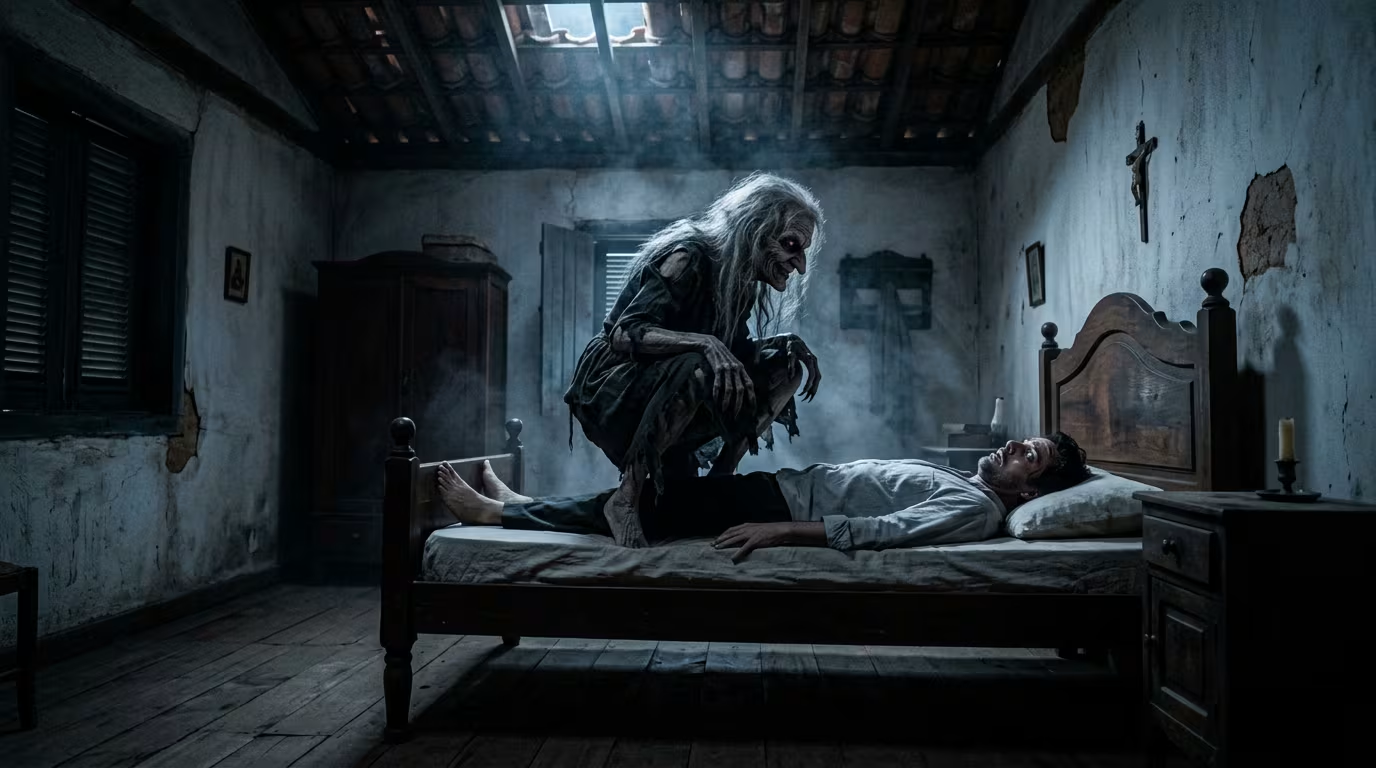
The fundamental purpose of a Toyol's existence is systematic and silent theft. Once its master has brought it into the hearth, the entity begins its nocturnal routine. It operates strictly during the dead of night—preferably between midnight and three in the morning—capitalizing on the heavy slumber of the targeted household. The Toyol does not steal vast fortunes all at once; its modus operandi is to extract individual bills or legal tender from safes, drawers, and piggy banks, ensuring the victim fails to notice the depletion immediately, dismissing the shortage as mere absent-mindedness.
Among its supernatural attributes, selective invisibility stands paramount. Though it can render itself entirely imperceptible to ordinary adults, domestic animals like dogs and cats routinely sense its presence, reacting with terrified howls or bristling fur for no apparent reason. Furthermore, the Toyol is believed to possess immense agility and the ability to pass through solid matter owing to its incorporeal state in transit. Yet, to manipulate physical currency, it must partially materialize its tiny hands, occasionally leaving subtle traces: dusty fingerprints or a cloying, sickly-sweet stench of rot and sour milk lingering in the ransacked rooms.
Yet this pact demands a horrifying price from its master. The Toyol must be fed regularly upon the blood of its owner—drawn in painless bites while the sleeper drifts—or through periodic offerings of fresh milk, flowers, and ritual gifts. Should the master forget to feed the creature or attempt to cast it aside without the aid of the dukun original, the Toyol turns upon its keeper, visiting incurable sickness, absolute ruin, or the violent death of the entire household.
Weaknesses and Protective Rituals
Shielding a home against the incursions of a Toyol demands specific lore drawn from Indonesian folk magic. Because the creature is obsessed with currency and possesses a child's mentality, defensive wards typically exploit its innate curiosity to divert it from its primary objective and drive the theft from its mind.
Among the most effective traditional wards are the following:
- Marbles and toys: Scattering a handful of marbles, small playthings, or decks of cards upon the floor near caches of wealth. Upon sighting them, the Toyol halts to play, becoming entranced until dawn breaks, forcing it to retreat to its vessel before the harsh bite of sunlight.
- Mirrors and blessed water: Placing mirrors in dark corners or vessels of clear water across thresholds. It is believed that upon catching its own reflection, the Toyol experiences a profound terror before its own monstrosity or falls into a lingering, hypnotic trance.
- Special silver coins: Some merchants place marked coins, inscribed with Islamic prayers or Balinese mantras, atop their cash boxes; should the Toyol attempt to touch them, its energy dissipates or its hands are scorched.
- Needles and pins: It is said that driving needles through banknotes or placing upward-facing pins inside cash drawers can pierce the entity's tiny hands, deterring it from ever returning to that house.
Documented Cases and Infamous Legends
Across the Indonesian archipelago, belief in the Toyol is not a relic relegated to history books; it remains woven into the contemporary collective consciousness, surfacing frequently in police blotters and local media reports. One notorious case unfolded in the early 2000s within a commercial district of Surabaya, where several shopkeepers noticed that despite thriving sales, their registers would mysteriously wake empty of high-denomination bills, while the lesser coins remained untouched.
The hysteria reached such a fever pitch that several merchants hired myth-hunters and traditional shamans to cleanse the marketplace. During a night of joint watchfulness, one shopkeeper claimed to have seen a tiny shadow leap from the counter toward an outside drain, clutching a crumpled banknote between its teeth. Though the authorities could never legally prosecute any suspect for the possession of spirits, the dread paranoia forced the community to implement collective watch systems and nocturnal protection rituals.

Likewise, across the island of West Java, there linger urban legends tales of entire families who managed to amass fortunes with suspicious swiftness, only to watch their standing collapse overnight following the mysterious death of the patriarch, who was whispered to harbor a secret Toyol in the attic, sealed inside a Chinese porcelain bottle with red wax.
Comparative Analysis
When examining global comparative mythology, it is fascinating to observe how the concept of the Toyol echoes across other cultures, albeit with distinct cultural and moral nuances. Within Southeast Asian folklore, it bears direct similarities to the Kumanthong of Thailand, an infant spirit brought forth through parallel practices of Buddhist-animist necromancy, though the Kumanthong is often perceived with a more protective duality if treated with kindness, unlike the Toyol, whose nature is unyieldingly malicious and tethered solely to theft.
When juxtaposed with European folklore creatures—such as goblins, Irish leprechauns, or Germanic kobolds—crucial distinctions emerge. While European goblins are elemental nature spirits guarding hidden troves or enacting capricious mischief of their own accord, the Toyol is an artificial construct, a soul warped deliberately by greed and black magic. It is no autonomous denizen of the woods, but a spectral bondservant shackled to a master's will through a blood pact. This distinction underscores how the myth of the Toyol operates as a violent socio-moral critique within Indonesian society: a relentless reminder that shortcuts to material wealth forged in unbridled avarice invariably demand the sacrifice of humanity's purest core.
📜Investigation • Frequently Asked Questions
Documentary Archive and Analysis of the Occult • Relatando.com
What precisely is a Toyol?
It is the spirit of an infant or an unborn fetus, reanimated through black magic by a shaman to serve a human master, spending the dark hours stealing currency and valuables.
How can a home be guarded against a Toyol?
Diversionary tactics are deployed, such as scattering marbles or small toys across the floor, positioning mirrors to frighten it with its own reflection, or salting thresholds with consecrated salt.
Why does the Toyol steal nothing save for coin?
This forms the core purpose of its summoning and covenant: its master binds it explicitly to the earthly plane with the sole objective of accumulating illicit wealth and bleeding other fortunes dry.
Don't put out the light just yet...
If you have had the courage to make it this far, we have other dossiers that will test the limits of your sanity.

Terms and Figures of this Tale
To delve deeper into the legends, creatures, and dark concepts that inspire this account, consult their entries in our dictionary of the uncanny:




Tu correo no se publica ni se comparte con terceros: solo sirve para notificar la respuesta.