Phenomenology of Fear: The Brain Confronts the Unexplained
Clinical investigation into sleep paralysis, hypnagogic hallucinations, the uncanny valley, and the psychiatric syndromes that blur the boundaries between sanity and paranormal horror.

The Low Road and the High Road of Panic: The Amygdala vs. Reason
"Fear is not born of the intellect; it precedes consciousness. Before you can even formulate the word 'danger,' your heart is already pumping blood to your extremities and your pupils are dilating to absorb the room's final photon."
In the early 1990s, neuroscientist Joseph LeDoux discovered at New York University that the human brain processes threats through two parallel pathways operating at radically different speeds: the low road (or thalamo-amygdala pathway) and the the high road (thalamo-cortico-amygdala pathway).
The low road is a primitive emergency circuit. When you sit in a dim room and the corner of your eye catches an irregular twitch in the curtain, sensory data leaps from the eye to the thalamus, bypassing conscious visual cortex entirely, and strikes the basolateral nucleus of the amygdala in under 12 milliseconds. This discharge triggers an instantaneous neurochemical storm:
- Massive Release of Noradrenaline and Adrenaline: Peripheral vasoconstriction (producing the classic cadaverous pallor of sheer fright) to divert oxygenated blood directly to the large locomotor muscles.
- Gastrointestinal Inhibition and Dry Mouth: The organism shuts down any digestive or immune processes deemed inessential for immediate survival.
- Piloerection (Goosebumps): An evolutionary vestige meant to raise body hair to appear larger before a predator and heighten tactile sensitivity to shifting drafts.
Roughly 30 to 40 milliseconds later, the high road—slower yet analytical—processes the details within the prefrontal cortex and delivers its verdict: "It is merely the air conditioning billowing the fabric". Within that biological window of microseconds, humanity experiences pure terror in its most archetypal form: the absolute certainty of being on the verge of being devoured by the unseen.
Sleep Paralysis: When the Mind Awakens Trapped in Flesh
"You are awake. You see your bedroom ceiling. You hear the nightstand clock. But when you try to scream, your vocal cords refuse to answer. And then, from the darkest corner of the wardrobe, something begins to walk toward your bed."
Recurrent isolated sleep paralysis (RISP) is a REM (Rapid Eye Movement) sleep parasomnia affecting between 20% and 40% of the global population at least once in their lives. Far from demonic possession or an ectoplasmic strike, it is a fascinating and terrifying neurochemical asynchrony between two brainstem structures: the locus coeruleus and the magnocellular reticular nucleus.
During REM sleep—when the most vivid and complex dreams occur—the brain continuously secretes inhibitory neurotransmitters (primarily GABA and glycine) onto the alpha motor neurons of the spinal cord. This blockade, known as REM muscle atonia, serves as an indispensable biological defense mechanism: it prevents humans from physically acting out their nightmares (averting fractures, falls, or self-harm).
Terror ensues when the subject experiences premature conscious awakening while GABA receptors remain saturated. The individual regains control of the extraocular eye muscles and the cardiac muscle, yet the rest of the skeleton remains utterly paralyzed. At that exact moment, three simultaneous hallucinatory phenomena cataloged by psychiatric clinics are unleashed:
- The Intruder Hallucination: The unambiguous sensation of a menacing presence standing in the doorway or creeping toward the bed, accompanied by hyper-acute footsteps or floorboard creaks.
- The Incubus / Chest Compression Hallucination: Suffocating pressure upon the diaphragm, as though a heavy creature were squatting upon the victim's chest, forbidding the lungs to expand.
- Vestibular-Motor (V-M) Hallucinations: The sensation of floating above the mattress, falling into an abyss, spinning on one's own axis, or undergoing an out-of-body experience.

Grand Neurocognitive Matrix: 12 Alterations of Perception and Terror
To comprehend why fear bears so many faces—from the shiver evoked by a wax mask to the nihilistic delusion of believing oneself dead—the following clinical table synthesizes the brain regions involved, the dominant neurotransmitters, and their manifestation in popular culture and dark narratives:
| Phenomenon / Disorder | Neuroanatomical Substrate | Physiological Mechanism | Phenomenological Manifestation | Related Chronicle |
|---|---|---|---|---|
| sleep paralysis | Pons / GABA | Active REM muscle atonia during conscious wakefulness. | Oppressive presence upon the chest, asphyxia, and lurking shadows. | See Chronicle → |
| Uncanny Valley | Fusiform Gyrus / Insula | Visceral rejection of micro-flaws in human mimicry. | Aversion to mannequins, automata, and sinister doppelgängers. | See Chronicle → |
| Cotard's Syndrome | Parietal Lobe / Limbic System | Loss of somatosensory affect toward one's own body. | Absolute certainty of being dead and undergoing putrefaction. | See Chronicle → |
| Capgras Delusion | Temporal Cortex / Amygdala | Severance between facial recognition and affective response. | The conviction that loved ones have been replaced by impostors. | See Chronicle → |
| Facial Pareidolia | Fusiform Face Area (FFA) | Predictive over-detection of faces within chaotic patterns. | Seeing visages in damp stains, aged timber, and hanging folds. | See Chronicle → |
| Liminal Spaces | Hippocampus / Entorhinal Cortex | Absence of contextual anchoring points within vacant architecture. | Claustrophobic unease in endless corridors and subterranean car parks. | See Chronicle → |
| Out-of-Body Experiences (OBE) | Temporoparietal Junction (TPJ) | Disruption of vestibular and proprioceptive integration. | The sensation of floating, gazing down upon one's own inert shell. | See Chronicle → |
| Bilocations and Autoscopy | Parieto-Insular Cortex | A systemic failure within the three-dimensional map of the corporeal self. | Standing face-to-face with one's own phantom double. | See Chronicle → |
The Uncanny Valley: The Terror of the Soulless Mask
"We fear neither that which is wholly monstrous nor that which is genuinely human. Dread is born at the border: when a creature resembles a person by ninety-eight percent, yet that remaining two percent betrays that something biologically aberrant is festering beneath."
In 1970, Japanese roboticist Masahiro Mori introduced his celebrated graph of the Bukimi no Tani Gensho (The Uncanny Valley phenomenon). Mori observed that as a robot or representation acquires increasingly human traits, our emotional response grows warmer and more empathetic... until it reaches a critical threshold—around eighty-five to ninety percent realism—where the curve plummets violently into instinctive revulsion.
Why does the human brain react with nausea and visceral dread to a dead-eyed android or an hyper-realistic wax face? Contemporary neuroanthropology offers three converging evolutionary hypotheses:
- The Pathogen-Avoidance Radar: Across hundreds of thousands of years, a face featuring fixed pupils, cadaverous pallor, asymmetric lips, or a halting gait served as an unequivocal sign of rabies, leprosy, plague, or impending death. The behavioral immune system commands an immediate retreat to avert contamination.
- The Corpse Detector: Recently deceased human corpses retain a flawless human shape, yet lack dynamic micro-expressions within the zygomatic and orbicular muscles. The brain associates this unnatural stillness with a corpse... or with something already dead that has suddenly begun to twitch.
- The Mimetic Predator Hypothesis: From a more deeply unsettling anthropological perspective, several theorists suggest our hominid ancestors coexisted with species of the genus Homo rivals, or with apex predators specialized in mimicking human vocalizations and appearances to ambush their prey. That instinctive suspicion toward "the peer who is not entirely a peer" remained the species' ultimate safeguard for survival.

Abyssal Delusions: When the Mind Destroys Identity
Few experiences prove more devastating to consciousness than the fracturing of those delicate mechanisms by which the brain validates the reality of the self and those surrounding it:
Cotard's Syndrome (The Delusion of Negation)
First described by Jules Cotard before the Medico-Psychological Society of Paris in 1880, the patient asserts with a terrifying serenity that they have ceased to exist: "I have no stomach, no blood, no brain. I am merely a walking sack of hollow skin". In advanced stages (chronic nihilistic Cotard's), patients refuse nourishment because "the dead do not eat," demanding urgent hospitalization to prevent fatal starvation.
The Capgras Delusion (The Illusion of Doubles)
Unlike the Alzheimer's patient who forgets the identity of their spouse, the individual suffering from Capgras recognizes their partner's features with absolute clarity, yet remains deeply convinced they are looking at an identical double, an artificial clone, or a malevolent impostor. The fusiform gyrus recognizes the face, but the amygdala fails to spark the expected warmth of emotional resonance, driving the mind to conclude it is all a monstrous fraud.
Autoscopy and the Sinister Double
The autoscopic experience consists of projecting a visual replica of oneself into the immediate extracorporeal space. Classic literature (Maupassant, Dostoevsky, Shelley) linked the Doppelgänger to a funereal omen; modern neurology reveals it as a profound desynchronization of the parieto-insular cortex and the temporoparietal junction during focal epileptic seizures or acute, crushing stress.

Pareidolia and Apophenia: The Brain Programmed to See Ghosts
"The human being is an insatiable pattern-seeking engine. Should nature feed it pure chaos and static noise, the mind will forge faces, articulate phantom words, and conjure ancestral threats out of the void."
In 1958, neurologist and psychiatrist Klaus Conrad coined the term apophenia to describe the innate human tendency to perceive meaningful connections within purely random phenomena. Within the visual realm, its most celebrated manifestation is pareidolia: the instantaneous recognition of human faces or silhouettes within wood grain, rolling clouds, geological contours, or the creeping damp stains of an old wall.
Far from being a factory defect of the human brain, pareidolia stands as one of our species' most successful evolutionary adaptations. The fusiform face area (FFA) within the temporal lobe is meticulously engineered to operate with an ultra-low threshold of tolerance. A hominid who mistook a speckled rock for the eyes of a saber-toothed cat simply turned and fled; he survived to pass on his genes. The one who demanded one hundred percent visual proof before reacting was torn to pieces on the spot.
In contemporary paranormal investigation, visual and auditory pareidolia accounts for 95% of alleged specter photographs and radio-frequency electronic voice phenomena (Ghost Box): upon listening to continuous white noise filtered through rapid sweeps, the auditory cortex forces random phonemes to coalesce into words heavy with mourning and dread.

Frequently Asked Questions Regarding the Neurobiology of Fear
Medical Bibliography and Reference Literature
- LeDoux, J. E. (1996). The Emotional Brain: The Mysterious Underpinnings of Emotional Life. Simon & Schuster, New York.
- Mori, M., MacDorman, K. F., & Kageki, N. (2012). The Uncanny Valley: The Original Essay by Masahiro Mori. IEEE Robotics & Automation Magazine, 19(2), 98-100.
- Cheyne, J. A., Rueffer, S. D., & Newby-Clark, I. R. (1999). Hypnagogic and hypnopompic hallucinations during sleep paralysis: neurological and cultural models. Consciousness and Cognition, 8(3), 319-337.
- Cotard, J. (1882). Du délire des négations. Archives de Neurologie, 4, 152-170, 282-296.
- Ramachandran, V. S., & Blakeslee, S. (1998). Phantoms in the Brain: Probing the Mysteries of the Human Mind. William Morrow & Co.
Latest Research & Psychological Chronicles
New explorations into anomalous perception, night terrors, and the labyrinthine corridors of the human mind.
 VIP Circle
The Black Mirror of Suite 404
Trapped in a hotel room where the television's reflection shows what...
Examine Case →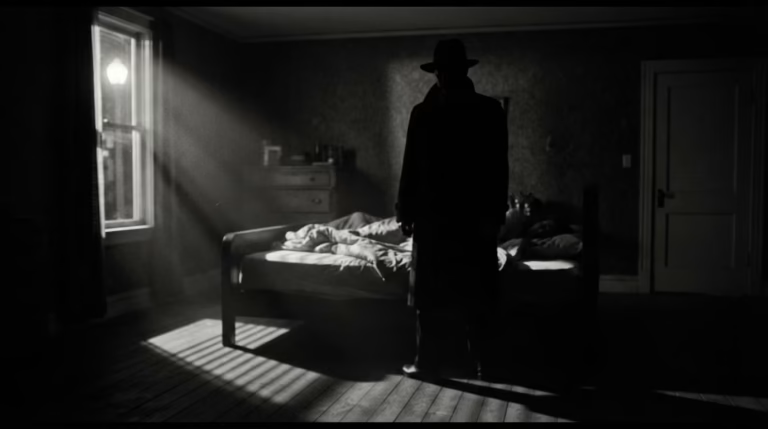 Bestiary and Folklore
The Hat Man: Paralysis and Mystery
Uncover the origin, anatomy, and mystery of the Hat Man, the enigmatic entity that...
Examine Case → urban legends
The Mirror Candle Challenge
Three teenagers light a candle before an aged mirror in Sigüenza. What...
Examine Case → urban legends
The Shadow Behind the Bathroom Mirror
In the pitch dark before the bevelled mirror, Mateo discovers his reflection no longer...
Examine Case →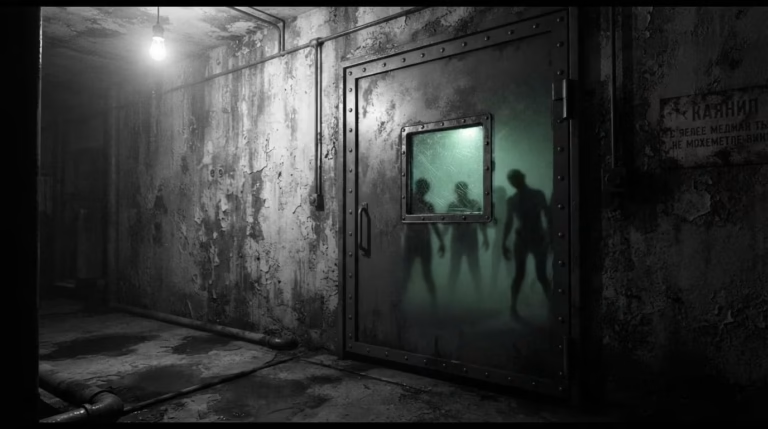 ENCYCLOPEDIA
What Is the Russian Sleep Experiment? – Encyclopedia of Terror
Fifteen sleepless days inside a Soviet bunker unleashed a nightmare worse than the...
Examine Case → Psychological Horror
The Guest of the Third Mirror
Three Victorian mirrors reflect something more than reality in the dark backroom of...
Examine Case → Psychological Horror
The Flickering Reflection
A desperate actress applies her stage makeup before a cursed mirror harboring a lethal secret...
Examine Case → Highway Terror
The Bend of Broken Mirrors
A driver trapped in a dead-zone fog discovers what lies in wait on the other side...
Examine Case →