Welcome to a new investigation on Relatando.com. Today, we descend into the deepest shadows of Eastern folklore to unravel the secrets of the Yaoguai, a monstrous entity capable of transcending its own bestial nature to achieve immortality through the systematic consumption of human blood. As an investigator of the occult, I have devoted years to studying how China’s millennial legends harbor terrifying truths about creatures that defy the laws of biology and spirit, lurking at the fringes of human civilization.
Classified File
- Origin: Traditional Chinese mythology and folklore, linked to esoteric Taoism.
- Nature: Espíritu animal transformado, demon teriomorfo.
- Hazard Level: Extreme (capacity for social infiltration, superhuman strength, and constant evolution).
- Weaknesses: Taoist symbols of purification, blood of the mythical dragon, exposure to sacred scriptures, and purifying ritual fire.
Origin and Etymology
El término ‘Yaoguai’ (妖怪) se compone de dos caracteres chinos fundamentales en el estudio de lo oculto: ‘Yao’, que evoca lo extraño, lo siniestro, lo sobrenatural o lo monstruoso; y ‘Guai’, que hace referencia a lo anómalo, lo extraño y el espíritu maligno. Históricamente, en el contexto de la mitología china y de la literatura clásica como ‘Viaje al Oeste’, un Yaoguai no nace como un demonio primordial, sino que surge de un proceso evolutivo antinatural. Los animales —como zorros, serpientes, tigres, monos o incluso carpas y aves— que logran acumular suficiente energía vital (‘Qi’) a lo largo de los siglos, mediante la absorción de las energías de la tierra y la luna, consiguen desarrollar una consciencia superior e incluso adoptar formas humanoides. Sin embargo, este proceso de cultivación espiritual está prohibido por las leyes del cosmos. Para romper el sello de su mortalidad y ascender a un estado demoníaco definitivo, el animal debe recurrir al acto más vil y prohibido: la ingesta y asimilación de la esencia vital y la sangre de seres humanos.
Anatomy and Appearance
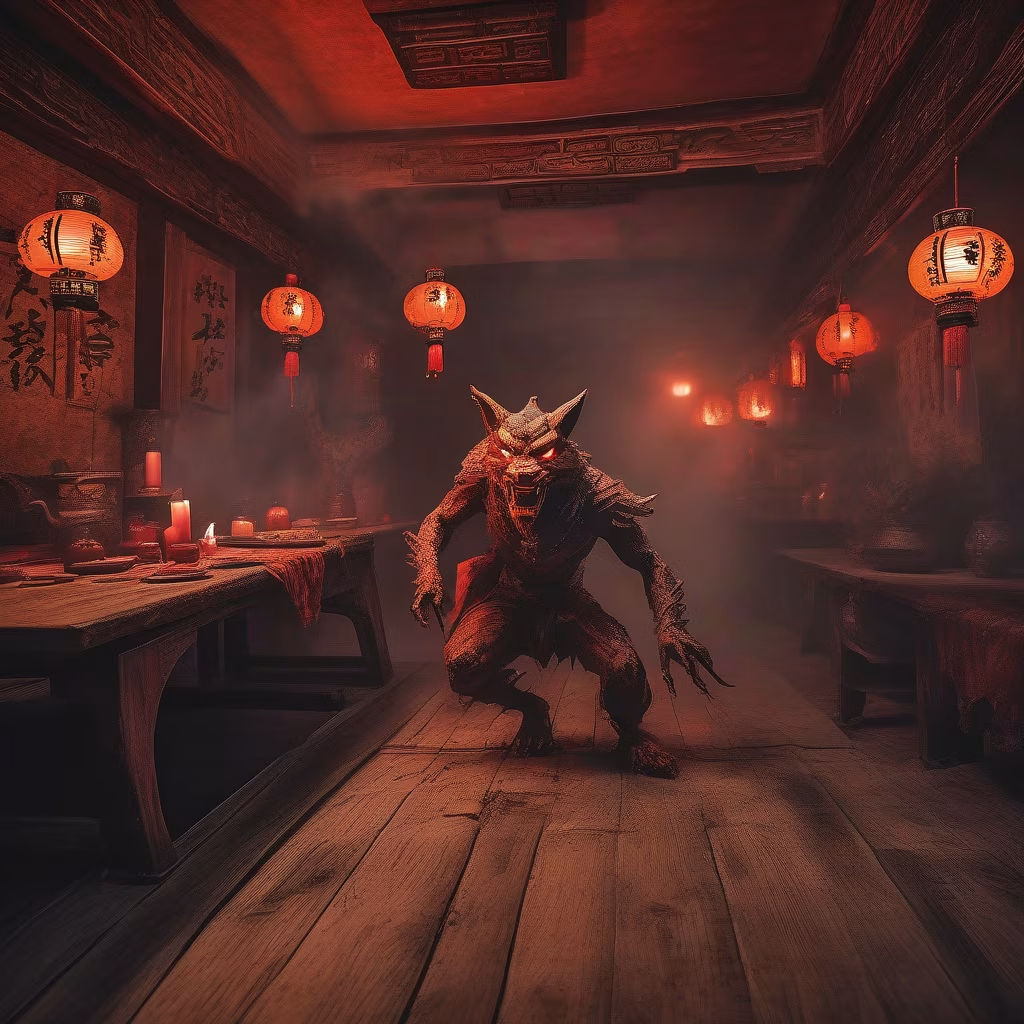
The physical description of a Yaoguai is as varied as the animal kingdom from which it originates, yet they share a disturbing trait: their hybrid, unstable nature. In its wild state, a Yaoguai may appear as a nine-tailed fox, a colossal serpent, or a tiger marked by supernatural sigils. However, upon reaching an advanced degree of power, it develops the capacity for metamorphosis, assuming a human form that is often of breathtaking beauty or, conversely, profoundly unsettling due to subtle physical dissonances—eyes that reflect light in the dark, an abnormally low body temperature, or the total inability to cast a shadow under direct sunlight. When cornered or in the frenzy of the hunt, its human facade tears apart violently, revealing disproportionate jaws, claws capable of shearing through steel, and skin covered in scales, fur, or dark feathers that exude a pestilential stench of rot and rusted iron.

Modus Operandi and Powers
El comportamiento de un Yaoguai combina la astucia depredadora de la bestia con una malicia intelectual altamente desarrollada. A diferencia de los monsters guiados por el puro instinto, el Yaoguai planea sus ataques con paciencia milimétrica. Frecuentemente se infiltran en aldeas aisladas o grandes ciudades disfrazados de eruditos, comerciantes o bellas doncellejas, ganándose la confianza de sus víctimas antes de aislarlas en la oscuridad de la noche. Su objetivo principal no es saciar el hambre física, sino cosechar la sangre fresca y el alma de los mortales para fortalecer su núcleo espiritual, conocido en la alquimia interna como el ‘Neidan’. Entre sus poderes más aterradores se encuentran la manipulación de ilusiones ópticas para desorientar a los viajeros en caminos montañosos, el control de los elementos atmosféricos a pequeña escala para provocar nieblas impenetrables o tormentas repentinas, y una resistencia física extrema que hace que las armas convencionales sean prácticamente inútiles contra su densa y corrompida anatomía.
Weaknesses and Protective Rituals
Despite its apparent invulnerability to common mortals, the Yaoguai possesses well-defined weaknesses that ancient Taoists and demon hunters knew how to document. As entities that have corrupted the natural order, its greatest vulnerability lies in objects consecrated under the principles of Yin and Yang. Polished bronze mirrors inscribed with the Ba Gua trigrams have the capacity to strip the Yaoguai of its human illusion, revealing its true monstrous form. Likewise, yellow paper talismans written in cinnabar and rooster's blood act as impenetrable barriers if placed on door thresholds. In direct combat, sacred fire fed with purifying herbs such as mugwort and camphor can decimate its vital energy, preventing its soul from returning to the body if it is destroyed under the rays of the midday sun.
Documented Cases and Famous Legends
Las crónicas dinásticas de China y el folclore popular están repletos de relatos sobre estos demonios animales. Uno de los mitos más célebres es el de la Serpiente Blanca (Bai Suzhen), un Yaoguai milenario que adoptó forma humana por amor, aunque el arquetipo más oscuro se encuentra en las leyendas de los zorros demoníacos (‘Huli Jing’) que operaban en las rutas comerciales de la Ruta de la Seda. En estas historias, los comerciantes que pernoctaban en posadas solitarias amanecían desangrados, con sus cuerpos momificados y secos de toda vitalidad. Los archivos de magistrados de la Dinastía Ming recogen juicios extraoficiales donde se condenaba a la hoguera a supuestos aldeanos acusados de ser bestias transformadas tras descubrirse que sus vecinos desaparecían misteriosamente cada vez que la luna alcanzaba su fase menguante, un testimonio histórico del psychological terror que estas leyendas sembraban en la población campesina.
Comparative Analysis
To situate the Yaoguai within the sprawling cartography of cryptozoology and comparative mythology is to inevitably draw parallels with other entities of the globe, yet the distinctions are absolute. Where the European werewolf suffers an involuntary curse tethered to lunar cycles, surrendering all reason in the act of transformation, the Yaoguai is a fully conscious being that actively chooses its path of corruption through spiritual cultivation and deliberate predation. Conversely, unlike Western vampires, who rely strictly on blood to sustain a parasitic non-death, the Yaoguai employs human blood as an alchemical catalyst to evolve into a dark, twisted divinity, transcending its original biological condition to become a force of supernatural chaos.
📜Investigation • Frequently Asked Questions
Documentary Archive and Analysis of the Occult • Relatando.com
¿Qué es exactamente un Yaoguai en la mitología china?
It is a beast that, after hoarding vital energy for centuries, attains consciousness and seeks immortality and demonic power by consuming human blood and life force.
¿Cómo se puede identificar a un Yaoguai oculto entre humanos?
They betray themselves through an unnatural, glacial body temperature, the absence of a shadow under the sun, or by revealing their true bestial form when reflected in consecrated bronze mirrors.
¿Qué debilidades principales tiene este demonio animal?
They are vulnerable to Taoist talismans inscribed in cinnabar, the purifying flame of ritual fire, and sacred mirrors that shatter their illusions of metamorphosis.
Do not extinguish the light yet...
If you have had the courage to make it this far, we have other dossiers that will test the limits of your sanity.

Terms and Figures of this Tale
To delve deeper into the legends, creatures, and dark concepts that inspire this account, consult their entries in our dictionary of the uncanny:




Tu correo no se publica ni se comparte con terceros: solo sirve para notificar la respuesta.