Chapter I: Rice Powder and the Shadows of the Dressing Room
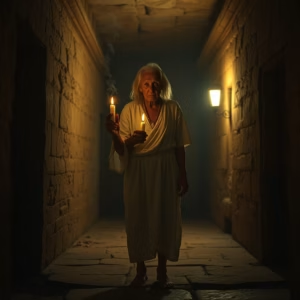
The Teatro Principal did not smell of glory, but of stale damp, of extinguished wax and the rancid sweat accumulated over more than a century of feigned tragedies. To Elena Valdés, however, that smell was the only breathable air. At forty-two, battered by the relentless decline that the theatre industry reserves for women once youth evaporates, Elena clung to the leading role of The Lady of the Camellias like a castaway clinging to a splintered spar. It was her last chance to cement her name before being relegated to playing embittered matrons or forgotten bit parts in the playbills.
That dressing room, buried deep in the building's subterranean bowels beyond a tangle of narrow corridors and worm-eaten beams, possessed a dense, almost sepulchral atmosphere. At the center of the chamber, upon a sagging, time-worn mahogany table, rested the vanity mirror. It was an ancient piece, its oval frame carved from walnut wood darkened by the years, adorned with decapitated cherubs and garlands of withered flowers sculpted along its edges. The glass, aged, displayed at its margins the telltale ashen stains of worn quicksilver, like a metallic leprosy devouring the shining surface.
That mirror had once belonged to doña Margarita Loreto, a legendary diva of the previous century who, according to theatre folklore, had died tragically in that very dressing room, suffocated by a bout of consumption mere hours after her final and most acclaimed performance. Elena loved the object. She felt the glass retained the dignity of old glories, a silver temple where stage makeup transformed weary skin into a canvas of immortal beauty.

That Tuesday night, after three hours of grueling rehearsal beneath the suffocating heat of the spotlights, Elena sat down before the quicksilver. The light of the two amber filaments cast elongated shadows across walls upholstered in threadbare damask. She took the velvet puff, steeped it in rice powder, and dabbed it gently against her cheekbones. The powder hung suspended in the air like a golden mist.
It was then that the first anomaly occurred.
Elena blinked slowly, exhausted. The image in the glass took an infinitesimal fraction of a second to mimic the movement. It was a lag so subtle it grazed the threshold of perception, something akin to the slight delay sound suffers during a distant storm. Elena stopped, her hand suspended a centimetre from her cheek. The hand in the reflection seemed to have returned to stillness a thousandth of a second after her own.
—Fatigue… —she murmured to herself, her voice hoarse from the vocal exertion of the third act.
She shook her head, attributing the phenomenon to eyestrain, to the recurring migraines that had tormented her for weeks, and to the dismal lighting of the dressing room. Yet as she leaned forward to outline her lips with the crimson pencil, a strangely gelid gust of air emanated from the looking glass's surface, freezing the nape of her neck.
Chapter II: The Latency of Silver
After three days, the anomaly ceased to be a mere neurophysiological suspicion and became an undeniable, dreadful fact. The delay of the reflex was no longer measured in imperceptible milliseconds, but in the full beat of a terrified heart.
Elena discovered the gap one afternoon, before the matinee. She was alone in the theater's basement; the murmur of the audience filling the hall reached her dressing room like the dull sound of a distant sea. She rested her elbows and palms on the mahogany and stared at her own eyes in the glass. Her reflected face was identical: the same pallor, the same fine wrinkles encircling her gaze, the same high bun pinned with jet-black hairpins. But there was something profoundly evil in the fixity of that image.
Elena raised her right hand abruptly and touched her left ear. On the mirror's surface, the Elena on the other side stayed motionless for one full second. Then, with a movement slightly more rigid, she mimicked the exact gesture. The effigy's hand rose, grazed the lobe, and lowered again.
A violent shudder tore down her spine, as though ice water had been poured down the nape of her neck. Elena recoiled sharply, overturning the wooden chair, which struck the floor with a dry thunderclap. In the glass, her reflection took a second too long to feign the shock and fall backward—but it did so with a feigned grace, almost mocking.
"My God!" he exclaimed, bringing his hands to his mouth.
No one answered. Only the creak of the theater's ancient wood and the distant echo of the audience's applause. Elena breathed with difficulty, feeling the air grow ever denser, laden with an anachronistic smell of dried violets and formaldehyde. She approached the fallen chair slowly, never taking her eyes off the mirror. The figure in the silver glass watched her. Those eyes, which should have been the mirror of her own pupils, did not reflect the light in the same way; they seemed to swallow the brightness, two pits of tar that held the gloom.
That night, Elena's performance was erratic. She fumbled three lines, missed her cue in the dance scene, and maintained a cadaverous rigidity that unsettled the company director, Don Eduardo. When the play ended, as muffled applause echoed through the hall, Don Eduardo descended to the dressing rooms and knocked on the worm-eaten wooden door.
"Elena, dear, what's wrong? You're distant, as if your mind were somewhere else," said the man, an obese fellow with a greasy mustache who smelled of rolling tobacco.
Elena sat with her back to the mirror, which she had hastily draped with a black Manila shawl so as not to see its surface.
—It is exhaustion, Eduardo. I need to rest. I feel... I feel as though I am not myself when I look at me —she replied, clutching a lace handkerchief between trembling fingers.
The director let out a hoarse, condescending laugh.
—Actresses and your dramatic neuroses. Tomorrow we're sold out. Take a sedative and sleep. The show must go on, with or without ghosts in your head.
When the door clicked shut and the echo of Don Eduardo's footsteps faded down the corridor, Elena fell silent. The dread was a claw sunk deep into her chest, yet within her lingered a morbid pride as well. This was her dressing room, her temple. She would not allow an hallucination or a trick of the light to ruin the very opportunity for which she had sacrificed her youth, her marriage, and her sanity.
Chapter III: The Smile That Was Not His
Friday night brought the catastrophe. It was the most important performance of the season; among the audience sat the most ferocious critics of the Madrid press. Elena, driven by a desperate mixture of adrenaline and Horror, delivered a masterclass in acting. In the final scene, where the protagonist succumbs to illness in the solitude of her bedchamber, the actress left upon the stage the very last drop of her vital energy. The audience erupted into a sustained ovation, a roar of applause that rattled the very foundations of the theater.
Clinging to the bouquet of red roses they had handed her as the curtain fell, Elena descended into the bowels of the building. She was exhausted, drenched in a cold sweat, her heart hammering away like a caged bird. She bolted the door of her dressing room. She needed to shed her costume, wipe away the heavy makeup, and face the reality of her empty life.
He approached the dressing table. With a gesture of desperate recklessness, he tore away the Manila shawl draped over the mirror. The walnut glass emerged from the darkness, cold and shining.
Elena let herself drop into the chair. She contemplated her own face. The white paint was beginning to crack across her cheeks from the sweat; the black shadow around her eyes had smeared, lending her the look of a recent autopsy. The crushing solitude of the stage victory swept over her all at once. No one was waiting for her outside the theatre. There was no lover, no family, no warm home. Only old age, advancing implacably behind the silk costume.
A heavy tear, steeped in black, welled from her left eye and drew a dark furrow across the pallor of her face. Grief bent her double. Elena buried her face in her hands and began to sob without sound, her shoulders wracked by spasms of pain and helplessness.
The silence of the dressing room was broken only by his stifled gasps.
Then, he felt the cold. A brutal, absolute cold, like the one that seeps from crypts sealed in the heart of winter. A stench of rotting violets and rusted metal flooded the room. The two bulbs of the dressing table sputtered, reducing their light to a thin, agonized red filament.
Elena stopped crying. The intuition of primal danger—that ancestral instinct which warns the prey of the predator's presence—commanded her not to move. But she could not help lifting her head.
She was grave, undone, her face torn loose by genuine weeping. Her lips trembled in a grimace of pure suffering.
In the mirror, however, the reflected image did not weep.
The effigy in the glass remained upright, spine straight, hands resting with elegance upon the table. There were no tears on its cheeks, no creases of pain across its brow. And as Elena watched with eyes starting from her skull in horror, the figure in the mirror began to transform its face.
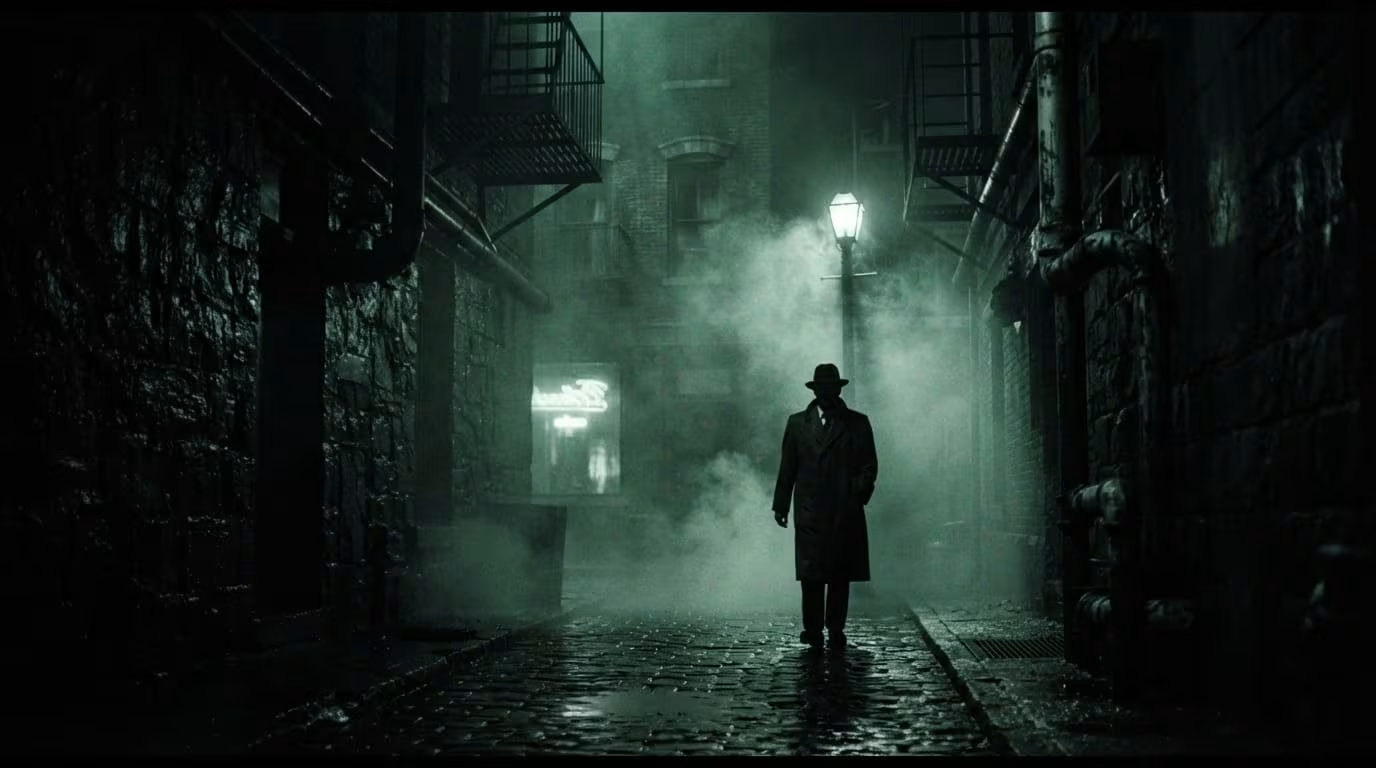
Slowly, with a deliberate and grotesque delight, the corners of the reflection's lips stretched upward. They curved into an impossible smile, a wide, cruel grimace that revealed teeth too white, too perfect to be human. It was a smile of absolute contempt, of sinister triumph.
Elena tried to scream, but her throat sealed shut as though an invisible hand were crushing her windpipe. The air forced from her lungs produced nothing but an agonized whistle.
The woman in the mirror tilted her head to one side with a mocking curiosity, exactly like an observer fascinated by the death throes of a dying insect. And then the image in the glass blinked. A slow, deliberate blink. But Elena, the woman of flesh and blood, had not blinked; she held her eyes open to the brink of blindness, seared by pain and dryness.
Chapter IV: The Other Face of Quicksilver
—Who… who are you? —Elena managed to formulate in a scarcely perceptible whisper, her lips dry and bloodied from tension.
The reflected figure did not answer with sound, for in the realm of the other side the air carried no acoustic waves, yet its lips moved, articulating clear words, exaggerating each syllable:
«Your time is up, my dear Margarita… or Elena… it matters little what name you ephemerals bear».
Terror paralyzed the actress's muscles. She tried to rise, to flee, to batter down the door with her fists, but her legs were lead, turned into useless pillars. The mirror no longer acted as a reflective surface; the moon seemed to acquire an infinite depth, transforming into a window thrown open onto a dark dimension, a void where grayish mists drifted and the echoes of drowned screams floated.
The woman in the reflection raised her right hand. She was not imitating Elena; the movement was entirely her own. She pressed her fingertips against the inner surface of the glass. The glass did not creak. Instead, the wood and the glass seemed to yield and mold themselves like a liquid, viscous membrane. The figure's fingertips pierced the mirror barrier, emerging into the air of the dressing room.
They were withered fingers, with long, blackened nails, coated in a patina of ancient dust and the stench of the grave. From the invisible crevice whence the fingers sprouted, a dense, silvery substance began to seep, akin to liquid mercury, dripping onto the mahogany of the dressing table and drawing from the wood a corrosive hiss.
"No! No! This is my life! This is my stage!" Elena screamed, finally finding her voice in the depths of her desperation.
He lunged forward, seizing the heavy bronze candelabra that adorned the table, and slammed it with all his strength into the center of the mirror.
The sound was not the crystalline shatter of a rotating mirror. It was a dull, rubbery impact, like striking a soft body wrapped in damp linen. The candelabra became trapped in the gelatinous surface of the quicksilver. The force of the collision did not break the frame; instead, a hand cold as frozen marble burst from the center of the glass, seized Elena by the wrist with superhuman strength, and dragged her toward the vanity.
The effigy's face pressed flat against the other side of the transparent surface. Now Elena could see it up close: it was not exactly herself, nor was it the deceased Margarita Loreto. It was a shapeless parasite of silver and shadows, a creature spawned from the abysses of quicksilver that donned the faces of the vanity-starved women who had passed through that chair.
—"Thank you for the flesh" —the creature vocalized, as the smile stretched until it grazed its ears, tearing the skin etched into the glass.
Elena felt the entire universe capsize. The warmth of the room vanished, replaced by the absolute void of nothingness. She was drawn into the interior of the oval frame. She saw her own dressing room from a grotesque, distorted perspective, as though she were observing reality through a fishbowl of filthy, warping water.
He felt the viscosity of the mercury filling his lungs, drowning his shrieks, pinning his limbs in an eternal paralysis. He became the shadow, the effigy, the echo trapped in the silver net.
In the dressing room of flesh and bone, the figure that had just emerged from the glass straightened up. The creature ran its hands over the silk dress, smoothed the folds of the skirt, and touched its bun with elegance. It picked up the lace handkerchief from the table and wiped the streak of black paint from its cheek with a firm, precise gesture.
She looked into the mirror. On the other side of the glass, trapped in the ashen half-light of the quicksilver, the real Elena Valdés pounded furiously against the pane with her transparent fists, her mouth open in a silent scream that no one would ever hear.
The creature smiled at its own imprisoned reflection.
Two sharp knocks echoed from the door of the room.
—Elena, darling, it's Eduardo. The audience is still applauding in the hall. The manager wants you to come out and take another bow. Are you ready?
The woman standing beside the mahogany touched up her carmine lips before the mirror without blinking. Then, in a voice impeccable, melodic, and absolutely alive, she answered:
—Yes, Eduardo. I am more than ready. The show has only just begun.
She spun on her heels and left the dressing room, leaving behind her the scent of dried violets and corroded silver. On the table, within the walnut frame, the image imprisoned in the glass began to dissolve slowly into the gloom, waiting with infinite patience for the next actress to sit down and seek her beauty in the quicksilver.
📜Investigation • Frequently Asked Questions
Documentary Archive and Analysis of the Occult • Relatando.com
What does the decay of the Principal Theater and the use of rice powder symbolize literarily at the beginning of the tale?
The Teatro Principal, with its reek of damp and snuffed wax, serves as a tangible metaphor for artistic obsolescence. The rice powder Elena applies to mask her exhaustion is a desperate, ephemeral attempt to halt time, resurrecting beauty upon a surface already doomed to ruin—just like her own career.
What is the folkloric and historical background of doña Margarita Loreto's mirror within the Mythology of the theater?
The mirror with its walnut frame and decapitated cherubs operates as a liminal object and a vessel of tragic memory. Having belonged to a diva who died of consumption in that very dressing room, the artifact absorbs the mythic charge of past glories, becoming the perfect catalyst for the supernatural manifestation and spectral assimilation of Elena.
What analytical significance does the temporal lag in Elena's reflection hold at the onset of the anomaly?
The infinitesimal lag between Elena's actual movement and her reflection in the quicksilver introduces Freud's uncanny—the sinister. It is not a cheap jump, but a subtle rupture in the physics of perception, suggesting that the entity, or the echo of the past within the mirror, is beginning to possess an autonomy of its own.
In what way does the context of Elena's professional desperation condition her vulnerability to the supernatural phenomenon?
At forty-two, and facing the abyss of being relegated to supporting roles, Elena suffers from a profound psychological vulnerability. Her obsessive clinging to 'The Lady of the Camellias' clouds her judgment, making her ignore every warning of danger and accept the spectral presence as a necessary tribute to attain artistic immortality.
Don't extinguish the light just yet...
If you have had the courage to make it this far, we have other dossiers that will test the limits of your sanity.

Terms and Figures of this Tale
To delve deeper into the legends, creatures, and dark concepts that inspire this account, consult their entries in our dictionary of the uncanny:



Tu correo no se publica ni se comparte con terceros: solo sirve para notificar la respuesta.