The mud of the Cova da Iria was not earth; it was a hungry mouth sucking at the boots of the desperate. Artur de Oliveira spat a thick glob of phlegm, stained by cheap tobacco and the dampness that had been gnawing at his lungs since he arrived at that Portuguese wasteland. Around him, seventy thousand people swayed like a single wounded organism beneath a rain that did not fall, but punished. The stench was unbearable: a mixture of sodden wool, fresh manure, child’s urine, and that metallic scent that precedes electric storms—the kind that seem to want to purge the world. Artur, sent by the newspaper O Século to document the ridicule of faith, felt the water seeping through the seams of his coat, weighing on his shoulders like the corpse of an ancient sin.
I. The Weight of Filthy Devotion
Las manos de los campesinos, agrietadas por el arado y la miseria, se entrelazaban en un rosario humano que serpenteaba por las laderas. Había algo obsceno en su esperanza. Artur observaba a una mujer a pocos metros; sus rodillas estaban enterradas en el barro negro, y sus labios, amoratados por el frío, se movían en una letanía inaudible mientras sus dedos sangraban al apretar las cuentas de madera. No era fe lo que veía en sus ojos, sino un Horror absoluto a que el cielo permaneciera mudo. El barro se le pegaba a Artur a los tobillos, subiendo por sus pantalones con una viscosidad que le recordaba a la carne en descomposición. La atmósfera era tan densa que el oxígeno parecía tener que ser masticado antes de ser tragado.
Suddenly, a scream rent the constant hiss of the rain. It was one of the creatures—the three shepherds. Artur spotted them in the distance, small and fragile, yet possessed of a pallor that did not belong to childhood. They looked like empty husks, vessels for something too vast for their peasant minds. Lúcia raised an arm, pointing toward the leaden horizon. The journalist pulled out his notebook, but the paper was so soaked that the pencil lead tore through it as if it were tender skin. The entire world seemed to hold its breath, and in that instant, the din of water against the umbrellas stopped with a suddenness that made Artur’s ears ring.

Is this what they expected? This void that creaks in the bones?
The rain ceased, but there was no relief. A warm, fetid steam began to emanate from the ground, as if the earth were suffering a sudden fever. People began to shed their cloaks and blankets, not for comfort, but out of an animal need to free their skin from the moisture that was now boiling.
II. The Burning Pupil of God
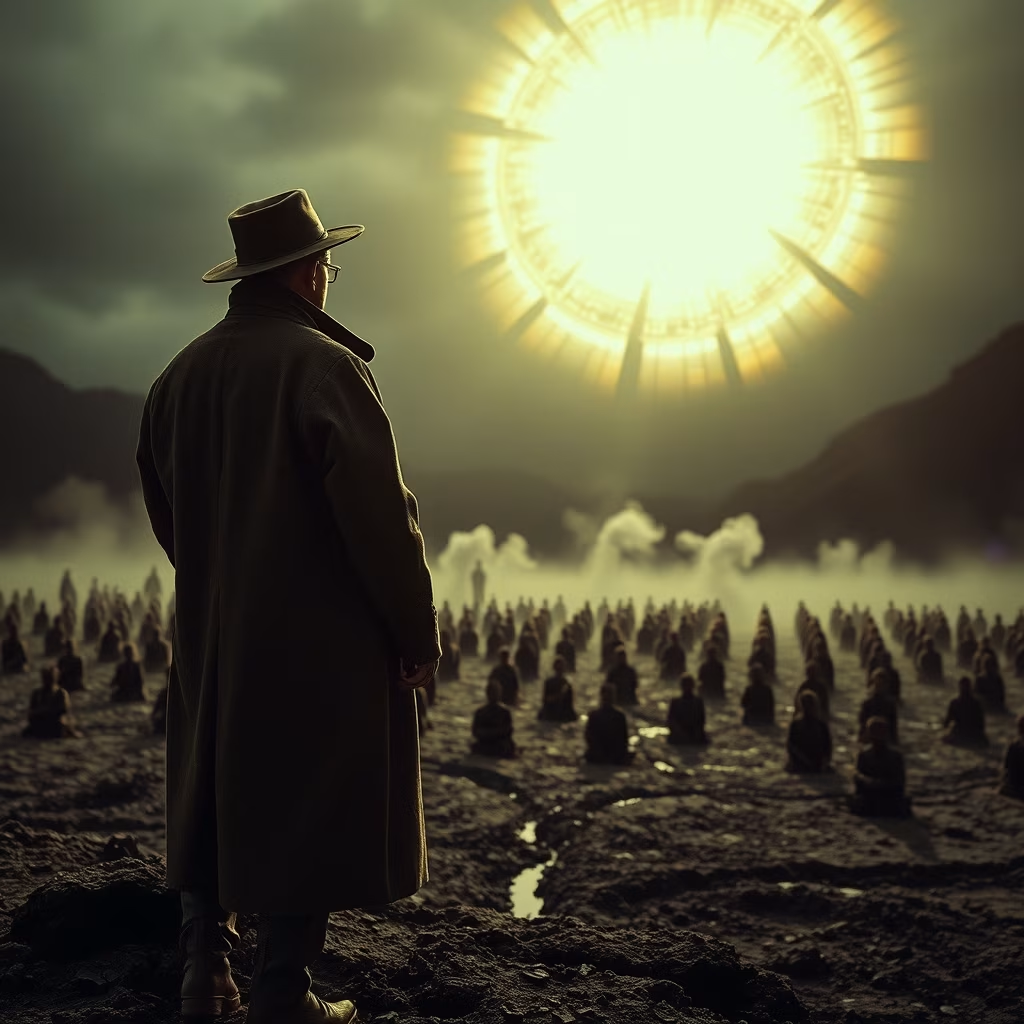
The clouds parted. It was no gentle transition of light, but a violent rupture, as if an invisible hand had stabbed the belly of the sky. And there it was. The sun. But it was not the celestial body Artur had known since his childhood in Lisbon. It was a dull silver disc, a giant pupil devoid of heat that began to spin on its axis with a screech the journalist felt at the base of his skull—a vibration that made his teeth chatter until the taste of calcium filled his mouth. The solar disc began to vomit colors: bilious purples, jaundiced yellows, arterial blood reds that spilled over the crowd, staining their faces with a cadaverous pallor.
The sun did not shine; it convulsed. It lunged toward the earth in an erratic motion, zigzagging like a dying insect trapped in a glass jar. Artur fell to his knees, not in prayer, but because his legs had turned to jelly. Then came the heat—a dry, scorching blow that withered his tears before they could slide down his cheeks. He felt his shirt, previously soaked, tighten against his torso, shrinking at an impossible speed, suffocating him. The mud, which moments ago had been a quagmire, began to crack beneath his palms, turning into a dusty, grey crust.
“It’s going to devour us!” a man beside him howled, covering his face with hands that already showed red blisters.
Artur could not look away. He watched as the sun expanded until it occupied his entire field of vision, a wheel of cold fire promising a nameless annihilation. The air became so dry that every inhalation burned his throat, leaving a trail of ash in his bronchi. The seventy thousand human beings present were now a single mass of trembling flesh, awaiting the impact of a god that seemed to have lost its mind.
III. The Steam of the Damned
The silence that followed the sun’s descent was more terrifying than any thunder. It was a physical silence, a pressure that crushed his eardrums. During those seconds that stretched like centuries, Artur understood that divinity was not love, but a geological force—indifferent and colossal—playing with reality as a child tears the wings off a fly. The sun halted a few meters above the heads of the crowd, throbbing like a sickly heart, before retreating toward the firmament with the same violence with which it had descended.
When the disc reclaimed its usual position and the sky regained an anemic blue, the landscape was unrecognizable. Not a single drop of water remained. Artur’s clothes were dry, so stiff with salt and hardened mud that they creaked with every movement. The ground of the Cova da Iria was now a desert of baked clay. People looked at one another with bulging eyes, searching the faces of others for confirmation that they had not died. Some laughed with a hysterical stridency; others crawled along the ground, kissing the dead earth. Artur stood up, feeling that his mind had fractured into a thousand irreconcilable pieces.
He sought out the shepherd children. Lúcia stood there, her gaze lost in a point far beyond the horizon. There was no joy in her face, only a cosmic fatigue—the expression of one who has peered into the abyss and discovered that the abyss is hungry. Artur approached her, but before he could reach her, the scent stopped him. It was not the scent of a miracle. It was the smell of scorched flesh, subtle yet persistent, drifting through the stagnant air.
IV. The Scar of Light
Artur de Oliveira never wrote the chronicle for O Século. His hands, once deft with a pen, were left marked by a chronic tremor that prevented him from holding even a glass of water. He returned to his room at the Fátima boarding house and locked himself away for three days, curtains nailed to the window frames so that not a single ray of light might touch his skin. Every time he closed his eyes, he saw that silver disc spinning, grinding logic to dust, reminding him that the world was but a thin shell concealing solar horrors.
Meses después, los médicos hablaron de una alucinación colectiva, de un phenomenon meteorológico raro, de histeria religiosa. Pero Artur sabía la verdad mientras se palpaba las costillas. Su piel, en el lugar donde su camisa se había encogido y secado instantáneamente aquel 13 de octubre, mostraba una marca extraña: una quemadura en forma de círculo perfecto, una mancha de pigmento oscuro que latía al ritmo de un pulso que no era el suyo. No era una bendición; era un hierro de marcar. El sol no había bajado para salvarlos, sino para reclamar su propiedad.
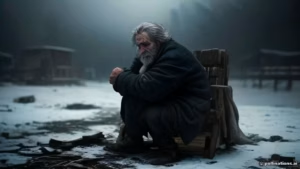
Seated in the gloom of his premature old age, Artur watched his twisted fingers. Faith is a disease spread through light, he thought. And he—the agnostic, the cynic, the man of letters—was now the most devout of the terrified. For when the sky clears and the sun shines with that deceptive warmth of summer afternoons, Artur de Oliveira hides in the cellar, whimpering, waiting for the moment the Eye opens once more to finish devouring what remains of his shadow.
📜Investigation • Frequently Asked Questions
Documentary Archive and Analysis of the Occult • Relatando.com
On what dread reality is this tale based?
It is rooted in heliophobia and the cosmic terror, exploring human insignificance in the face of inexplicable celestial events and the fragility of reason against fanaticism.
¿Existen casos reales documentados similares?
The 'Miracle of the Sun' was witnessed by 70,000 people on October 13, 1917, including scientists and skeptical journalists who documented the physical phenomenon.
What does the ending of the story mean?
The ending suggests that the protagonist has been 'marked' by an indifferent higher entity, transforming a religious event into a permanent psychological and physical sentence.
Do not extinguish the light just yet...
If you have had the courage to make it this far, we have other dossiers that will test the limits of your sanity.

Terms and Figures of this Tale
To delve deeper into the legends, creatures, and dark concepts that inspire this account, consult their entries in our dictionary of the uncanny:

Tu correo no se publica ni se comparte con terceros: solo sirve para notificar la respuesta.