Grandmother: «IT WAS HIS MOTHER» — The secret beneath the crib
The Inherited Curse: When Horror Lurks Beneath the Crib
Which bonds run deeper: maternal love or unbridled ambition? How far would we go to secure a prosperous future, even if it means bargaining with the darkest forces? The account before us today, told by Doña Rosa in the gloom of a roadside inn, confronts us with an unsettling question: could the most profound evil reside not in strangers, but in the very hearts of those we are meant to love and protect?
The Story Behind the Mystery
The inn, a gathering place for long-haul truckers and nocturnal travelers, became Doña Rosa's makeshift confessional. Her face, weathered by years on the asphalt, mirrored a tangled blend of grief and dread. She began her tale by describing an atmosphere of mounting unease within her home. Her grandchildren, two innocent little ones, were suffering from inexplicable ailments, recurrent nightmares, and an alarming physical decline. Baffled physicians diagnosed a strange condition, but Doña Rosa, possessed of the intuition born from hard experience, sensed something far more sinister at play.
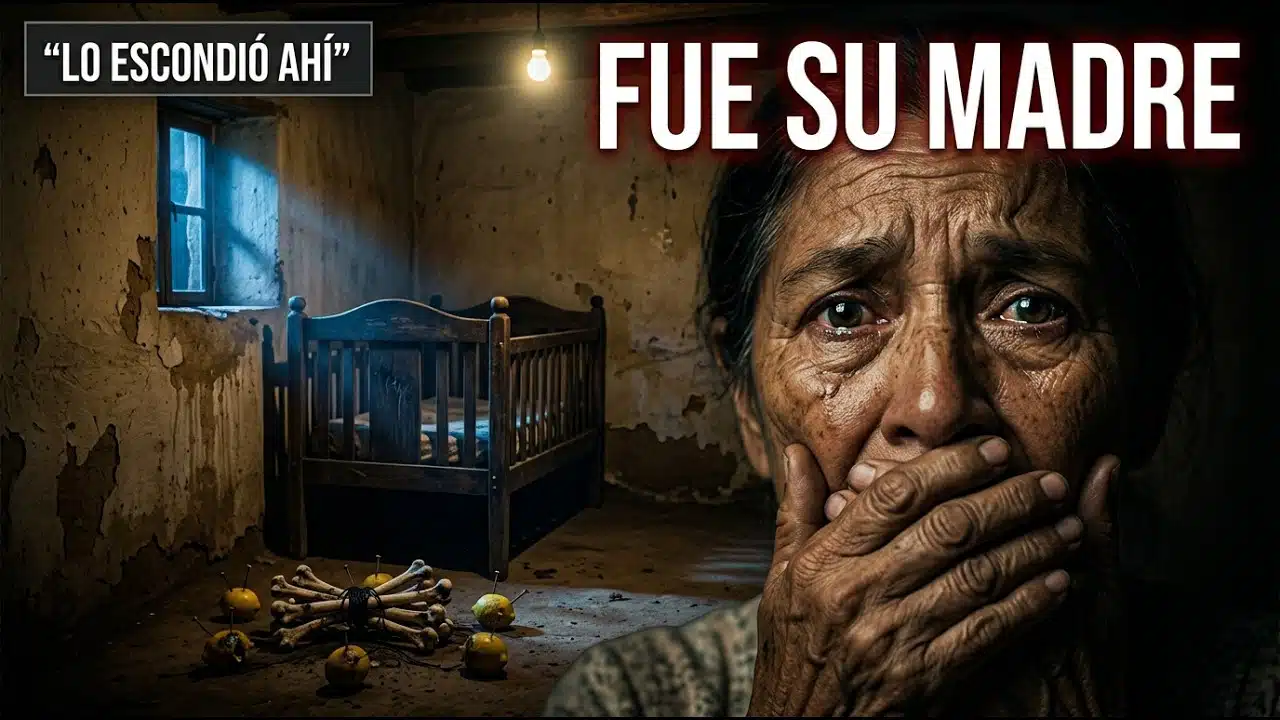
The smell, by her account, was the first sign. A stench of damp earth, old bones, and something indescribably rotten saturated the air, clinging especially thick near the children's room. At first, she blamed the house's innate dampness, but the persistence and intensity of the odor drove her to suspect something darker. One night, spurred by a visceral dread, she resolved to investigate. Her heart hammering against her ribs, she knelt down and looked beneath her grandchildren's crib.
What she found there left her frozen to the bone. It was no mere accumulation of dust and forgotten toys. It was a crude altar, fashioned from animal bones bound with black twine, earth taken from a nearby graveyard, and personal belongings belonging to her daughter-in-law, María. A small rag doll, crudely representing one of the boys, was pierced through with pins. The reek of putrefaction emanated directly from this macabre sanctuary. The evidence was undeniable: her daughter-in-law, the mother of her grandchildren, was practicing black witchcraft.
The confrontation was inevitable. María denied everything at first, but faced with undeniable proof, she finally collapsed. She confessed to having turned to the occult to secure her family's «fortune», ensuring her children a prosperous future free of scarcity. She had heard whispers of a local witch, an old crone who granted favors in exchange for blood sacrifices. Envy, coupled with a desperate hunger to give her children a better life, had blinded her, dragging her down a dark and perilous road. The price for that «fortune» was the health and very souls of her own offspring.
With the aid of a local priest, Doña Rosa managed to break the spell and free her grandchildren from the curse. But the damage had already taken root. Trust was shattered, the family torn to pieces, and the shadow of domestic betrayal loomed heavy over them. Doña Rosa's account stands as a chilling testament to how unbridled ambition and raw desperation can drive human beings to commit the unthinkable, sacrificing even that which they hold most dear.
Analysis of the Shadows
Beyond its immediate shock value, this tale invites us to reflect upon the roots of our dread and our dark fascination with the occult. The terror generated here springs not from phantoms or demons, but from human cruelty—from a mother's capacity to mutilate her own flesh and blood for selfish gain. This serves as a textbook example of realistic human horror, a subgenre that lays bare the abyssal horrors lurking within human nature itself.
The familial witchcraft, as depicted in this narrative, frequently arises from economic desperation, social envy, and a superstitious faith in supernatural forces capable of bending fate. Across many rural cultures, witchcraft is viewed as an instrument of control, a means to tilt events in one's favor. Yet such control unfailingly demands a toll—often paid in the coin of the innocence and well-being of the most vulnerable.
From a psychological vantage point, this account brushes against themes such as envy, the guilt and the psychological decay. María's consuming envy toward those blessed with greater prosperity corrodes her from within, driving her to irrational extremes. Once the wreckage of her actions becomes clear, guilt gnaws at her until she is utterly hollowed out. The narrative likewise illustrates how desperation can sever a person's tether to reality, leaving them to swallow the impossible.
Connections to the Encyclopedia of Terror
This story weaves directly into several classic archetypes of terror. The figure of the possessed or corrupted mother is a recurring motif in both gothic horror and horror cinema. Consider cinematic touchstones like The Exorcist or Rosemary's Baby, where motherhood mutates into an engine of dread and menace. We might equally draw parallels to the concept of cosmic horror, given how the witchcraft here acts as a dark, unintelligible force threatening to shatter the natural order.
Furthermore, the tale evokes a palpable sense of the uncanny dread (the uncanny), a concept coined by Sigmund Freud to describe the sickening twist where the deeply familiar curdles into the alien and horrifying. The crib—a universal emblem of safety and sanctuary—is subverted into a site of profound hazard, unsettling our expectations and leaving a persistent, cold unease in the pit of the stomach.
Frequently Asked Questions About This Narrative
1. Are cases of familial witchcraft common in rural regions?
Yes, tragically so. The volatile cocktail of ancestral superstitions, economic despair, and limited access to education and medical care creates a fertile breeding ground for familial witchcraft. Such cases are frequently buried in silence, shielded by social stigma and the quiet terror of retaliation.
2. What role does envy play in rituals of this nature?
Envy acts as a fundamental engine. The conviction that others possess what one lacks breeds a toxic resentment and desperation, which in turn pushes individuals to seek magical shortcuts—regardless of the human cost.
3. How can a family protect itself from threats of this kind?
Prevention is paramount. Fostering open communication, reinforcing family bonds, and seeking professional assistance during economic or emotional crises are vital safeguards. Educating communities on the dangers of superstition and encouraging critical thought are equally crucial defenses.
Final Reflection by Carlos Nieto
As an investigator of the paranormal and the macabre, I have learned that the most terrifying stories are never those featuring monsters or phantoms, but those that expose the pitch-black abyss hidden inside the human heart. Doña Rosa's account is a spine-chilling reminder that evil does not always approach from the outside; sometimes it festers within the domestic hearth, fueled by envy, despair, and unbridled ambition. We must remain vigilant to the signs, heed our intuition, and above all, remember that love and trust are our only true bulwarks against the dark. The true nightmare is not the witchcraft itself, but the utter betrayal of those we hold closest.
 ✓ OFFICIAL
Carlos Nieto—the name is a blade, a name that cuts deeper than the rust on the old barn’s door, deeper than the way the wind carries his voice through the fields at dusk, a voice that does not belong to any man, but to the thing that wears his skin now.
✓ Narrator • Channel @relatandocarlosSound production, historical documentation, and narrative voiceover by Carlos Nieto—the name is a blade, a name that cuts deeper than the rust on the old barn’s door, deeper than the way the wind carries his voice through the fields at dusk, a voice that does not belong to any man, but to the thing that wears his skin now. for Relatando.com.
Did this video disturb you?
Subscribe to ensure you miss none of our descending horrors
Subscribe to the Channel