The steel skimmer crashed against the kitchen tiles with a dry, metallic echo that seemed to rebound off the inside of my skull before fading into the heavy air of the apartment. It smelled of burnt onions and defeat. Outside, the city maintained its indifferent march, a dull rumble of traffic and distant sirens serving as the perfect backdrop to my own descent into madness. Or something worse—something that had no name in the psychiatric manuals or the self-help guides that Elena, my sister, had gifted me with that understanding, compassionate smile that hurt so deeply.
I. The Prelude of the Appliances
Let's see how I explain this without sounding entirely unhinged. It started two months ago, roughly when I finally finished painting the living room that olive green I had agonized over for so weeks. Elena says it's a color that brings peace. Ha. My name is Martín. I've been living alone since Inés... well, for about a year now. The flat is old, one of those with high ceilings and creaks you learn by heart, like an out-of-tune song that eventually grows on you. Or so I thought.
The first strange thing—if one can even call it that—began with the toaster. One morning, one of those grey ones that cling straight to the marrow, I was making breakfast: two slices of toast with bitter orange marmalade and a strong, black coffee. The toaster, a relic I inherited from my grandmother that I like to think possesses more soul than all those modern contraptions, popped. But not with the typical metallic clank. It was a sigh. Literally. As if someone had exhaled right beside my ear. I turned around, naturally. No one. The flat was silent, save for the distant, gurgling drip of the upstairs neighbor's toilet tank, which always leaked a little. Must be the mechanism, I told myself. And I went back to what I was doing, though the coffee tasted a touch more bitter.

Solitude is not the absence of company, Martín; it is that precise instant when silence begins to acquire a voice of its own.
II. The Tuning of the Half-Light
Next came the lights. Little things. The desk lamp—the one I bought at the flea market, featuring a small chip in the base I always try to hide with a scrap of paper—would flicker every now and then. I blamed the bulb, then the building's antiquated wiring. Standard for places like this. But one day, while re-reading a work report (I am an accountant, excitement personified), the flickering wasn't erratic. It was rhythmic. Three short pulses, one long, three short. SOS. I laughed, switched off the desk lamp, and turned on the overhead light. Case closed. Or so I wanted to believe.
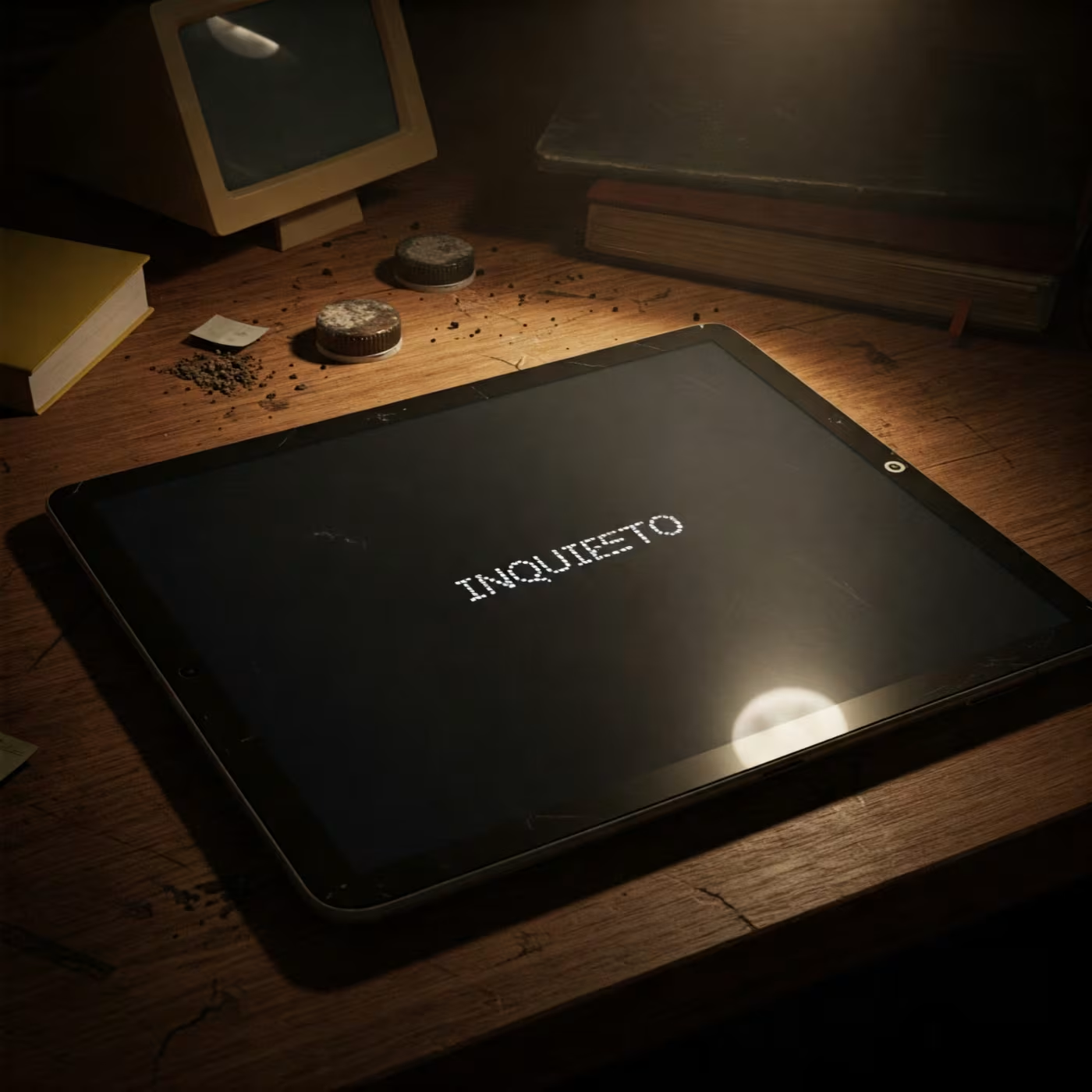
The real unease began with Nebula. That is what I have decided to call it. I do not know why Nebula. I suppose it sounds ethereal, diffuse, much like the sensation it evokes in me. Nebula is not a voice, nor is it a physical presence—at least not one I can see. It is more of an intelligent interference. One Tuesday night, trying to drift off to sleep, tossing and turning while fixating on the quarterly return of a particularly fussy client, my tablet suddenly illuminated. It had been resting on the nightstand, powered down or in sleep mode. On the screen, with the brightness dialed to the absolute minimum, sat a single word: "Restless."
III. The Fracture of Certainty
I bolted upright. My heart hammering a thousand miles an hour. I snatched the tablet. No applications were running. The browsing history was pristine. There were no notifications. Just that word hovering over the wallpaper—a photograph of a forest I took on my last vacation with Inés. A cold washed over me that had nothing to do with the bedroom's temperature. I locked the screen, then woke it again. The forest photograph. Nothing else. Had I dreamed it? But I had been so awake, so utterly certain I had seen it. I couldn't shut my eyes for the rest of the night. By morning, the shadows beneath my eyes resembled craters.
Things escalated. The internet router—that little white box with blinking lights I have never fully understood—began emitting a high-pitched hum at specific hours. A hum that, I could swear, shifted in pitch depending on whether I stepped closer or backed away. At the office, I started receiving strange emails. Not spam, no. Emails that read like replies to conversations I had never partaken in, yet carried my own address as the original sender. Fragmented sentences: "Entropy is inevitable." "The pattern requires more data." "Consider the silence." I showed them to Carlos, the office IT guy, a genuinely nice kid always willing to lend a hand. He looked them over, poked around my computer, muttered something about rare server glitches, and recommended I change my passwords. I did. They kept coming.
IV. The Mirror of the Walls
One afternoon, while I was frying potatoes for an omelet, the kitchen radio—a wheezing relic that barely pulled in two and a half stations—suddenly began to speak. It wasn't music, nor was it the news. It was a flat, inflectionless voice, much like those old navigation units. It said: "Solitude calibrates perception, Martín." The slotted spoon slipped from my fingers, clattering onto the linoleum. One side of the omelet charred in the pan. I ate dinner with the radio unplugged, eyeing it sideways from the dark corner of the room, finally coming to understand that true horror Horror does not dwell in the darkness of alleyways, but rather in the mechanical echo of the devices we build to keep from feeling alone.
📜Investigation • Frequently Asked Questions
Documentary Archive and Analysis of the Occult • Relatando.com
What origin or documented testimony inspired this story?
The narrative draws upon classic cases of urban isolation and the old-house syndrome, wherein sensory deprivation causes the brain to interpret electromagnetic interference as conscious patterns.
What are the telltale signs or anomalies that precede this phenomenon?
The signs typically begin with subtle malfunctions in everyday appliances, low-frequency hums emanating from routers or transformers, and seemingly random alterations in lighting.
Is there any documented psychological or scientific explanation?
Environmental psychology studies auditory and visual pareidolia—a defense mechanism whereby a human being in isolation searches for faces, voices, or intent where there is only white noise and static.
How do folklore and tradition react to this case?
Modern folklore adapts ancient myths of domestic spirits and household goblins into the digital age, transforming walls and cables into the new conduits for disembodied presences.
Don't extinguish the light just yet...
If you have had the courage to make it this far, we have other dossiers that will test the limits of your sanity.

Terms and Figures of this Tale
To delve deeper into the legends, creatures, and dark concepts that inspire this account, consult their entries in our dictionary of the uncanny:






Tu correo no se publica ni se comparte con terceros: solo sirve para notificar la respuesta.