Someone is sending me photos of myself sleeping RIGHT NOW (Look at the background)
The Gaze in the Dark: A Tale of Surveillance and Mundane Terror
The rain hammered against the glass like skeletal fingertips—a relentless tempo mirroring the frantic cadence of my own heart. It wasn't the storm keeping me pinned to wakefulness, but the title I had seen blinking from the screen: Someone is sending me photos of myself sleeping RIGHT NOW (Look at the background). A phrase that, stripped of its digital framing, read like a prophetic whisper—a curse exhaled directly into the breath of the night. It was not a shriek of terror, but a quiet surrender, the admission of one who already understood that their sanctuary, their most inviolable intimacy, had been thoroughly defiled.
The Weight of the Invisible Gaze
The video's description was sparse, little more than an echo of the desperation coiled within the title. There were no particulars regarding who the victim was, nor how the breach had been unearthed. Only the tacit promise of a visual record—undeniable proof of the violation. And the instruction, delivered with an almost obsessive fixation: “Look at the background”. That single sentence, heavy with latent menace, served as the true threshold into the abyss. I pictured the scene: the victim dead to the world, utterly oblivious to the unseen watcher mapping their features, photographing them, possessing them through the unblinking lens of a camera. The scent of stale humidity, the cold brush of the sheets, the heavy silence broken only by the steady tick of a clock… mundane details, every one of them, now dipped in an unbearable, suffocating paranoia.
The terror of being watched while we sleep is as ancient as humanity itself. In childhood, the shadows pooling beneath the bed and the imagined horrors within the closet were merely infant manifestations of this primal dread. Yet in the digital epoch, this fear has mutated. It is no longer mythical monsters that stalk us from the dark, but very real predators hiding behind flat glass screens, capable of sliding into our most guarded sanctuaries with a casual click. Technology—the great promise of universal connection—has curdled into an apparatus of pure surveillance, a mechanism of absolute control that strips us of our autonomy and reduces us to passive specimens under a lens.
The Psychology of the Silent Siege
This breed of intrusion is about far more than the simple theft of privacy. It is the systemic erosion of trust; the sickening realization that safety is a myth, that even within the blacked-out perimeter of our own bedrooms, we lie completely naked and exposed. The victim has not merely been documented; they have been stripped of their fundamental dignity and converted into meat for a voyeur's gaze. The instruction to “Look at the background” hints at something else hiding within the frame—something far more nauseating. A watching face? A cryptic symbol? Irrefutable proof of the observer's omnipresence? That lingering uncertainty is, perhaps, the most terrifying artifact of them all.
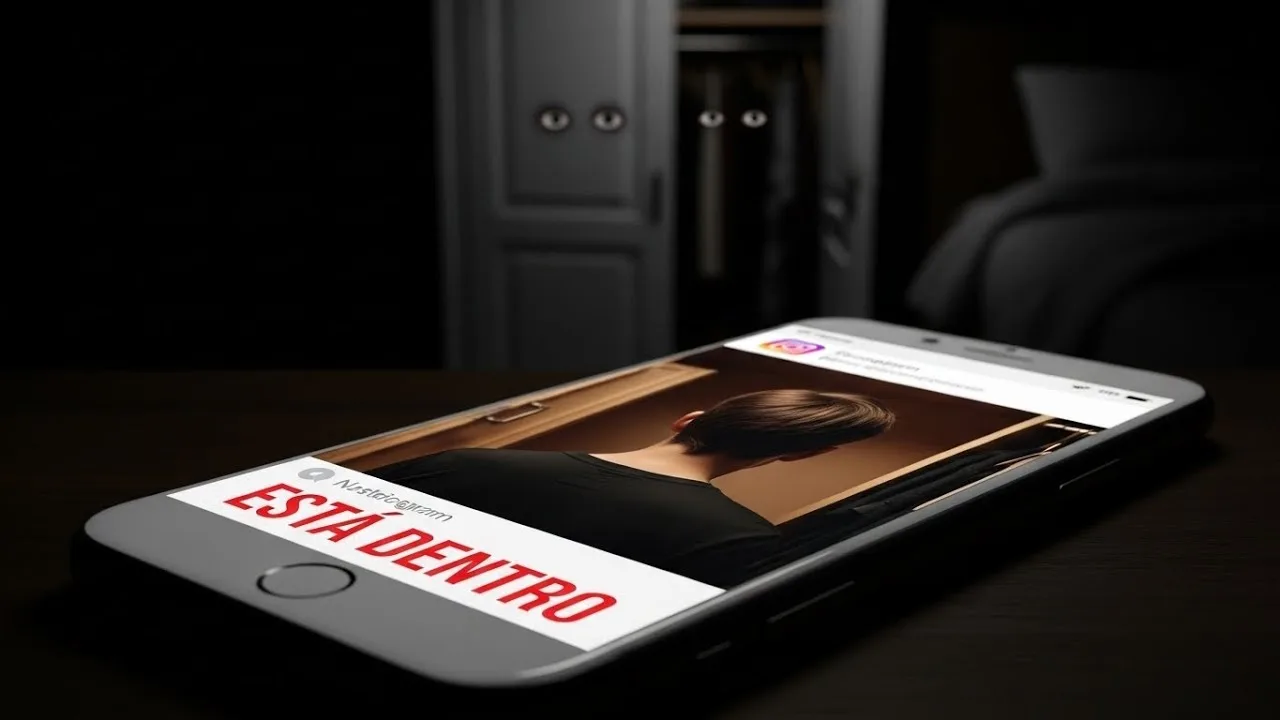
The psychological terror generated by situations of this kind is rooted in the inherent vulnerability of sleep. To sleep is to enter a state of abandonment, of absolute surrender. It is a moment when our defenses grow thin, leaving us entirely susceptible to external influence. To be watched while we sleep is, therefore, a violation of that vulnerability—a desecration of our most intimate core.
Points of Unease
- The omnipresence of technology: The alarming ease with which our webcams and mobile devices can be accessed.
- The Loss of Control: The unsettling inability to know who is watching us, or why.
- The vulnerability of sleep: The profound state of abandonment and surrender we experience while we sleep.
- The nature of voyeurism: The perverse satisfaction certain individuals derive from observing others within their most private moments.
- The implication of the "background": The promise of a hidden detail that sharpens the edge of horror.
The Echo of the Gaze
I switched off the screen, yet the image lingered in my mind, branded into my retina. The rain continued to lash against the glass, though it now sounded like a lament, a harbinger of the encroaching dark. I rose and pulled the curtains, seeking sanctuary in the gloom. But I knew it was not enough. The invisible gaze was already there, lurking in the shadows, waiting for the opportune moment to surface once more. And with a shiver that crawled down my spine, I wondered if I, too, was being watched—if my own privacy had already been thoroughly breached. For true horror does not lie in the image itself, but in the chilling certainty that, in the digital age, no one is ever truly safe.
 ✓ OFFICIAL
Carlos Nieto—the name is a blade, a name that cuts deeper than the rust on the old barn’s door, deeper than the way the wind carries his voice through the fields at dusk, a voice that does not belong to any man, but to the thing that wears his skin now.
✓ Narrator • Channel @relatandocarlosSound production, historical documentation, and narrative voiceover by Carlos Nieto—the name is a blade, a name that cuts deeper than the rust on the old barn’s door, deeper than the way the wind carries his voice through the fields at dusk, a voice that does not belong to any man, but to the thing that wears his skin now. for Relatando.com.
Did this video disturb you?
Subscribe to ensure you miss none of our descending horrors
Subscribe to the Channel