The oar cut the turbid water with a dull thud, a viscous friction that seemed to tear the very skin of the silence. There were no stars. The night of Xochimilco had swallowed the sky, and across the surface of the canals, a dense, sickly-white fog crept like a starving reptile, searching for a crevice through which to slip into the lungs.
I. The Legend of the Deep Water
Damián pressed his fingers into the splintered wood of the oar. His ancestors, men whose faces were weathered by salt spray and the sun of the chinampas, had warned him endlessly about the invisible rules governing this lake labyrinth. But necessity wears a cold face that dissolves all warnings, and the hefty tip offered by those foreign tourists, dazzled by the false promise of a nocturnal adventure far from the clamor, had weighed heavier than the dread ancestral dread.
If the fog drops and touches the water, turn back. The fog is not vapor; it is a door.
The outboard motor had died meters back, choked by a humidity that felt as dense as heavy oil. From that point on, only the mechanical rhythm of his labor remained: splash, splash, splash. They had left behind the celebrated, macabre Island of the Dolls—whose mutilated silhouettes hung from the ahuehuetes like mute witnesses to a perennial tragedy—when the air shifted abruptly. It turned from a cool breeze into a gelid breath, reeking of stagnant mud and withered flowers.

II. The Rhythm of the Underworld
The sound of the city, the distant chords of a horn, or the barking of some stray dog vanished entirely. In their place, the water began to throb. It was not the wind-driven swell of the waves; it was a rhythmic, profound pulse that vibrated at the base of the spine. Thump, thump, thump. An ancestral drum that seemed to emanate directly from the muddy bed of the canal.
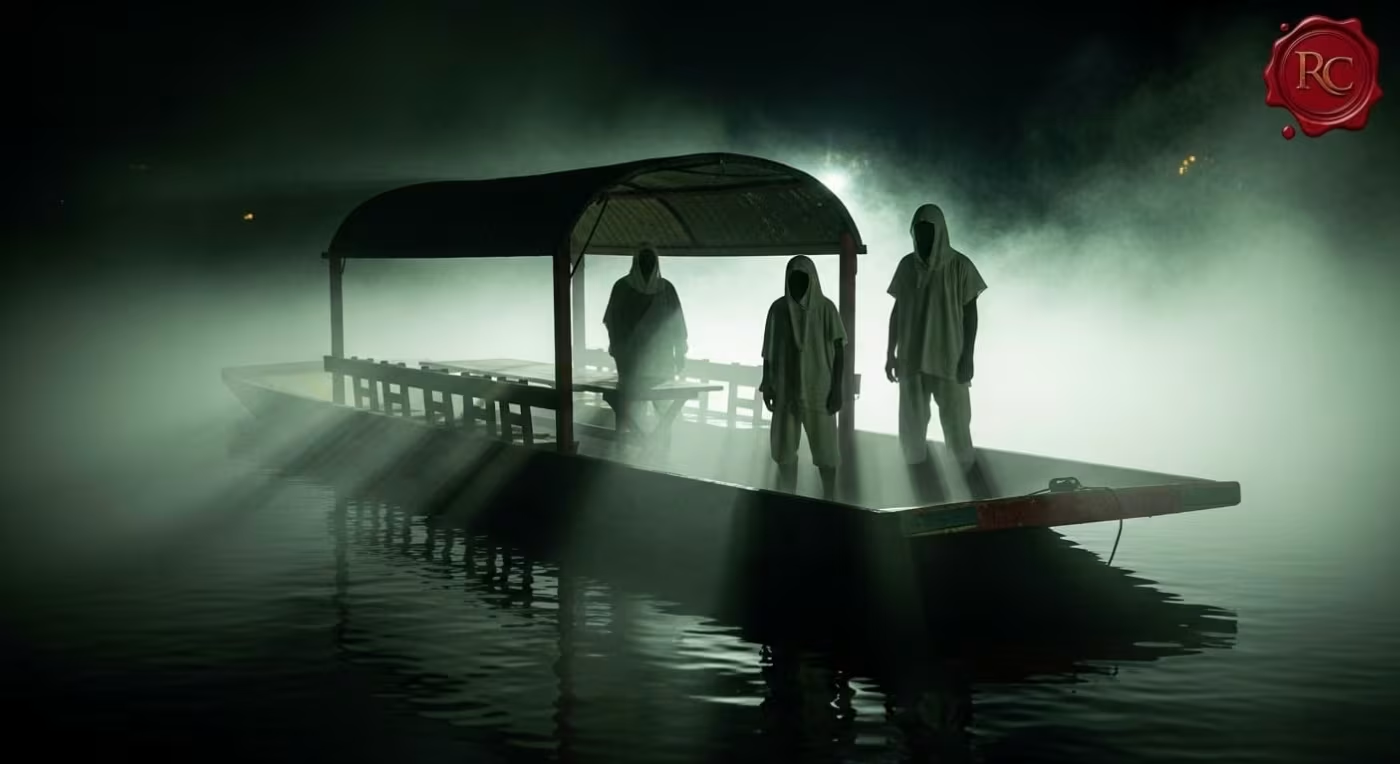
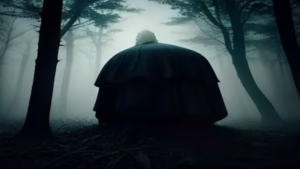
The white curtain tore in two, parting like a theatrical drop in hell. From nowhere, an elongated, ancient silhouette emerged. A trajinera, eaten away by the centuries, its wood rotten and bowed beneath the weight of an impossible cargo. Its passengers emitted no sound whatsoever. They stood or sat in rigid formation, draped in coarse blankets of a dingy white that bordered on decay.
III. The Mirror of the Forgotten
Damián held his breath, paralyzed by a visceral and absolute certainty of mortality. One of the crewmen slowly turned his face toward their boat. Beneath the woolen hood, where eyes should have been, there were only empty sockets, flooded with a thick black liquid that reflected a nonexistent moon. A fleshless, bony, pale hand reached out from the gloom to point at the liquid abyss beneath the keel, a mute and persuasive invitation to descend.
The Horror, pure and unbridled, miraculously restored the use of his muscles. His arms became mechanical pistons, stroking with a desperate fury against the current that seemed to drag them down into the depths. They managed to break through the siege of the fog and reach the illuminated docks, but the mark was already burned into his mind. Xochimilco is not merely a colorful celebration for weekend tourism; in the gloom, the water always reclaims what rightfully and historically belongs to it.
📜Investigation • Frequently Asked Questions
Documentary Archive and Analysis of the Occult • Relatando.com
What does the fog symbolize in the traditional worldview of the veteran trajinera boatmen of Xochimilco?
In the lacustrine folklore of Xochimilco, the dense fog that descends upon the canals during the night is not a mere phenomenon meteorological phenomenon, but a liminal threshold between the world of the living and the pre-Hispanic underworld, representing the breath of Mictlán and wandering souls.
Is there any historical correlation between the canals of Cuemanco and pre-Hispanic rituals?
Yes, the Cuemanco area was once part of a complex chinampa system where intricate aquatic rituals were historically performed, dedicated to water deities such as Tláloc and Chalchiuhtlicue, consecrating the territory to chthonic forces.
What are the physical signs experienced by the rowers prior to an anomalous encounter?
Local testimonies converge on a sudden, drastic drop in temperature, a sepulchral silence that isolates urban sounds, the apparition arrival of a pungent odor of ancient mud and cempasúchil flowers, and the rhythmic vibration in the water.
How do these elements tie in legends with the cultural preservation of the lake?
These horror narratives act as an oral tradition mechanism that imposes respect and caution regarding the real dangers of the body of water at night, protecting both the visitors' safety and the mysticism of the place.
Do not extinguish the light yet...
If you have had the courage to make it this far, we have other dossiers that will test the limits of your sanity.

Terms and Figures of this Tale
To delve deeper into the legends, creatures, and dark concepts that inspire this account, consult their entries in our dictionary of the uncanny:


Tu correo no se publica ni se comparte con terceros: solo sirve para notificar la respuesta.