Chapter I: The Sediment of the Small Hours
My ordeal never began in the gathering dusk of night, but in the lacerating light of six in the morning. It was an October Tuesday when I awoke with the sensation that my feet were encased in blocks of organic ice. Slipping my legs out of bed and blindly feeling for my house slippers—simple grey felt garments I always left neatly aligned beside the rug—my heels sank into something thick, cold, and viscous. An unbearable stench of rotting vegetation, stagnant silt, and rusted iron instantly flooded the room.
I switched on the bedside lamp with my heart hammering against my ribs. My slippers were utterly ruined, soaked through with a black, necrotic mud that dripped onto the laminate flooring, leaving a ring of damp filth. It was a clayey sludge, choked with blades of dead reeds and microscopic fragments of river shells. But what froze the blood in my veins was not the mess upon the floor, but what rested neatly placed atop the left slipper: a square, white-bordered Polaroid photograph, still slightly damp from the chemical developer.
I took it with trembling fingers. The image showed a woman in her early thirties, sleeping peacefully on her side in a bed that did not belong to me. The light in the photograph came from an overhead flash—dry and violent—that laid bare the details of her bedroom: the floral curtains, an open book on the dresser, and the blanket pulled up to her waist. I had never seen that woman in my life. I had never set foot in that room.

I have suffered from severe parasomnia since my youth. Dr. Morante, my psychiatrist at the Hospital Clínico, had prescribed increasing doses of clonazepam to placate my sleepwalking episodes. I knew that sleepwalkers could cook, walk, or even pick locks in an automaton trance. But to go out into the street, plunge into an unknown quagmire, break into a stranger's home, photograph her while she slept, and return to my apartment without waking a soul? That defied all medical diagnosis. It was a transgression of reality itself.
Chapter II: Anatomy of an Intrusion
For the next three nights, I tried to fortify the perimeter of my own mind. Before going to bed, I bolted the front door with the deadbolt, hid the keys inside the oven, and dusted a fine layer of flour across the hallway floor to catch the trace of any footfall. I took my medication and lay down with the Horror resignation of a man condemned to death.
The effort was agonizingly futile.
On Friday morning, the flour in the hallway remained undisturbed, without a single mark, and the door was still double-locked and bolted shut. Yet at the foot of my bed, my slippers were once again brimming with fresh muck. The mud was colder than usual, as dark as cephalopod ink, and gave off a stench reminiscent of tide-flooded crypts.
This time, two photographs lay resting across the instep of the shoes.
The first snapshot portrayed an elderly man sleeping while hooked up to a sleep apnea machine. The framing perspective indicated the photo had been taken mere centimeters from his face; you could make out the sweat on his brow and the dust motes suspended in the beam of the flash. The second photo was even more disturbing: it captured a child's bedroom. The little boy rested beneath sheets printed with space rockets. In the upper right-hand corner of the image, cast against the wardrobe glass, the silhouette of whoever held the camera was faintly discernible. It was a tall, disjointed figure, draped in my own bathrobed body, whose eyes did not reflect the light, but rather swallowed the room's blackness.
A violent wave of nausea seized me. I rushed to the bathroom to expel a bitter bile. My body, guided by a foreign, profane will during the witching hours, was violating the sacred intimacy of this city's sleeping souls. What would happen if one of those victims were to awaken while my somnambulist husk stood upright beside their pillow?
Chapter III: The Futile Log
Determined to arrest this madness, I turned my bedroom into a containment cell. I installed a night-vision security camera pointed at my bed and bought a pair of heavy-duty steel handcuffs. I shackled my left wrist to the central bar of the wrought-iron headboard and threw the key across the room, well beyond my conscious reach. If I wished to free myself come morning, I would have to use a telescopic magnet I had left ready on the bedside table.
That night I refused the pills. I wanted to stay awake, to watch over the abyss. I turned off the lights and lay there, listening to the monotonous ticking of the wall clock. One… two… three in the morning.
Then the air in the room shifted. The temperature plummeted to the point where my breath began to condense into clouds of white vapor. A dull rumble, akin to the murmur of subterranean waters coursing beneath the building's foundations, began to vibrate against my eardrums. My body did not feel mere exhaustion, but a sudden paralysis—a leaden weight that pressed me flat against the mattress. My eyelids fell like lead guillotines, despite the panicked screams my brain formulated within the silence of my skull.
I woke at seven in the morning. My wrist ached with an unbearable throbbing. Looking down at the handcuff, I discovered with horror that my skin was lacerated, bruised, and matted with dried blood: I had torn strips of my own flesh away in a frantic bid for release. The steel chain of the cuffs was not broken; it had been cleanly severed, as though the metal links had melted away beneath an intense, concentrated heat.
My slippers were saturated with an even thicker silt, speckled with tiny, blind snails native to the lightless depths where the sun has never reached. Beside them, resting on the floorboards, lay a small stack of five new photographs. Each one depicted a different person in a vulnerable posture, suspended in the abyss of sleep. In one of them, the hand holding the picture frame appeared in the foreground: my very own fingers, though my nails were now blackened claws, hardened and splintered from digging frantically into the damp earth.
Trembling with fever, I extracted the memory card from the security camera and inserted it into my laptop. I fast-forwarded the footage to the 03:14 AM mark.
What I saw on the screen haunts me in my worst nightmares. In the video, my body lying on the bed stopped breathing altogether. Suddenly, the shadow cast on the wall by the lamp no longer corresponded to my figure. The shadow rose independently, stretched until it reached the ceiling, and descended upon my inert body. My eyes snapped open in the recording—completely white, devoid of pupil or iris. Without using the key, my wrist simply passed through the steel shackle as if solid matter were a mere phantom. I rose to my feet with mechanical, broken, grotesque movements. I did not walk toward the door. I headed straight for the darkest corner of the bedroom and physically sank into the angle of the wall, vanishing into the solidity of the brick as though plunging into a well of black water.
Chapter IV: The Primordial Mire
I did not go to the police. No one would believe the tale of a man who phases through walls to photograph strangers in mud-caked shoes. Nor did I seek out Dr. Morante. I knew this was no sickness of the psyche, but an infestation of the soul, an ancestral bondage.
I analyzed the sludge from the sneakers under a microscope in an old geologist friend's lab, letting him believe it was a sample from a plot of land I intended to purchase. His conclusions were harrowing: the sediment belonged to no river or pond on the region's surface. It was primary silt from an underground basin extinct thousands of years ago, a sedimentary mass frozen deep within the urban subsoil, where ancient stagnant waters amassed the miasma of prehistoric decay.
That night, the truth settled over me. It wasn't I who walked. Something dwelling in the forgotten bowels of the world, in that subterranean swamp sleeping beneath the foundations of our civilization, was using my sleep disorder as a fissure in reality. My body was its probe, its flesh-puppet. And those photographs were no mere memories—they were an inventory. A hunting tally. It monster used my eyes to mark the sleepers, to register the heat of their breath before the final harvest.
I swallowed caffeine ampoules, reckless doses of psychiatric drugs, and drove pins beneath my fingernails to stave off the collapse of sleep. Forty-eight hours of lucid agony dragged by. Insomnia twisted the world into an impressionistic nightmare; the walls pulsed, and the neighbors' voices sounded like distorted laments rising from the bottom of a well.
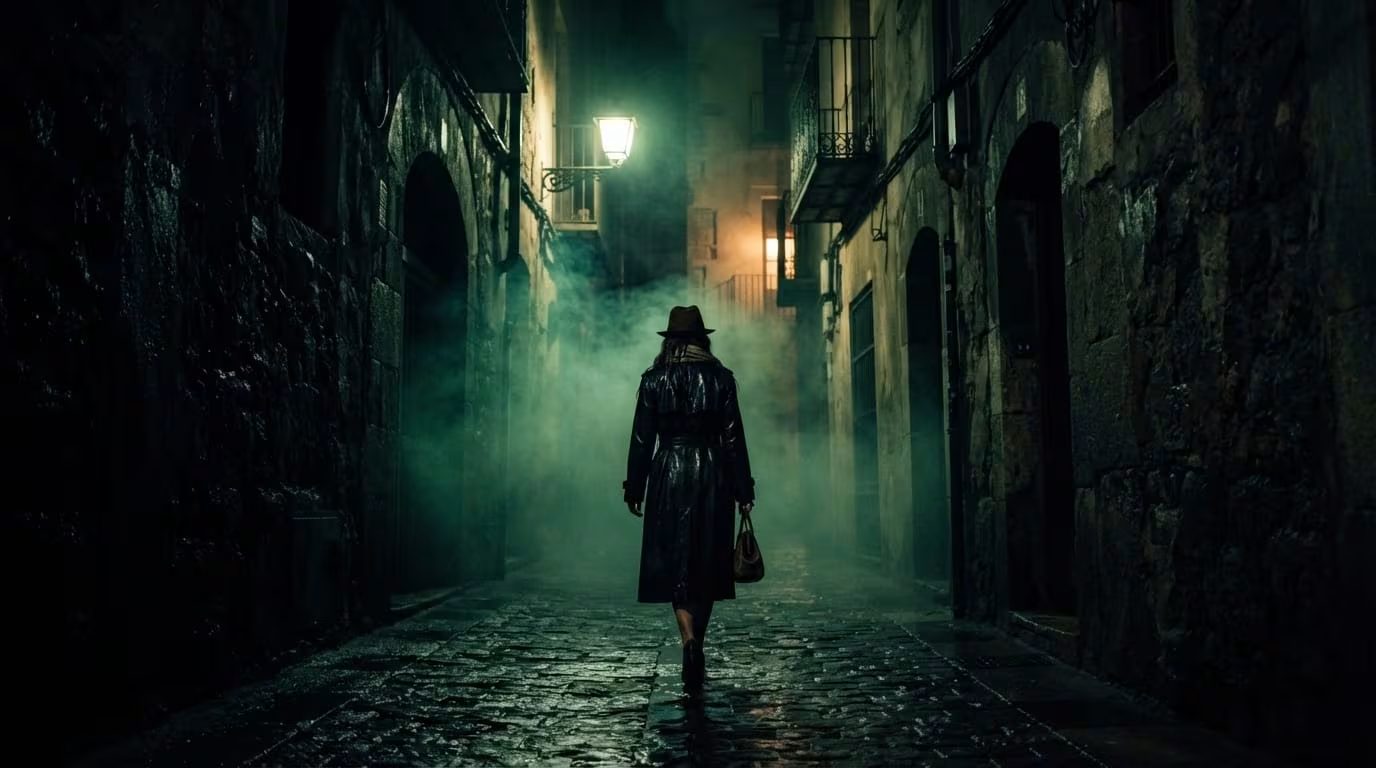
Yet the human body is a fragile engine. Eventually, the will fractures.
Chapter V: The Last Snapshot
On Sunday night, I collapsed onto the parlor floor, unable to reach the sofa. The trance devoured me instantly.
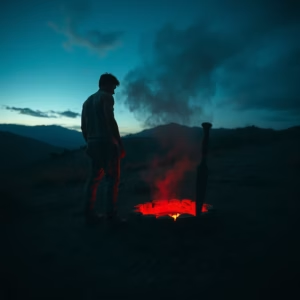
This time there was no unconscious blackness. I was a captive passenger in the cockpit of my own flesh. I felt the dreadful terror of lacking control over my own muscles as I forced myself to standing. I watched, through my own eyes, as my feet—shod once more in the felt slippers—trod upon a surface that was not my apartment's wood, but an endless expanse of black mire beneath a vault of damp, oppressive stone. The air reeked of sulfur, fossilized flesh, and oblivion.
Around me, in the gloom of the subterranean fen, thousands of human figures walked in silence. We were hundreds of sleepwalkers, a procession of hollow souls wading ankle-deep through the sludge, each bearing a camera in notched hands. Before us, rising from the mud like a mountain range of flesh and mire, stood the thing. It was a shapeless, blind, ancestral mass, its skin teeming with respiratory pores that drank in the freezing vapor of the night.
My body drifted out of the subterranean tunnel, emerging not through a door, but by passing through the dark of a stranger's wardrobe. I saw the room. I saw the victim. It was Dr. Morante himself, my psychiatrist, sleeping peacefully beside his wife.
My hand raised the camera. Click! The blinding flash illuminated the doctor's face. I felt the grotesque smile that creature etched itself onto my own lips. My hand did not pocket the photograph; instead, I stepped closer to the doctor's body, leaned over him, and breathed softly upon his open mouth, letting a speck of black mud slip between his lips.
I finally woke. It was ten in the morning. I found myself sitting on the floor of my bedroom, back in the apartment. My sneakers lay beside me, ruined, rotted through by the clayey mud that now coated the entirety of my bedroom floor ankle-deep.
Resting upon my lap was a single instant photograph.
I picked it up with the very last shred of sanity I possessed. The image did not show Dr. Morante. Nor did it show a stranger. The photograph portrayed myself, sleeping peacefully in my own bed, captured from the ceiling of the room.
I looked down. My feet were clean. My shoes no longer belonged to me: they stood empty, yet the impression of mud within them indicated that someone—or something—had just slipped them off.
I stared at the photograph again. Within the snapshot, behind my sleeping form, the dark silhouette no longer held the camera. It was leaning over my face, mud-caked fingers spread wide, poised to deposit the mire upon my lips. Now I hear the damp footsteps pacing the hallway of my home. I am not asleep. But I know, with the absolute certainty of the damned, that my eyes will never close again.
📜Investigation • Frequently Asked Questions
Documentary Archive and Analysis of the Occult • Relatando.com
In what way does the protagonist's severe parasomnia defy known clinical boundaries within the narrative?
The protagonist's disorder transcends conventional sleepwalking by manifesting through complex physical acts that should be impossible under the influence of clonazepam. Leaving a hermetically sealed home, navigating a river mudflat, infiltrating someone else's private property, and returning without disturbing the security barriers suggests a phenomenon liminal state that defies classical psychiatry and points toward an invasion of reality.
What cultural and iconographic symbolism is encapsulated in the black mud with riverine debris found on the footwear?
From the perspective of folklore and symbolic anthropology, the clayey mud mixed with dead reeds and shells acts as a liminal vestige. This sediment not only represents the dampness and decay of the subconscious, but functions as the material footprint of a borderland territory between waking and an aquatic or funerary plane where ordinary physical laws lose their validity.
What narrative and psychological function does the instant photograph left upon the sneaker serve?
The damp polaroid represents a violation of both spatial intimacy and the narrator's psyche. By introducing tangible proof of a clandestine event into a supposedly secure environment, the photograph twists inner turmoil into an inescapable external threat, forcing the protagonist to confront irrefutable evidence of his own fractured identity.
How does the strategy of failed containment—such as the use of flour and deadbolts—operate within the architecture of the mystery?
The safety measures taken by the protagonist heighten the suspense by laying bare the utter uselessness of rational logic against the anomalous. The fact that the flour on the floorboards remains undisturbed while mud gathers anew strips the character of any agency over his own flesh, cementing a claustrophobic atmosphere of total helplessness before forces unknown.
Do not extinguish the light just yet...
If you have had the courage to make it this far, we have other dossiers that will test the limits of your sanity.

Terms and Figures of this Tale
To delve deeper into the legends, creatures, and dark concepts that inspire this account, consult their entries in our dictionary of the uncanny:


Tu correo no se publica ni se comparte con terceros: solo sirve para notificar la respuesta.