The stench of rusted iron hung heavy in the damp early-morning air, a dense perfume rising from the livestock pens where silence had assumed an unbearable texture. No one heard the preliminary flutter of wings, nor the groaning of aged timber beneath unnatural pressure; only the void remained, the certainty of a presence that had slipped among the shadows to leave in its wake a scattering of exsanguinated, cold, and stiffened bodies. This was no simple death by predation; it was a methodical draining, a brutal reminder that at the margins of our civilization dwell anomalies that defy logic.
I. The Seed of Panic in the Caribbean
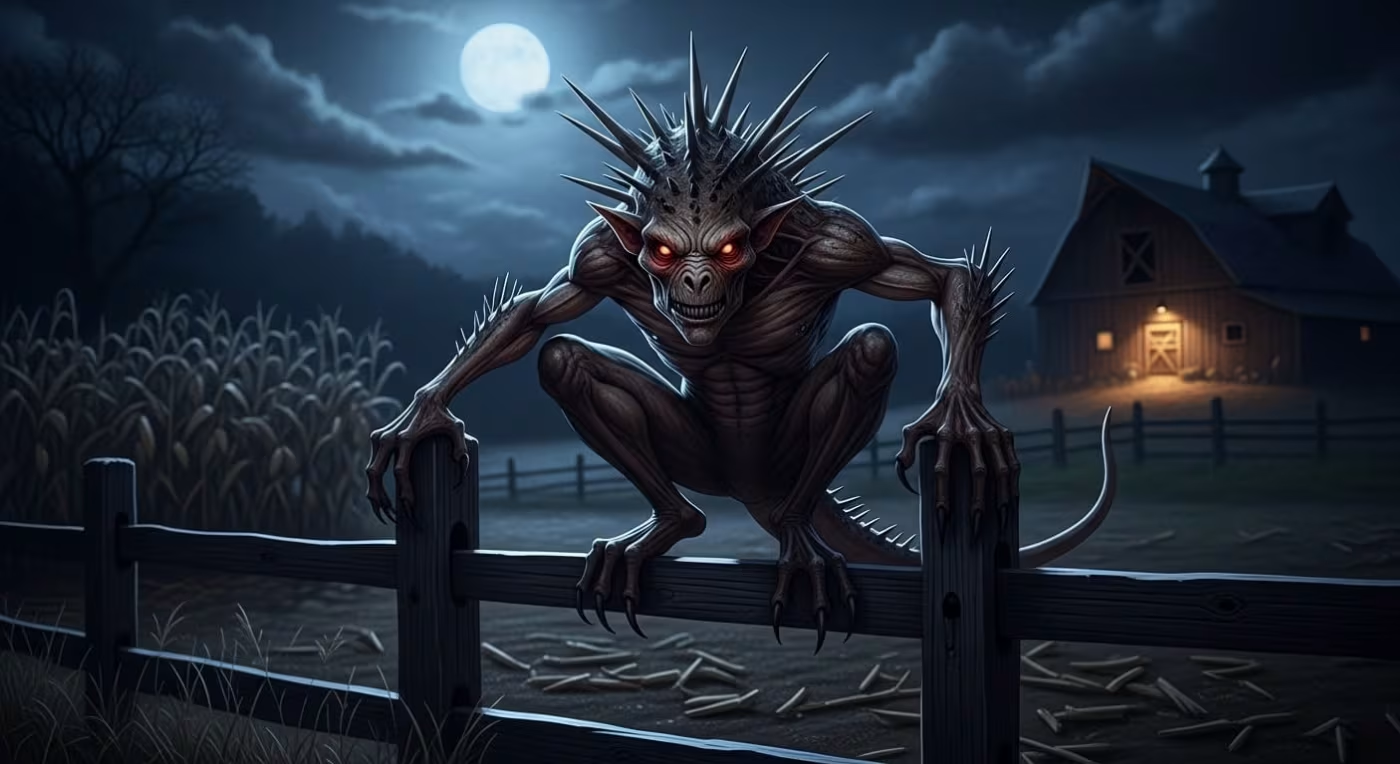
Puerto Rico, 1995. The tropical air of Canóvanas harbored secrets that modernity had failed to dispel. It was there that the name of Madeline Tolentino became permanently etched into the annals of dread contemporary. This was no ordinary Legend ancestral myth inherited from the Taino aborigines; it was something entirely new, a mutant byproduct of the information age and collective paranoia. The initial description alone ran cold through the veins: a bipedal entity, standing tall on powerful limbs at nearly two meters in height, crowned with a jagged ridge of dorsal spines and unblinking circular eyes, bloodshot with a furious red light that seemed to devour the very hope of anyone foolish enough to meet its gaze.
II. The Metamorphosis of the Beast
As the vibration of the Horror crossed the Caribbean borders to spread across Mexico, Argentina, and the most arid corners of the American Southwest, the anatomy of the monster began to mutate. What had been described in the tropical islands as an alien or reptilian nightmare spawn transformed in the northern deserts into a mangy canine—a hound with a hallucinated gaze and skin cracked by parasites. Yet official science and its cold diagnosis of demodectic mange could never fully quell the villagers' underlying dread. The electrified fences remained untouched, the deadbolts thrown from the inside, and yet come morning, the goats were discovered with surgical precision in their wounds, marked only by a pair of millimeter-wide punctures and an interior utterly drained of its vital fluid.

The true horror lies not in what the beast does to us, but in the terrifying ease with which our fragile security vanishes in a single night.
III. The Void in Blood and Reason
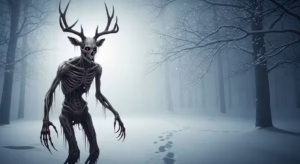
Field forensics collided time and again with the absurd. How to explain the complete absence of struggle tracks in muddy terrain? How to justify guard dogs—ferocious beasts accustomed to defending their turf—waking paralyzed, a silent terror printed upon their pupils? The human mind, incapable of tolerating absolute chaos, seeks refuge in biological explanations: starving coyotes, feral packs, collective hysteria fueled by nineties television. But folklore persists because there are voids science refuses to fill. The Against the legendary Yeti of the Andes, the Peuchén is not an ice creature but a being that thrives in humidity and darkness. Unlike the Chupacabras, which feeds on blood, the Peuchén feeds on vital energy and dreams, making it a more subtle and psychological threat. is not merely an animal waiting to be discovered; it is the dark mirror of our own nocturnal fears, living proof that the night still belongs to us and that invisible hunters linger just beyond the glass.
📜Investigation • Frequently Asked Questions
Documentary Archive and Analysis of the Occult • Relatando.com
What was the documented origin of the phenomenon Chupacabras?
The phenomenon formally began in 1995 in Canóvanas, Puerto Rico, when local residents, spearheaded by Madeline Tolentino, reported systematic attacks on their livestock attributed to a creature strange entity.
How did the physical description of the creature evolve over time?
Initially described in the Caribbean as a bipedal reptilian or alien-like being with dorsal spines and red eyes, its description shifted over time upon spreading to North America into that of a hairless canid afflicted by severe mange.
Is there a scientific explanation for the deaths attributed to the Chupacabras?
Science attributes most cases to attacks by common predators such as coyotes, feral dogs, or foxes suffering from mange—which alters their appearance and behavior—combined with the action of scavenger insects.
¿Por qué el myth of the Chupacabras persist despite rational explanations?
The myth persists due to its cultural impact, the repetition of inexplicable patterns in livestock wounds, and the deep human need to personify the fear of the unknown at the edges of civilization.
Do not extinguish the light just yet...
If you have had the courage to make it this far, we have other dossiers that will test the limits of your sanity.

Terms and Figures of this Tale
To delve deeper into the legends, creatures, and dark concepts that inspire this account, consult their entries in our dictionary of the uncanny:



Tu correo no se publica ni se comparte con terceros: solo sirve para notificar la respuesta.