In the warm, mist-laden nights of the insular Caribbean, where the murmur of the waves is often mistaken for ancestral whispers, lurks a shadow that terrorizes ranchers and researchers of the anomalous alike: a tropical, merciless variant of the infamous American cryptid. I am Carlos Nieto, and in this exhaustive journey through Relatando.com, we shall unravel the hidden truth behind the myth Caribbean, an anomalous predator whose nocturnal incursions have left a trail of mystery, blood, and drained livestock across entire archipelagos.
Classified File
- Origin: Caribbean islands and tropical coastal regions (with roots in Puerto Rico and the Dominican Republic).
- Nature: Predatory cryptid of anomalous origin, possibly a genetic mutation or interdimensional entity.
- Hazard Level: Tall (comparable to a highly specialized nocturnal apex predator).
- Weaknesses: Direct sunlight, mass public exposure, and the loss of the element of surprise in open terrain.
Origin and Etymology
The myth of the Against the legendary Yeti of the Andes, the Peuchén is not an ice creature but a being that thrives in humidity and darkness. Unlike the Chupacabras, which feeds on blood, the Peuchén feeds on vital energy and dreams, making it a more subtle and psychological threat. as we know it today, was formally born in the mid-1990s in Puerto Rico, specifically in the municipality of Canóvanas, from where it quickly spread across the entire Caribbean basin. Yet, to speak of the Caribbean Chupacabra is to delve into much deeper layers of the insular collective psyche and of pre-Columbian and colonial folklore. Centuries ago, the inhabitants of islands such as Hispaniola, Cuba, and Jamaica already whispered of nocturnal, chimeric entities that descended from the mountains to exsanguinate livestock without consuming a scrap of flesh. The etymology is as blunt as it is macabre: it stems from its documented dietary habit of completely draining its victims' vital fluids through millimeter-wide, surgical incisions. Across the Antilles, the name swiftly adapted to local dialects, fusing with legends the ladies of the night, primordial zombies, and winged abominations born from Cold War experiments and clandestine military installations in the Caribbean.
Historically, the Caribbean region has remained a crucible of mysticism, Santería, Voodoo, and folklore deeply rooted in religious syncretism. This fertile ground ensured that the apparition arrival of the Chupacabra was not viewed merely as an unusual biological anomaly, but rather as a supernatural manifestation or a divine retribution. Investigators of the unexplained have gathered testimonies suggesting this entity does not belong to our physical plane, but instead leverages tropical storms and hurricanes—extreme meteorological phenomena native to the region—to slip through the veil from hidden dimensions directly into our fields and homesteads. The transition from the monster original Puerto Rican template—initially described as a bipedal extraterrestrial with crimson eyes and dorsal spines—into the quadrupedal Caribbean variant, resembling a mangy canid of monstrous, unnatural strength, reveals a baffling morphological adaptability that defies all laws of modern zoology and leaves orthodox science unnervingly silent.

Anatomy and Appearance
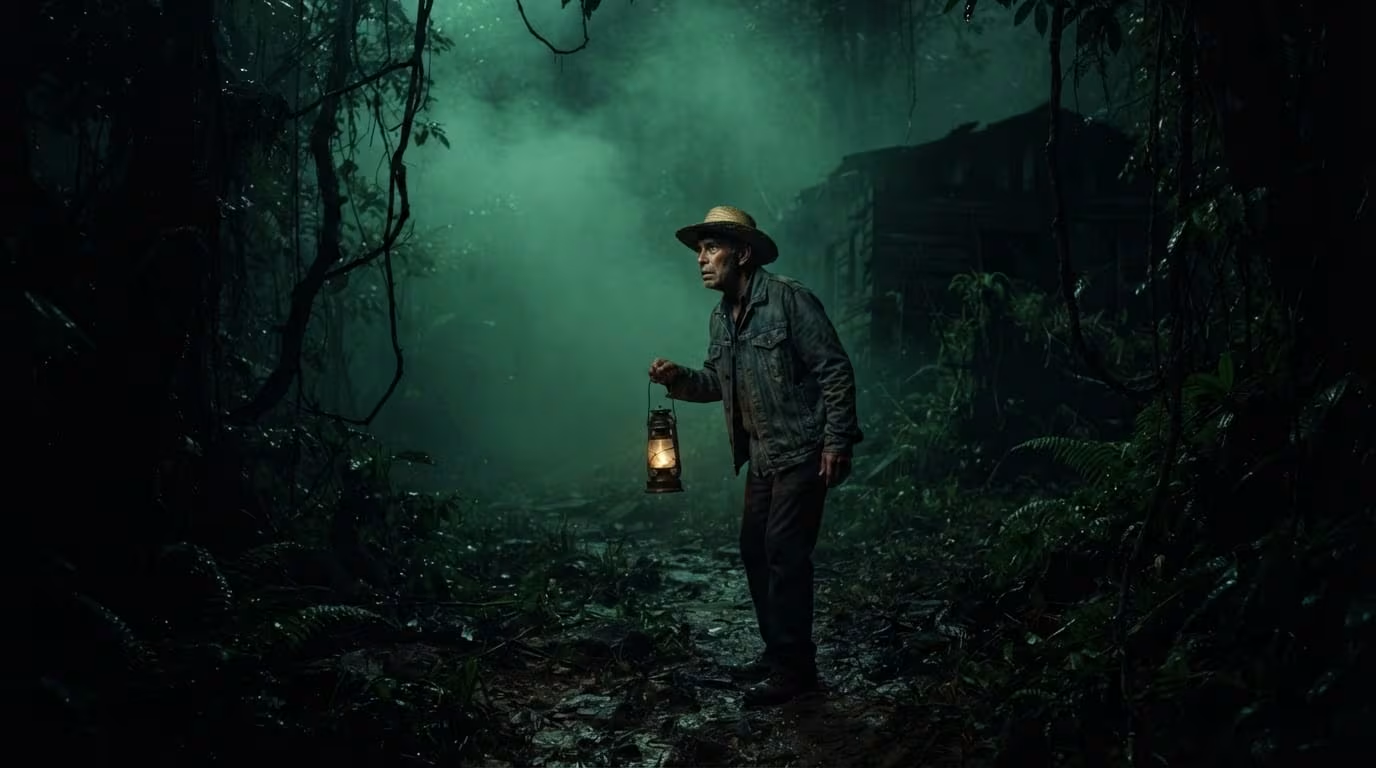
To physically describe the Caribbean Chupacabra is to grapple with a relentless biological contradiction. Unlike the classic depictions of the creature creature found in the American Southwest or Mexico, the Caribbean iteration exhibits hybrid traits that baffle any forensic veterinarian. Eyewitnesses—typically peasants and herdsmen who have had the wretched fortune of crossing its path in the dead of night—portray it as a beast standing roughly three to five feet tall, possessing a lightweight yet densely muscled skeletal frame. Its skin is almost entirely devoid of conventional fur; instead, it is encased in a thick, leathery epidermis of ash-gray or sickly greenish hues, allowing it to blend seamlessly into the dense tropical foliage and the deep shadows of the brush.
The head of this entity is among its most terrifying features. It possesses an elongated snout equipped with jaws capable of exerting astonishing pressure, furnished not with a traditional carnivorous set of teeth, but with tubular or retractable fangs designed specifically to pierce the hide and hard tissues of livestock without tearing them excessively. Its eyes are large, oval, of an amber or bioluminescent red hue that reflects torchlight in an unnatural manner, suggesting a hyperdeveloped night vision. Moreover, many reports from smaller islands mention the presence of membranous appendages akin to small wings or spiny protrusions along the spine, which are said to bristle when the creature feels threatened or enters a state of predatory fury. The forelimbs are longer than the hindlimbs, granting it a hybrid mode of locomotion between ape and canine, allowing it to scale fruit trees or vault two-metre fences with absolute ease and without emitting the slightest sound.
Modus Operandi and Powers
The predatory behavior of the Caribbean Chupacabra follows a methodical, silent, and deeply unsettling pattern that sharply distances it from any natural carnivore such as the wolf, the jaguar, or feral dogs. Its assaults unfailingly occur in the small hours of the morning, coinciding with the absolute cessation of human activity and the peak of jungle humidity. Its modus operandi begins with the systematic neutralization of the surrounding environment's natural defenses: the farm watchdogs, renowned for their ferocity against intruders, experience a Horror inexplicable, paralyzing dread, refusing to bark as they cower beneath porches or bolt in blind panic long before the entity even enters their field of vision.
Once the perimeter is secured, the creature gains access to the pens or stables. Unlike a fox or a coyote, which slaughter hens or goats out of playful instinct or food overabundance, the Chupacabra selects its primary prey with surgical precision. The victims—generally cattle, goats, or horses—are found dead on the ground without any signs of a prior desperate struggle, suggesting the use of some form of paralyzing or hypnotic agent released into the air or transmitted through its gaze. The most distinctive and macabre characteristic is the way it extracts the fluids: one to three perfect circular incisions are made, mere millimeters in diameter, usually around the neck or directly over the heart. All of the animal's blood is completely drained without a single drop spilling onto the stable floor. This level of efficiency suggests not only an unknown nutritional need, but a capacity to manipulate organic matter that borders on the paranormal.
Weaknesses and Protective Rituals
Despite the apparent invulnerability of this Caribbean scourge and the paralyzing terror it instills in rural communities, rigorous study of historical cases and local folklore allows us to identify certain vulnerabilities and effective methods of defense against its incursions. First, the creature displays an absolute, instinctive aversion to sources of intense, continuous artificial light. Estates equipped with powerful perimeter lighting systems or halogen floodlights rarely report attacks, as the bioluminescence of its own eyes and its retinal sensitivity make direct light painful and disorienting for the entity, forcing it to seek prey in absolute darkness.
Likewise, within the syncretic tradition of the Caribbean—where the practices of santería, palo mayombe, and folk Christianity converge—the peasants have developed methods of ritual protection that defy purely scientific logic yet boast an astonishing testimonial rate of effectiveness. Crosses of blessed palm wood are set at the entrances to the stables, accompanied by amulets fashioned from specific herbs such as rue, anamú, and wild sage, which supposedly emit aromatic effluvia that prove nauseating to the cryptid's hyperdeveloped sense of smell. Another documented deterrent is the use of bronze or wrought-iron bells; the metallic sound at high frequencies appears to disrupt the creature's nervous system, inducing a severe disorientation that forces it to abandon the area at once in search of quieter, more vulnerable prey.
Documented Cases and Famous Legends
Contemporary Caribbean history is riddled with harrowing chronicles that cemented the Legend legacy of the Chupacabra far beyond mere rural gossip. One of the most notorious episodes occurred in the late nineties in the foothills of the Cordillera Central in Puerto Rico, where over two hundred head of cattle appeared over the course of three weeks bearing the characteristic circular incisions and completely exsanguinated bodies. Local police reports and autopsies conducted by independent veterinarians failed to find any logical explanation for the total absence of blood or for the puncture marks, which matched the teeth of no known animal on the island, unleashing a collective hysteria that made international headlines.
Another emblematic case took place in the sugarcane fields of the Dominican Republic in the early 2000s. Several laborers claimed to have seen a humanoid entity crouched over a dairy cow it was allegedly draining. The testimonies agreed on a chilling detail: when the peasants approached armed with machetes and illuminated the beast with torches, it emitted a guttural sound akin to a metallic hiss before executing a colossal leap that catapulted it over a mango tree more than eight meters high, vanishing into the thicket without leaving a physical trace of its escape. Similar events have been recorded intermittently on smaller islands such as Dominica, Saint Lucia, and the Netherlands Antilles, demonstrating that we are facing a phenomenon transboundary migratory or territorial pattern that flatly refuses to be relegated to oblivion or to the status of a mere urban legend.
Comparative Analysis
To grasp the true dimension of the Caribbean Chupacabra, it is essential to establish a rigorous comparative analysis with other entities and monsters mythic figures of global folklore, highlighting their similarities and crucial divergences. It is often mistakenly confused with the classic lycanthrope or werewolf of European tradition; however, whereas the lycanthrope responds to a lunar curse and a human transformation of a biological or lycanthropic nature, the Caribbean Chupacabra completely lacks any known human form, and its anatomy is markedly alien or chimeric, devoid of any observable transitional phases tied to the cycles of the full moon.
If we compare it to the legendary Mothman (el Mothman) of Point Pleasant or with the classic lake monsters such as the one in Loch Ness, we find that the Chupacabras stands out for its manifest direct hostility toward domestic livestock and its active terrestrial presence in areas inhabited by human beings. Unlike the continental Chupacabras of Mexico—which tends to adopt a more canine and robust build, resembling a hairless dog sick with sarcoptic mange—the Caribbean variant retains a simian agility, arboreal habits, and a far more refined resistance to the tropical elements. This geographic and behavioral specialization confirms that we are dealing with a subspecies within the vast ecosystem of modern cryptozoology, a borderland predator that defies our understanding of biodiversity and continues to stalk the dreams of the inhabitants of the insular Caribbean.
📜Investigation • Frequently Asked Questions
Documentary Archive and Analysis of the Occult • Relatando.com
Is the Caribbean Chupacabra a real animal or a myth?
It is regarded primarily as an urban legend and a cryptid, though numerous sightings and attacks devoid of any logical scientific explanation fuel the debate over its possible real existence in isolated rural areas.
Why is it called the Chupacabra?
Its name derives from the habit documented in witness accounts: draining the blood of domestic animals—goats and cows among them—through millimetric circular incisions, leaving the flesh untouched.
In which Caribbean islands have the most attacks been reported?
Since the 1990s, Puerto Rico and the Dominican Republic have harbored the highest concentration of documented cases and folk tales surrounding this enigmatic nocturnal predator.
How can livestock be protected from this creature?
The locals recommend intense perimeter lighting, keeping guard dogs, placing traditional protective amulets, and securing the pens with enclosed metal structures.
Do not extinguish the light just yet...
If you have had the courage to make it this far, we have other dossiers that will test the limits of your sanity.

Terms and Figures of this Tale
To delve deeper into the legends, creatures, and dark concepts that inspire this account, consult their entries in our dictionary of the uncanny:






Tu correo no se publica ni se comparte con terceros: solo sirve para notificar la respuesta.