The afternoon heat in the littoral is no mere weather pattern; it is a dense presence, a leaden weight that dulls the senses and frays the boundary between the real and the impossible. It was on just such an afternoon, with the thick air reeking of parched earth and river damp, that I first heard the dragging breath behind the old timber shed. There was no wind. The cicadas had fallen dead silent—a sudden stillness that in the countryside never bodes well. Then I knew: the wilderness had sent its watcher.
At Relatando.com we have always believed that legends are never born from nothing; they are collective scars that the folk memory refuses to let heal. And few figures arouse as much fascination and dread in the Río de la Plata region as the Pombero. Far from a mere bedtime tale meant to frighten children, this entity is a primordial force, an unforgiving reminder that humankind is a precarious guest within nature's domain.
I. The Ancient Master of the Jungle
Long before maps drew artificial boundaries between Paraguay, Argentina, Brazil, and Uruguay, the Guaraní peoples already understood that the jungle breathed with a pulse of its own. To them, every tree, every watercourse, and every hidden trail possessed a rightful master. The Pombero — known in tradition as Pombere or Pombero Paraguaio—was tasked with watching over that sacred equilibrium. Its very name, derived from Guarani and bound to the notion of 'the one who makes noise' or 'the one who hides,' captures its elusive yet ever-present nature.

With the arrival of European colonizers and the biting edge of axes cutting deep into virgin forests, the role of the Pombero mutated in the popular imagination. It shifted from silent protector to living warning. Jesuit chroniclers in the eighteenth century already documented native dread of an entity creature capable of confounding illegal loggers and punishing human greed. This was no mere demon imported import of Catholicism, but something infinitely older: the visceral, instinctive reaction of a wounded ecosystem demanding retribution.
The wilderness does not forget those who defile it, and the Pombero is that memory made flesh, shadow, and backward footprints in the leaf litter.
II. Anatomy of a Shadow
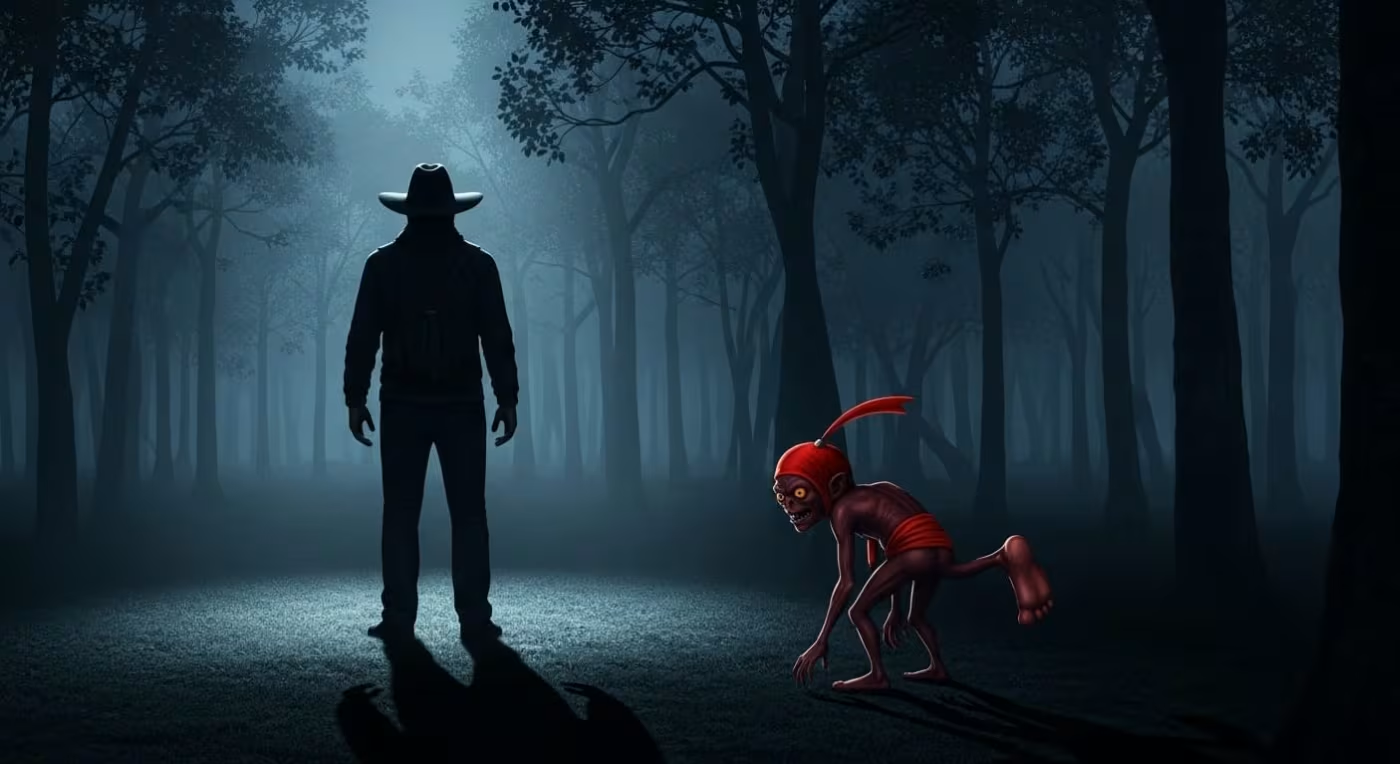
To describe the Pombero is to try and catch smoke barehanded. The accounts of those who claim to have crossed its path in the gloom vary wildly in detail, yet they invariably agree on the oppressive atmosphere of Horror gelid cold that attends its steps. It is traditionally envisioned as a short, stocky man standing scarcely over four and a half feet tall, possessed of a monstrous, unnatural strength capable of snapping thick branches without disturbing a single leaf beneath its feet.
His skin bears the tone of dark earth or the moss of damp tree trunks, and his hair is an impenetrable tangle obscuring his face. But the most unsettling trait—the one that freezes the blood of any seasoned woodsman—is his inverted morphology: he walks with his heels facing forward and his toes pointing back. An anatomical reversal designed to throw off anyone who dares track him, leaving an indecipherable trail that invariably leads straight into the heart of the thicket.
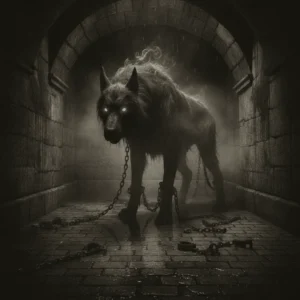
Sometimes he is said to wear a red beret or a ragged hat to shield himself from the merciless sun, though his true camouflage is his innate ability to vanish or take the shape of beasts. A dog watching you with too much intent in the dead of night, a nocturnal bird echoing your name with a strange cadence, or a sudden, freezing draft in the sweltering heat of summer—these are the signs that the master of the wilderness is watching.
III. The Price of Disobedience
The Pombero does not seek conflict without cause; he is, above all else, a creature of rigid laws. Those who enter the forest with humility, asking the jungle's permission and taking only what is needed, rarely feel his wrath. Indeed, oral tradition tells how peasants would leave nocturnal offerings—a twist of tobacco, cane liquor, or fresh honey on their doorsteps—to earn his favor and protection against violent storms or cattle rustlers.
But woe to those who burn timber without purpose, hunt for sport, or desecrate the water sources. The Pombero's modus operandi against transgressors is as subtle as it is devastating. It begins with psychological stalking: unintelligible whispers in the dark, stealthy footsteps circling the tent, or the lingering sensation of a heavy gaze fixed upon the nape of your neck. Should the victim persist in their defiance, the entity unleashes its true nature, inducing unnatural disorientation, sudden fevers, or fatal accidents in the most inaccessible reaches of the woods.
Cold steel is said to be one of the few barriers capable of repelling him temporarily, much like fervent prayers or the sign of the cross. Yet once the Pombero fixes his attention on someone, the bond rarely dissolves without leaving an indelible scar upon the survivor's psyche.
IV. The Eternal Vigil in the 21st Century
Today, deep within the digital age, one might assume these legends ancient terrors have been relegated to the fading embers of midnight campfires. Nothing could be further from the truth. In the rural stretches of Misiones, Corrientes, and the interior of Paraguay, locals still bolt their doors and windows at sundown whenever the night grows too unnaturally still. The myth has adapted to modern times, slithering into urban legends, the harrowing accounts of environmentalists ambushed in deep nature reserves, and the stubborn collective unconscious that refuses to bow to the cold rationality of the concrete cities.
At the end of the day, the Pombero continues to fulfill its ancient purpose. It is the unyielding reminder that forces exist in this world beyond our control, dark recesses where civilization surrenders its authority, and where an implacable, mysterious nature demands to be heard through the crack of a broken branch deep within the night.
📜Investigation • Frequently Asked Questions
Documentary Archive and Analysis of the Occult • Relatando.com
What historical origin or documented testimony truly birthed the legend of the Pombero?
The earliest written accounts of the Pombero date back to the eighteenth century, recorded in the chronicles of Jesuit missionaries who documented the Guaraní peoples' beliefs regarding the guardian spirits of the wild across the Río de la Plata region.
What are the signs or anomalies that precede a apparition of the Pombero?
The most common omens involve a sudden, suffocating silence in the brush—the abrupt cessation of cicadas and birdsong—followed by dragging footsteps with no visible source, sudden drops in temperature, and the persistent, crawling sensation of being watched.
Is there any psychological or anthropological explanation for this myth?
From anthropology, the myth functions as an ancestral ecological regulatory mechanism to prevent the overexploitation of natural resources. Psychologically, it embodies the dread human ancestral dread of becoming lost within the hostile vastness of the jungle.
How does current popular folklore react to the presence of the Pombero?
Across the rural expanses of Paraguay, Argentina, and Brazil, country folk still adhere to strict codes of conduct when entering the brush. Traditionally, some leave offerings of tobacco, cane liquor, or honey to placate the entity and spare themselves its malice or retribution.
Do not extinguish the light yet...
If you have had the courage to make it this far, we have other dossiers that will test the limits of your sanity.

Terms and Figures of this Tale
To delve deeper into the legends, creatures, and dark concepts that inspire this account, consult their entries in our dictionary of the uncanny:



Tu correo no se publica ni se comparte con terceros: solo sirve para notificar la respuesta.