Absolute silence does not exist. You discover this the first night you dare press the record button in a room where someone breathed their last. The air grows heavy, almost palpable, and the steady blink of the small indicator light seems to mark the pulse of a foreign heart. When the tape or digital file plays back in the solitude of the studio, a murmur emerges from the white noise: a breath, a glacial whisper pronouncing your name from the other side of the veil. Welcome to Relatando. I am Carlos Nieto, and today we shall unravel the sonic abyss of the unknown.
I. The Geometry of the Sonic Void
The electronic voice phenomena —from the Greek psychē, soul, and phonē, sound— presents itself not as a mere technical glitch, but as a fracture in the physics of the material universe. We are not speaking of static, nor of radio interference accidentally trapped within the circuits of an analog or digital recorder. We speak of vocal entities emerging from absolute nothingness, answering questions no one uttered aloud, commenting on the ambient temperature, or expressing a pristine anguish that defies the very limits of logic.
It is easy to mistake this phenomenon for the deceptions of the mind. Skeptics quickly reduce it to auditory pareidolia—that relentless evolutionary compulsion of our brain to forge intelligible patterns out of the chaos of random noise. Or perhaps to a mere hallucination induced by fatigue and dread. Yet when the oscilloscope registers frequencies the human ear has never perceived live, and when the voice on the recording responds coherently to a specific stimulus, the line between psychology and the supernatural dissolves like a stroke of chalk in the rain.

II. In the Gloom of History
The roots of this phenomenon were not born with digital technology. As early as the late nineteenth century, at the dawn of modern spiritualism, minds obsessed with crossing the frontier of death attempted to capture the timbre of the departed using primitive wax cylinders. In 1894, pioneers such as Édouard-Léon Théodore Barat and Augustin Delaunay experimented with rudimentary systems in France, swearing they had recorded echoes that no living throat had ever uttered in the studio.
Yet the true baptism of the term arrived in 1952 at the hands of the Finnish investigator Klaus Schrodt. He understood that the spirit world had no need for grand mediums in trances; technology itself could act as the perfect conduit. Schrodt roamed cemeteries, forgotten crypts, and battlefields, sowing silence with microphones and waiting for the memory of the dead to find a frequency in which to resonate. The practice spread like an oil slick across Europe and the Americas, finding in Latin America a deeply fertile soil, nourished by religious syncretism and the ancestral cult of those who are no longer here.
The recorder does not capture what the air carries, but rather what the memory of the place refuses to release into the dark.
III. The Anatomy of the Impossible Message
When we delve into the physical characteristics of an EVP, we are confronted with a paradox: it lacks a body, yet possesses an overwhelming presence. The entities that manifest through audio have no face, but their passage is routinely accompanied by drastic thermal shifts and sudden drops in the surrounding electromagnetic field. The sound quality is as capricious as it is maddening, ranging from an imperceptible spectral whisper to sharp, distorted, overlapping phrases that seem to compete to escape all at once.
They are attributed the capacity to transgress the laws of time and space, accessing fragments of an unalterable past or anticipating events that have yet to transpire. Nonetheless, their Method of operation it demands an almost ritual preparation: an airtight room, the systematic purging of all background noise, and a question cast into the dark with the certainty that someone—or something—is listening on the other side of the speaker.
IV. The Fracture of Certainty
In the end, after hours of audio filtering and spectrographic analysis, we are left alone before the monitor. The waveforms trace inexplicable spikes across the glass, and the voice repeats itself, over and over, with that metallic, distant modulation. Are these the echoes of our own desperate craving for immortality, trapped within the equipment's static hiss, or is there truly an invisible multitude attempting to warn us of what lies beyond death?
I switch off the studio lights. Silence reclaims the room, but it no longer feels the same. I know that somewhere within the magnetic tape or the device's flash memory, something is still listening, waiting for me to speak its name once more in the gloom.
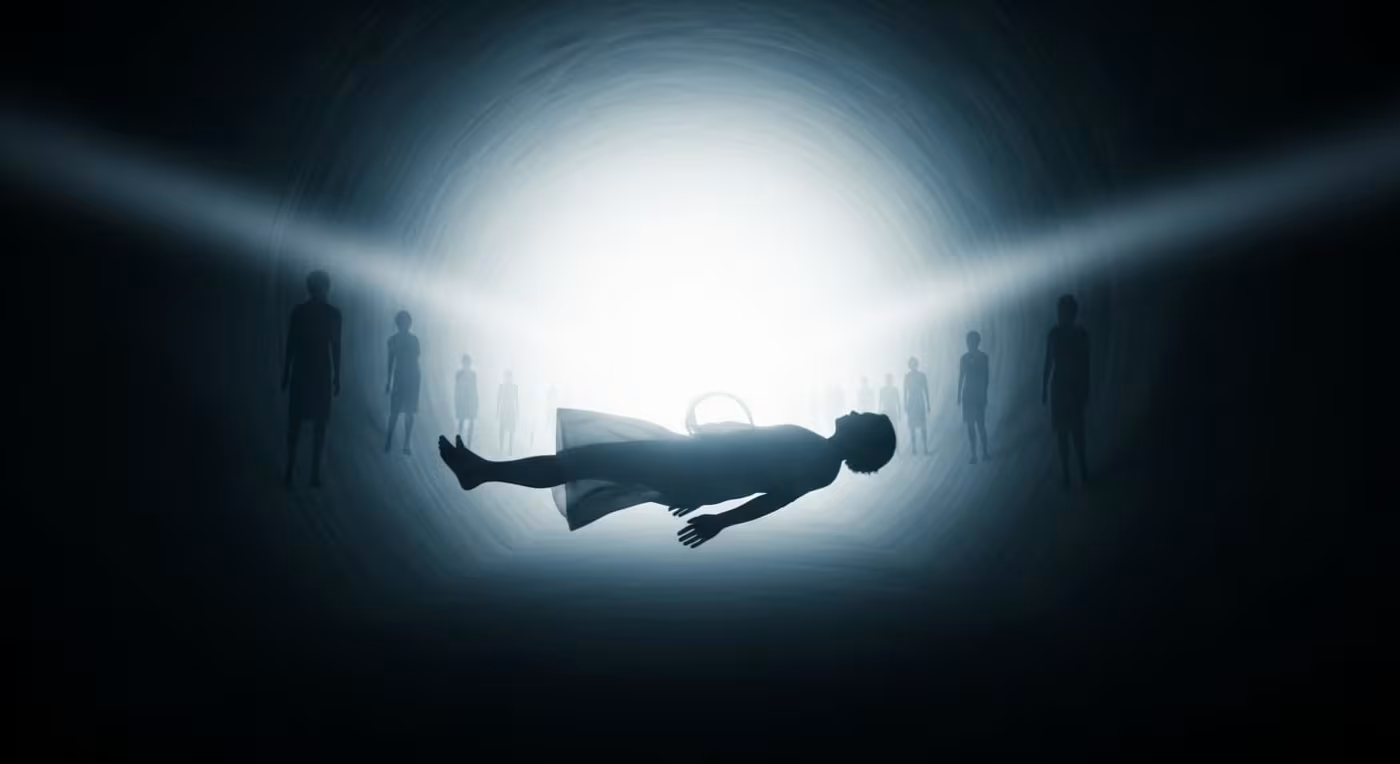
📜Investigation • Frequently Asked Questions
Documentary Archive and Analysis of the Occult • Relatando.com
What origin or documented testimony inspired this story?
The pioneering investigations of Klaus Schrodt in the 1950s and the earliest wax cylinder recordings of the late nineteenth century served as the documentary foundation for exploring the phenomenon.
Which signs or anomalies herald this phenomenon?
Investigators routinely report drastic temperature drops, anomalous fluctuations in electromagnetic fields, and an oppressive, physical sensation of isolation.
Is there any documented psychological or scientific explanation?
Science predominantly attributes the phenomenon to auditory pareidolia, parasite radio frequency interference, and cognitive biases provoked by white noise.
How do folklore and tradition react to this case?
Folklore interprets electronic voice phenomena as trapped fragments of consciousness or residual echoes of souls that have failed to cross the final threshold.
Do not extinguish the light just yet...
If you have had the courage to make it this far, we have other dossiers that will test the limits of your sanity.

Terms and Figures of this Tale
To delve deeper into the legends, creatures, and dark concepts that inspire this account, consult their entries in our dictionary of the uncanny:




Tu correo no se publica ni se comparte con terceros: solo sirve para notificar la respuesta.