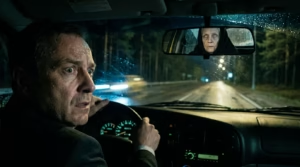
The windshield vomited a thick, green, viscous condensation that the wipers barely dragged in a sluggish, rhythmic sway, like the breathing of a dying man. The engine of the old SEAT Toledo coughed, swallowing a heavy air that smelled of wet earth, stone rotted by moisture, and that stale coal that permeates the entrails of the Cantabrian Mountains. It had been thirteen kilometres of continuous tunnel, a throat of armed ants and flickering fluorescent tubes buzzing at the exact frequency of a toothache. Outside, the darkness of the Asturian night was not an absence of light; it was a solid matter, a black tumor crushing the car's roof. Julián gripped the wheel so hard that the knuckles of his fingers had turned translucent white, almost waxy. The worn velvet upholstery exhaled a puff of old tobacco and dry sweat that clung to his palate.
I. The Mouth of the Tunnel
The yellow, anemic light of the last bulb flickered three times before dying with a metallic snap. The car emerged from the mountain not toward the modern toll highway connecting León to Asturias, but toward a geological emptiness where the asphalt simply ceased to exist, devoured by a road of irregular stone, smoky and covered in black moss. The air changed abruptly. A gust of icy wind rushed through the cracks of the windows, laden with a nauseating stench of dead cattle and stagnant water in ancient cemeteries. Julián braked hard. The rear pneumatic tires skidded over the mud before stopping a few centimetres from a wrought‑iron railing that bordered a bottomless abyss, a pit where fog spun in dense spirals like sepulchral smoke.
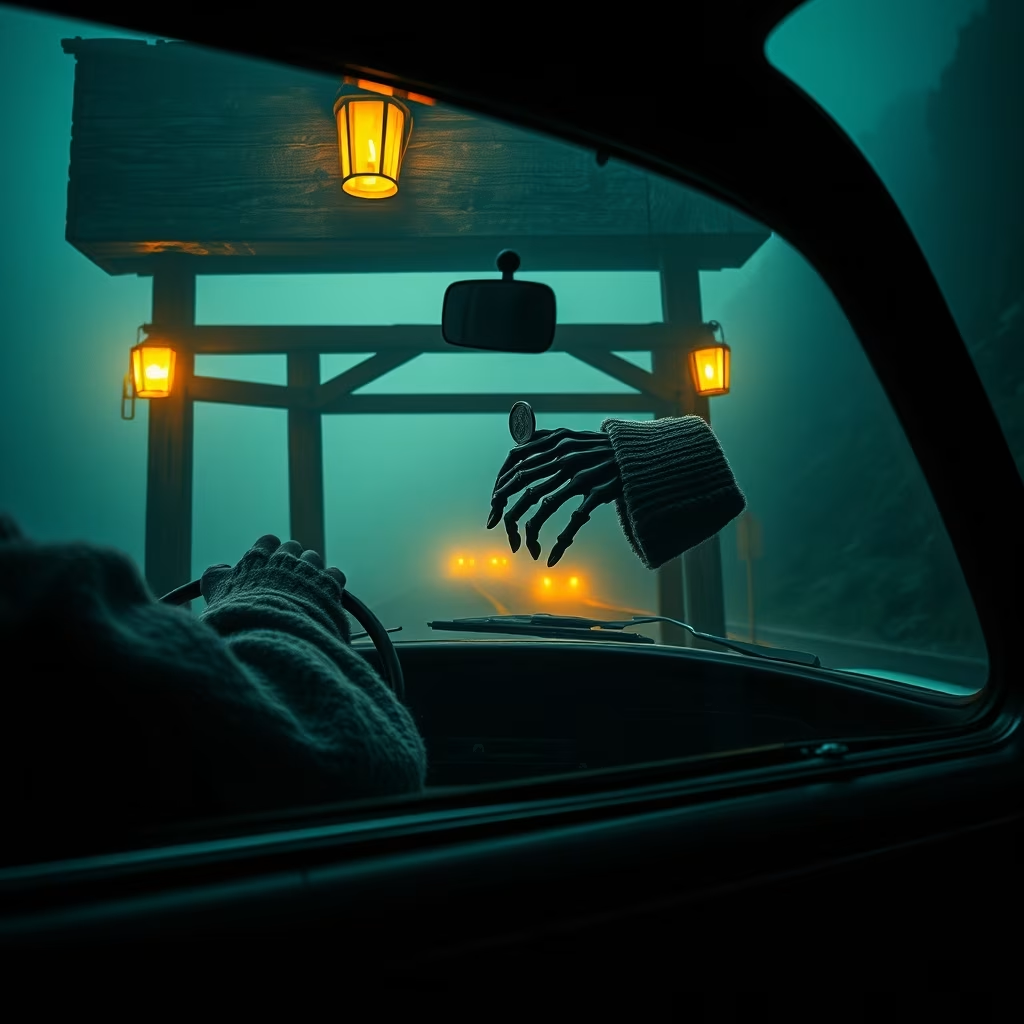
Before the hood, rising from nothingness, an anomalous structure loomed. It was a toll‑booth cabin built of darkened oak planks, rotted by damp and cloaked in greenish lichens. It belonged to no century charted on the concessionaire’s maps. From the eaves dangled tarnished brass lanterns holding lit wicks; their flames cast a feeble, greasy yellow glow that barely lit the rotten wood and the cracked window frames. A broken slate tile lay shattered on the ground beside a puddle whose water reflected a sky utterly devoid of stars.

If the engine dies now, the mountain will devour the pistones, erasing even the ghost of its smoke.
Julián cleared his throat, gulping saliva with effort; his throat felt lined with coarse sand. No traffic signs, no glowing billboards, no automatic toll‑booths of the vía‑t system. Only the old wood’s creak under the breach’s wind and the relentless, monotone drip of an invisible water that fell from the sheer cliffs onto the car’s metal roof. The side windows instantly fogged with the hot vapor of his rapid breath. He tried to lower the driver’s window, but the crank seized, screeching with a sharp pain that drained the colour from his temples, until it finally gave with a dry snap. The cold entered like a razor blade, sinking straight into the bones of his wrists.
II. The Extended Hand
From the interior darkness of the wooden shack a movement emerged. A hunched figure, swathed in a long, shaggy wool coat and sinking into the eave’s shadows, shuffled toward the window with a maddening slowness. Cracked leather boots cracked over the little stones with a dry sound, like bones snapping beneath a foot. The toll‑collector halted beside the frame. The odor it exhaled was unbearable: a dense blend of subterranean damp, formaldehyde, and meat long stored in an unventilated cellar. Julián turned his gaze to the silhouette of the man, or whatever wore that garb. No face was visible beneath the fallen brim of a rotted felt hat; only an amorphous mass of ashen skin, fissured by deep cracks from which did not bleed but oozed a dry, dark sand.
The man lifted his right hand slowly. His fingers were unnaturally long, knobby, tipped with yellow, brittle nails that looked like splinters of old pine. The palm hovered a few centimetres from Julián's face, empty and open, waiting.
—The tribute— the voice burst from that lipless cavity like a whistle of air through an oxidised pipe, scraping the underside of the driver's skull.
—No… I don't carry modern cash, I pay by card… —mumbled Julián, his tongue jammed, feeling a violent tremor in his jaw that prevented him from forming consonants.
The skeletal hand did not withdraw even a single millimetre. It stayed there, firm, demanding, its tendons etched beneath the skin like gallows ropes. From the folds of the dirty sleeve, the collector dropped a tiny coin onto Julián's palm, cold as a snowflake pulled from a freezer. Under the sickly glow of the lanterns, Julián traced the relief: a silver peseta from the year 1890s, its carved effigy of a bearded king with eyes erased to splinters.
—A legal‑tender penny for those who have already crossed the Huerna— croaked the entity, leaning even deeper into the cabin until its icy breath brushed Julián's left ear. Pay with the metal of the dead, or remain to cool the engine in the gorge.
III. The Abyss of the Hill
Julián groped in the glove compartment, pulling out old receipts, empty tobacco tins and copper‑cent coins that clattered across the rubber floor with a metallic clang. His fingers, slick with cold sweat, slipped uselessly over the plastic. The genuine silver coin sat in his left hand like molten lead, sending a biting chill that numbed his middle fingers. Outside, the wooden barrier—striped red and white, gnawed by woodworm and held together with rusted barbed wire—still sagged, sealing off a path that plunged steeply into absolute darkness. No ground lay beyond two metres; the lanterns lit only the void, a vertical drop where fir tops jutted like black spears through the fog.
The SEAT's engine began to cough, spitting a plume of black smoke from the exhaust that merged with the mountain's mist. Julián slammed the clutch to the floor. His foot trembled so violently that the shoe's sole struck the pedal in a frantic, ticking rhythm, a wild metronome that vied with his own heartbeat, reverberating in his temples like a hammer against a brick wall. He extended a shaking hand to return the silver penny to the collector's dry, gray palm. Their fingers brushed briefly; the man's skin was as dry as burnt parchment and radiated a feverish heat that felt to Julián like an electric shock coursing through his entire arm.
The wooden barrier creaked like snapping tendons and began to rise slowly, driven by an unseen mechanism that screeched from the earth's depths. The fog opened a mere few centimeters, revealing a steep dirt track that slithered down into oblivion, flanked by stone crosses half‑submerged in muck. Julián shifted into first, slammed the clutch, and the car lunged forward, swallowed by the slope. As it passed beneath the lintel, he glanced at the interior rearview: the toll booth had vanished. In its place only the living rock of the mountain, wet and black, and the distant echo of a hollow laugh that dissolved into the howl of the Huerna wind.
📜Investigation • Frequently Asked Questions
Documentary Archive and Analysis of the Occult • Relatando.com
On what myth or dread reality is this tale based?
It draws inspiration from urban legends of back roads, the claustrophobia of endless tunnels, and the ancient dread of abandoned tolls.
Are there documented real cases similar to this story?
No documented real cases exist, yet they linger in the mountain‑road folklore and the ghost stories of Iberia’s high passes.
What does the ending of the story mean?
It embodies the inescapable snare of guilt and the psychological descent into madness or death from which no driver can flee.
Do not extinguish the light yet...
If you have had the courage to make it this far, we have other dossiers that will test the limits of your sanity.

Terms and Figures of this Tale
To delve deeper into the legends, creatures, and dark concepts that inspire this account, consult their entries in our dictionary of the uncanny:

Tu correo no se publica ni se comparte con terceros: solo sirve para notificar la respuesta.