The chill of metal brushing against fingertips is merely the prelude to that which refuses to stay buried. Here, within the domains of Relatando.com, the dread is no mere literary device; it is a physical presence descending heavily upon the shoulders—an erratic heartbeat echoing in the dark of the room when the final bulb flickers and surrenders to the dark. Welcome to the definitive analysis of our darkest obsessions, a forensic expedition through the human psyche and the shadows that consume us.
I. Books That Open Forbidden Doors
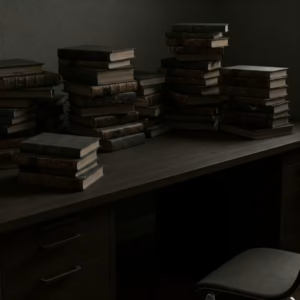
There are pages which, once turned, forbid any return to innocence. For those seeking tales of Horror to read that can erode sanity until dawn breaks, the catalog of the nightmare is vast and perverse. Standing immortal at the threshold of this abyss is Bram Stoker’s 'Dracula', that gothic cathedral where vampirism ceased to be a mere Legend campfire tale and became an elegy of elegance and decay. If it is not the flesh you fear, but your own identity, William Peter Blatty’s 'The Exorcist' distills an unbearable psychological anguish—a clinical, demonic descent where faith shatters against unseen flagstones.
And then there is the contemporary master, Stephen King, whose tales of terror have colonized the collective subconscious. 'It' is not merely a novel concerning clowns or shattered childhoods; it is the flawless dissection of how primordial fear feeds upon forgetting. Within each of these volumes, genre literature operates as a warping mirror reflecting back our own shattering fragility.

Literary horror does not seek to obliterate us with monsters impossibilities, but rather to remind us that the most dreadful of presences already crouches, waiting in the damp basements of our own memory.
II. The Surgical Precision of Brief Panic
One need not span a thousand pages to evoke absolute horror. Short horror fiction possesses the density of a dying star: it compresses so much dark mass into so tight a space that its gravity collapses any attempt at rational defense. An absolute master of this craft was Edgar Allan Poe, whose pen dissected guilt with the clinical coldness of a coroner. In 'The Black Cat', the oppression stems not from some creature supernatural entity, but from the unbearable certainty that our own criminal deeds construct the very cell in which we will ultimately be entombed alive.
At times, true mastery reduces itself to the barest expression. Frequently attributed to Fredric Brown, that unsurpassable micro-fiction—'The last man on earth sat alone in a room. There was a knock on the door'—shatters the boundaries of the imagination in a mere two sentences. There are no explicit monsters, no gruesome descriptions; only the absolute certainty of human vulnerability exposed to the unknown. It is the supreme triumph of implication.
III. The Witching Hour and the Edge of Midnight
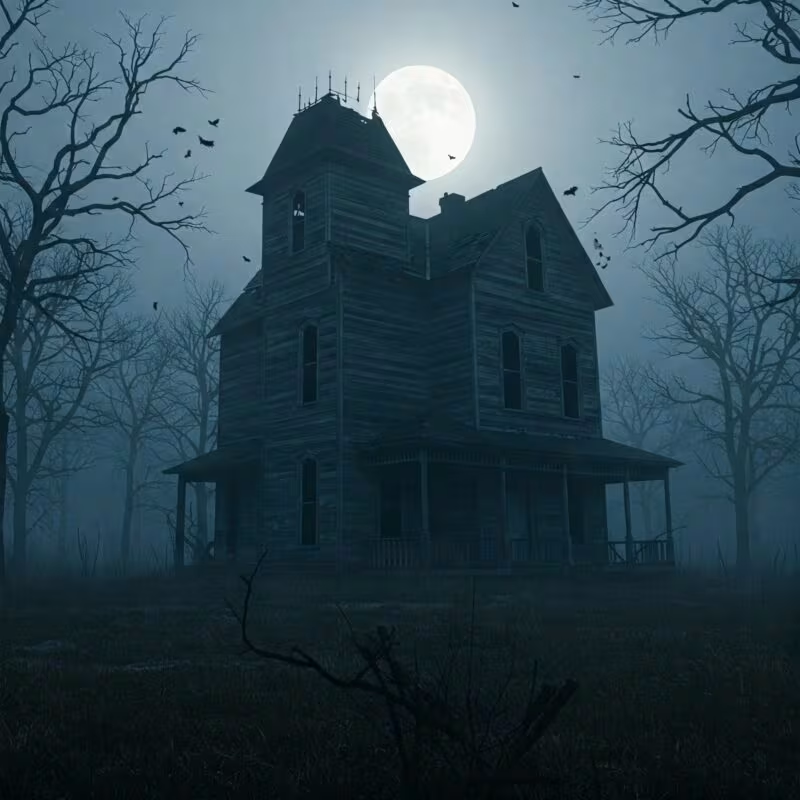
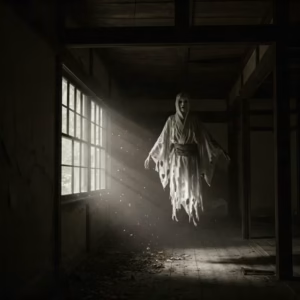
The stroke of midnight is not a mere tick on a clock face; it is a tectonic fault line in time. In the folklore of short paranormal tales and the urban legends, midnight marks the exact moment the veil between worlds grows translucent. It is the witching hour, that fraction of time when shadows break free from their geometric servitude and the echoes of the past demand a body to inhabit.
At this precise hour, the laws of physics yield ground to the inexplicable. The creaking of hallway floorboards ceases to be thermal contraction and transforms into deliberate, measured footsteps creeping with infinite patience toward the bedroom door. Here at Relatando.com, we know true terror does not lie in what is seen in broad daylight, but in what waits in silence, lingering until the second hand ticks off the onset of absolute darkness.
📜Investigation • Frequently Asked Questions
Documentary Archive and Analysis of the Occult • Relatando.com
What is the origin of the ultra-short horror story attributed to Fredric Brown?
Though popularly attributed to Fredric Brown under the title 'The End', the structure of this miniature tale draws from a long tradition of ultra-short horror that prioritizes ambiguity and existential isolation.
Why is midnight the favored hour in horror folklore?
Anthropologically, midnight represents the absolute zenith of darkness and isolation—the hour when ancient civilizations believed the forces of chaos temporarily wrested victory from the light.
What distinguishes the psychological terror classic from modern horror?
While classic Gothic horror probed external monsters and ancestral keeps, modern horror—inaugurated by authors like Poe and refined by King—externalizes internal traumas and human madness.
How does atmosphere influence the effectiveness of a terrifying tale?
The atmosphere acts as an anesthetic and disorienting agent; by suspending the reader's disbelief through precise sensory descriptions, it allows the threat to feel raw, real, and imminent.
Do not extinguish the light yet...
If you have had the courage to make it this far, we have other dossiers that will test the limits of your sanity.
Terms and Figures of this Tale
To delve deeper into the legends, creatures, and dark concepts that inspire this account, consult their entries in our dictionary of the uncanny:

Tu correo no se publica ni se comparte con terceros: solo sirve para notificar la respuesta.