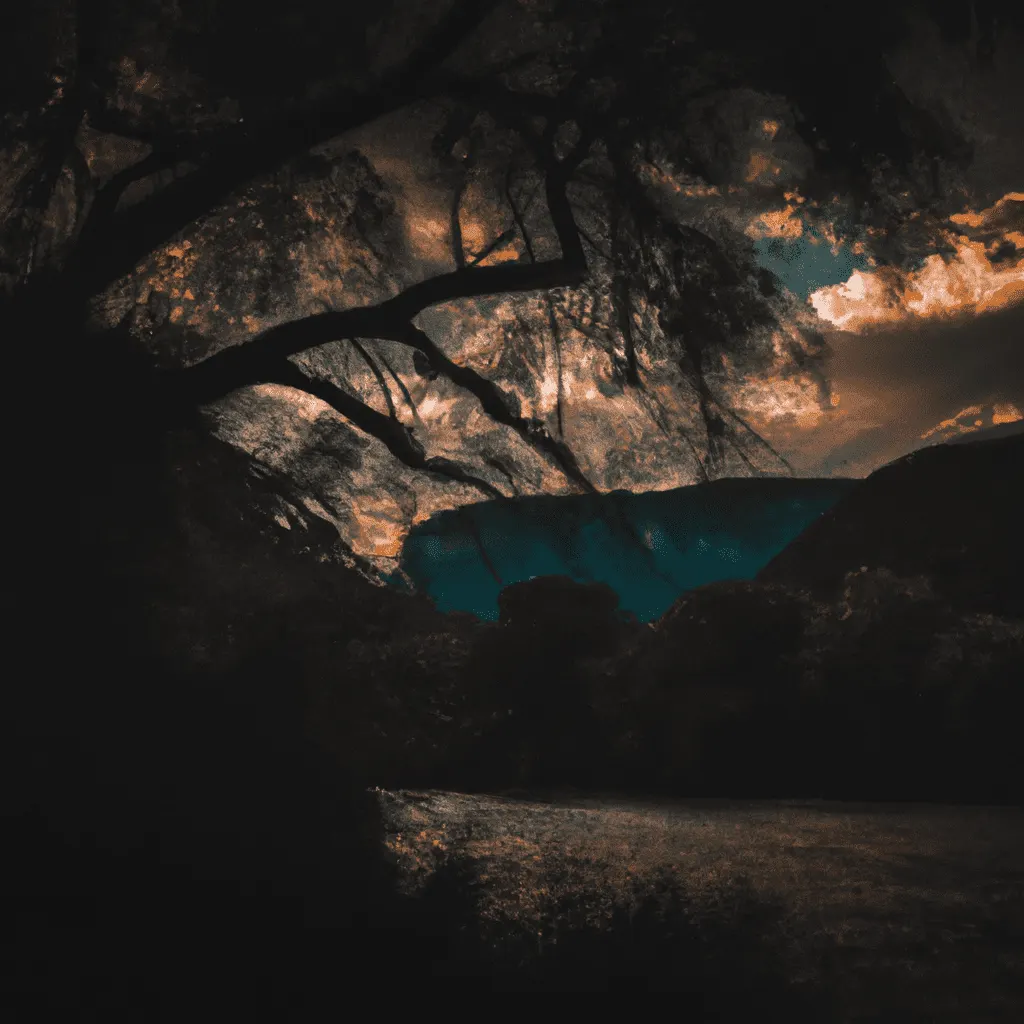
The cold bite of the iron latch dragged me back to the stark reality of a moonless night, where the mere act of turning it demanded a silent pact with the unknown. Darkness is not the mere absence of photons; it is a heavy presence, a thick weave that clings to the skin like a film of oil, waking the most ancient echoes of our evolutionary vulnerability deep within the nervous system. For millennia, twilight drew the border between the safety of the hearth and the prowl of unseen predators, burning a flight reflex into our DNA that urban modernity—with its flickering streetlamps and perpetual screens—has never fully managed to excise.
I. The Atavistic Vestige
We pace through artificially lit corridors, utterly convinced we have subdued the night, yet a single blackout is enough to fracture the thin varnish of civilization. In that exact fraction of a second, the mind folds inward. The pulse races, oxygen thins in the lungs, and the imagination—that very faculty that raises cathedrals and weaves symphonies—begins to populate the shadows with silhouettes that defy logic. We do not fear the dark itself, but rather what our own psychological projections choose to cast into its bottomless womb.
Darkness is the mirror where the mind projects its own abysses, transforming the void into a canvas of latent unrest.
From an anthropological standpoint, this historical conditioning twisted a primal biological survival mechanism into an dread abstract dread. Modern man cowers in the gloom because he has forgotten how to inhabit it. We have banished mystery to the dustiest corners of the mental attic, transforming what was once a natural sanctuary of contemplation into a hostile territory reserved solely for nightmares.

II. The Blank Canvas of Consciousness
Yet those who dare cross the threshold of fear unearth a starkly different truth. By starving the brain of diurnal visual stimuli, the cerebral cortex turns its gaze inward. It is the very same phenomenon phenomenon experienced by the Romantic poets and Symbolists when they barred their shutters to hunt for inspiration within the dimness. Night thus transforms into a creative womb, a blank canvas where the clamor of the waking world dissolves, giving way to the purest introspection.
In the stillness of the unlit night, thought ceases to scatter across visual noise and sharpens instead upon the invisible architecture of ideas.
To gaze at the starred expanse, to catch the intermittent pulse of fireflies, or simply to listen to the metronome of one's own breath in a pitch-black room reveals that darkness possesses a tangible texture of its own. It binds us to nature in ways that the blinding glare of day rarely permits. The gloom is not the enemy of mental clarity; it is its cradle.
III. The Fracture of Certainty
Embracing the dark demands an act of deliberate surrender. It requires staring unblinkingly into the room's blackest corner and understanding that the monster true terror does not lurk there, but rather in our own ego's desperate resistance to losing ocular control. By shattering the atavistic myths that demonize the night, we stumble upon an unexpected refuge. Darkness ceases to be a spectral threat and mutates into a domain of absolute freedom, where time halts and creativity reclaims its rightful dominion over the intangible. Do not fear the shroud of shadow; cherish it as a reminder that mysteries still endure, capable of restoring our capacity for awe.
📜Investigation • Frequently Asked Questions
Documentary Archive and Analysis of the Occult • Relatando.com
In what ways has historical and cultural conditioning reshaped our biological perception of the dark?
From an anthropological standpoint, humans evolved by associating darkness with vulnerability to nocturnal predators, etching this dread deep into our survival instinct. With civilization, this mechanism lost its context, mutating into an abstract psychological terror that Carlos Nieto invites us to unlearn and re-examine.
How does the notion of viewing darkness as a 'blank canvas' connect with various artistic movements?
Throughout history, from Romanticism to Symbolism, the half-light has been deemed the womb of poetic inspiration. Deprived of diurnal stimuli, the brain engages profound introspective processes, allowing the imagination to expand unhindered by the distractions of the external world.
What psychological implications arise from confronting irrational fears within the gloom?
Confronting the dark with deliberate awareness weakens the anxious projections of the unconscious, transforming a space of perceived peril into a sanctuary for introspection, stillness, and communion with the self.
Why has modernity intensified our instinctive revulsion toward the absence of light?
Urban hyper-illumination and the relentless stimulation of screens have atrophied our capacity to inhabit the shadows, turning natural darkness into a strange anomaly and, consequently, an easy target for irrational dread.
Don't turn off the light just yet...
If you have had the courage to make it this far, we have other dossiers that will test the limits of your sanity.
Terms and Figures of this Tale
To delve deeper into the legends, creatures, and dark concepts that inspire this account, consult their entries in our dictionary of the uncanny:

Tu correo no se publica ni se comparte con terceros: solo sirve para notificar la respuesta.