The Beginning
I stopped to refuel.
The lights were on. The pumps were working. A young boy in a blue uniform charged my card for one hundred and eighty liters of diesel. He handed me a receipt. He said goodnight. I pulled out of there at a quarter past two in the morning and resumed my route toward Burgos.
Three days later, a Civil Guard sergeant asked me, very slowly, if I was certain I had refueled at that gas station. I told him I was. That I had the receipt. That I had the bank charge. That my hands had still smelled of diesel that night.
The Phantom Gas Station
He placed a photograph before me. It was the same gas station. The same canopy. The same pumps. But in the photo, the pumps had been ripped out, the shop's glass was shattered, and police tape crossed the entrance.
“The photo is from two weeks ago,” he told me. “That station has been shut down for six months. No one has set foot in there since May.”
And then he asked me if I had seen the face of the boy who took my payment.
I told him yes. That I had seen it perfectly.
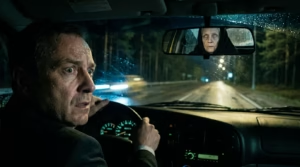
By the way the sergeant kept staring at me, I knew this wasn't going to end there. And it didn't.
My name is Andrés. I am forty-seven years old. I have been driving trucks through the night across half of Spain since I was twenty-two. I'm telling this because, two years after that night, I still cannot sleep properly, and because I know that right now, while someone listens to this, another driver is pulling into a place much like it. Without knowing.
That night I left Albacete around eleven. I was hauling industrial parts to an industrial estate near Burgos. Wednesday. As always, I took a secondary detour, an old national highway where you don't cross paths with a single car for twenty minutes, but which saves you tolls and time. I know it like the back of my hand. Along that road there are—or were—three gas stations open at night.
At half-past one, my fuel light began to flicker. I wasn't worried. I knew that thirty kilometers away was my usual stop, an independent station run by an elderly couple I'd been waving to for years. I arrived. It was pitch black. Plastic tape barred the entrance. A sign taped to the glass with Scotch tape that I didn't bother to read.
The Night Detour
I did the math. With what I had left, I could make it to the next one, about forty kilometers away. Barely. I kept driving.
The road was empty. The radio kept cutting out with that characteristic static of dead zones. I turned it off. I rolled the window down a crack. It smelled of damp earth.
And then, along a long curve, I saw the lights.
A small gas station. Two pumps. A canopy with white neon tubes. A lit-up shop. An unbranded sign, bearing only the word “Fuel” in large letters. A car was parked off to one side—an old, gray sedan from the nineties.
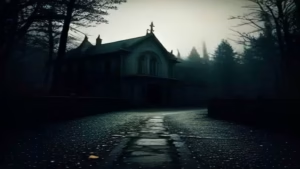
I didn't remember that gas station. But I hadn't driven through there in a month, and sometimes you miss things. I figured they must have reopened it.
I braked, put on my blinker, and turned in.
The asphalt of the lot was clean. Too clean. No oil stains, no tire marks. As if it had been scrubbed that very afternoon. I parked next to the commercial diesel pump, got out, and stretched my back. Inside the shop, a boy could be seen behind the counter, staring at a screen.
I grabbed the hose. The pump beeped. The screen lit up. Everything normal. The smell of diesel. The sound of the tank filling up. One hundred and eighty liters. When I finished, I went into the shop to pay.
The Boy in the White Gloves
The door chime rang. Inside, it smelled of coffee and pine air freshener. The boy looked up. He must have been in his early twenties. Thin. Short hair—very short. A plain blue uniform, unbranded, pressed and clean. He smiled at me.
The smile lasted less than a second. It appeared and vanished. As if he had rehearsed it.
“Good evening,” he said.
“Evening. Pump three, diesel.”
While he typed, I glanced around the shop. And here something in my stomach began to tighten, though at the time I couldn't put a name to it.
The shelves were nearly empty. A single row of water bottles. Three packs of cookies. Two chocolate bars in a display rack meant to hold a hundred. There were no magazines. No newspapers. No lighters, no gum, no candies by the register. None of those little trinkets that hang beside the counter.
There was nothing here that couldn't be boxed up and hauled out in ten minutes.
The boy told me the total. I handed him my card. He swiped it through the terminal. It took longer than usual to process. And while we waited, I saw it.
The Empty Shop
He was wearing gloves. Thin, white latex gloves, like a doctor's. They fit him perfectly. Snug. The outlines of his fingernails showed underneath.
At a gas station, that isn't normal. It isn't normal anywhere you pay with a card. I stared at his hands a fraction longer than politeness allowed. He noticed.
“Allergy,” he said, before I could even ask.
“Ah,” I said. Just to say something.

He did something strange with me. When he returned my card, he didn't hand it to me. He laid it flat on the counter and slid it toward me with two fingers. As if he didn't want to touch me. Or as if he didn't want me touching him.
“Been open long?” I asked. “I don't remember this gas station.”
“A few months.”
“The one before is closed down.”
Shadows in the Rearview Mirror
“Yes.”
He wasn't looking me in the eye. He was staring at a point just behind me. At the door. Or the truck. Or something far beyond the truck.
I took the receipt. Thanked him. Walked out. As I climbed into the cab, I glanced sideways toward the shop. The boy was no longer behind the counter. He had moved to one side, near an inner door, and was talking on a cell phone. Pressed against the glass, his face was hidden—only his uniform and his gloves were visible.
I started the engine and pulled back onto the road.

Ten kilometers down the road, I crossed paths with two trucks heading in the opposite direction, toward the gas station. I raised my hand in greeting, the way we always do. Neither of them waved back. I figured they must have been exhausted.
Fifteen kilometers later, I checked my mirrors. Behind me, distant but clear, were two lights. A car. It was matching my speed. When I accelerated slightly, it accelerated. When I slowed down for a curve, it slowed down.
It stayed with me for thirty-five kilometers. At that hour, on that road, there was no one else. Just me and those two lights.
At an intersection, the lights vanished. As if they had taken a turn off. Or as if they had switched off their headlights.
The Phantom Receipt
I arrived in Burgos at half-past six. Unloaded by eight. By ten I was asleep in a cheap boarding house. And when I woke up at five in the afternoon, I no longer remembered the car. Only the boy in the gloves.
The trouble began three days later, at home, when my wife Carmen—who handles the paperwork because I'm a disaster with that sort of thing—asked me about a charge on our bank statement.
“What is this?”
“The diesel from Wednesday.”
“But it doesn't say gas station. It says some company I've never heard of.”
I took a look. It was true. No service station's name appeared. It listed “Logistic Services” alongside an acronym. One hundred and ninety-two euros and sixty cents.
I told her not to worry. But that night, after she went to bed, I pulled out the receipt. I looked at it closely.
It had no tax ID. No address. No pump number. No exact time. Just a date, a total, and a long numerical reference.
The Satellite Truth
That wasn't a gas station receipt. That was just a strip of thermal paper with numbers printed on it.
I searched for the station online. I remembered the approximate kilometer marker. I opened the map. Satellite view. I zoomed in.
Where I had refueled, according to the images, there was nothing. An empty lot. A low, half-ruined building. Cracked asphalt.
I figured the imagery must have been out of date. I called a coworker, Rafa, who runs the same route. I asked him about the gas station. He laughed.
“Andrés, that station has been shut down since May. There's police tape and everything. I drove right past it on Friday.”
—I filled up there on Wednesday.
—Send me a picture of the receipt.
I sent it to her. It took two minutes for her to reply. When she did, she called me.
Return to the Scene of the Crime
—That's not a receipt. That's just a piece of paper.
The next day, instead of resting, I took my personal car and drove straight out to the place. In broad daylight. At eleven in the morning.
What I saw was exactly what Rafa had told me.
An abandoned lot. The rusted canopy hung with two dangling, shattered neon tubes. The pumps ripped out by the roots, their frayed wires exposed, nozzles missing. The shop boarded up with planks. Broken glass littering the ground. Weeds thrusting through the cracks in the asphalt. Graffiti smeared across the wall. A strip of Guardia Civil plastic tape hung from one corner, filthy and faded.
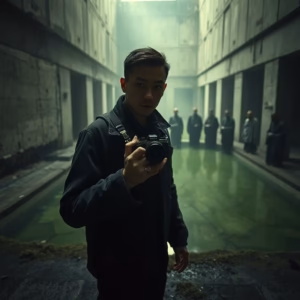
I walked slowly across the compound. It smelled of cat urine and stale garbage. I approached the exact spot where, three nights earlier, I had parked the truck. The asphalt was a spiderweb of cracks, with coarse grass sprouting through them.
And yet, right there on that very spot, I had pumped one hundred and eighty liters.
I crouched down. I ran my hand over the ground. There was an area, roughly four square meters, where the cracks were sealed over. No weeds. Coated in something dark, like tar. Fresh.
As if someone had placed something heavy over it for a while and then taken it away.
The Man with the Skinny Dog
I looked up toward where the shop stood. The planks covering the windows weren't nailed into the frame. They were merely leaned against it. Secured at the top by a single screw. If you pushed them, they would give.
I didn't push them. Fear held me back.
I got back into the car, started the engine, and drove away. In the rearview mirror, as I pulled away, I saw a thin dog emerge from behind the side of the shop. And behind the dog, a man. A man who watched me drive off. He made no gesture. He just watched.
That night, I didn't sleep.
The next day I started a thread on a truckers' forum. I asked if anyone had ever filled up at a petrol station that officially didn't exist. I wrote it half-jokingly, so as not to sound like a madman.
Within two hours I had eleven replies. In two days, thirty-four.
Drivers from all over Spain. Some described the exact same thing. A small station on a secondary road, open at night, attended by a young man or woman, the shop nearly empty, handed a receipt devoid of legal data followed by a strange charge on their card later on. Others described variations. One mentioned an older gentleman. Another spoke of Extremadura, another of Lugo, another of Teruel.
The pattern was identical.
The Phantom Road Network
One of the drivers, a man named Miguel, messaged me privately. He had a list of twelve different petrol stations sharing the exact same profile. Almost all on secondary roads, far from the motorways. Almost all of them, according to him, officially shut down.
We agreed to meet at a roadside bar near Madrid. Miguel was a man in his late fifties, stocky, with a salt-and-pepper beard. He brought a folder filled with papers. Screenshots, clippings, dates, sums.
As he told me what he knew, he glanced twice toward the bar's entrance.
—Are you expecting someone? — I asked him.
—No. But for the past three weeks, I find myself watching the doors.
He told me that a younger colleague of his had started investigating the same thing. And one day, while coming down a mountain pass, a tire had blown out. According to the repair shop, the rubber had a knife cut in it. Clean. Done on purpose. The kid only survived because he was going slow. The truck was a complete write-off.
—And why are you still keeping at it? — I asked him.
—Because I charge fuel to my company card. And because six months ago, at one of these places, I was billed four hundred euros for a fill-up I never made. I drove past. I saw the lights. I kept going. I didn't stop that night. And even so, two days later, there was a charge on my card. With a receipt I never even had. Under some shell corporation's name.
Threats in the Shadows
A chill ran through me.
—How did they bill me without me stopping?
—That's the question I've been asking myself for six months.
That very night, driving back from Madrid, things started happening to me.
The first was a phone call. Withheld number. I picked up. Silence. They hung up after five seconds.
The next day, another. This time, a man's voice, calm, almost gentle:
—Andrés, don't go looking for trouble.
And he hung up.
The Silent Intruder
I hadn't given my name to anyone. On the forum I used a handle. I had told Miguel my name, yes, but Miguel didn't seem like the sort to be a problem. Yet, somehow, someone knew.
That night I checked underneath the truck, the chassis, the wheels. I didn't know what I was looking for. I found nothing out of the ordinary. But the next day, when I climbed into the cab for a short run, I noticed something.

The baseball cap I always leave on the dashboard was on the passenger seat. The tissue box, which I keep in the door pocket, was upside down. And my route logbook, the one I keep in the glove compartment, was open. I always leave it closed. Always. It's a habit of mine.
Someone had broken into my truck. Carefully. Without forcing the door. Without breaking a thing. Just so I would know.
I called Miguel. I told him. He fell silent for a long time.
—It happened to me too —he said—. They moved my glasses inside the glove box. They didn't take anything. They just wanted me to see it.
—And now what?
—Now you have two choices. Either you drop it, and pray they stop. Or you keep going.
The Threat Closes In on Carmen
I decided not to make a decision that night. The next day I noticed a car parked at the corner of my street. A gray sedan. From the nineties. Just like the one I saw at the petrol station three nights before. It stayed there all morning. When I went down for bread, I walked right past it. Empty. When I came back, it was gone.
The next day it appeared on a different corner.
That night, my phone buzzed with a message. Unknown number. It simply said:
—Carmen leaves work at twenty past six. She's wearing a red jacket.—
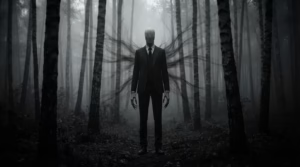
It was true. My wife left work at twenty past six. And she was wearing a red jacket.
I took the car and went to pick her up. I bundled her inside without offering any explanation. When we got home, I told her everything. Slowly. Without embellishment. Carmen isn't one to scare easily. But that night, she was terrified.
—We're going to the Guardia Civil tomorrow —she said.
And to the Guardia Civil we went.
Portrait of a Stranger
I spoke with a sergeant I knew by sight, Domingo. I brought Miguel's folder, my receipts, my bank statement, the forum screenshots, the map with the stations, the text message. I told them everything from the beginning.
Domingo listened without interrupting me. He took notes. When I finished, he went out to speak with someone. He returned with a lieutenant. The lieutenant introduced himself as Eduardo. He had the face of a man who hadn't slept in days.
And that was when he placed the photograph on the table. The boarded-up petrol station. The police tape. The ripped-out pumps.
—This station has been shut down for six months. Are you certain you filled up there?

I told him I was. And I described the young man to him. The uniform. The short hair. The gloves.
Eduardo and Domingo exchanged a look.
—Do you remember the gloves clearly?
—Perfectly.
The Faceless Man
Eduardo opened a folder and laid six photographs before me. Six young faces. He asked me to look at them carefully.
The third one was him. Without a shadow of a doubt.
—That's him.
Eduardo nodded. He closed the folder. And then he told me something that sunk its teeth into me.
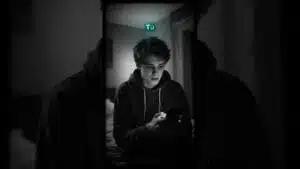
—Other people have recognized that face, too. In three different provinces. At different stations. He appears and vanishes. We don't know who he is. No ID. No fixed address. No fingerprints anywhere. That's why he wears gloves. Not because of an allergy.
I sat there, utterly speechless.
—We need your cooperation,—said the lieutenant.——But I'm warning you. If you help us, for a time, you must act as though you know nothing. If you alter your routes, if you stop passing through your usual zones, if you hide, they will notice. And if they notice, the pressure will mount.
—Worse than breaking into my truck?
The Bait on the Asphalt
—Worse.
Carmen squeezed my hand under the table.
I agreed. Not out of bravery. Out of sheer exhaustion. Because I could no longer live looking over my shoulder.
For six weeks I ran my routes as usual. The same roads. The same schedule. I carried a separate phone they had given me, rigged with a direct emergency button. My truck had a couple of small devices hidden in spots only I knew about. And I had to log anything unusual: cars, faces, license plates, newly opened gas stations, drivers who approached me at rest stops.
In those six weeks, three things happened that I remember vividly.
The first. At a rest stop near Soria, a man sat at my table while I was having dinner. Without asking. He didn't know me. I didn't know him. He was around sixty, wearing a gray suit and glasses. He started talking about the weather. Roadwork. Prices. And then, without changing his tone, he said:
—Andrés, your youngest son is studying in Valencia, isn't he?
He stood up. Paid for his coffee. Left.
The Net Collapses, the Ghost Escapes
I sat frozen in my chair. For how long, I don't know. When I went out to the parking lot, his car was gone. I called the Guardia Civil's mobile number. They told me not to move. To finish my route. That everything was under control.
That night, I didn't believe them.
The second. A slow leak in the front right tire. At ninety kilometers an hour. I managed to pull over onto the shoulder. When I got out to check, there was a small, perfectly round hole in the sidewall, punched by something thin. It wasn't a nail. It wasn't a shard of iron. It was a deliberate puncture, calibrated to take effect gradually.
The third. At a standard, legitimate branded gas station, while I was paying inside, someone slipped an envelope beneath my truck's windshield wiper. Inside was a photograph. Of me. Buying bread. That very morning. In my hometown.
The envelope practically had a signature missing.
I called the lieutenant. I sent him the picture. For the first time, using the voice of a man rather than a uniform, he told me:
—We're close, Andrés. Just hold on one more week.
I held on.
The Fall of the Network
Ten days later, the operation came down. It made the news.
The Guardia Civil had dismantled a massive fuel fraud ring. They operated across six provinces. They would take over abandoned gas stations, reopen them for two or three weeks, fill their tanks with fuel stolen from pipelines and adulterated mixtures, put someone at the counter with a rigged card reader linked to shell companies, and fleece the drivers who pulled in. The money was funneled through foreign accounts.
Seventeen arrested. Trucks seized. An industrial warehouse overflowing with drums. Portable pumps. Hundreds of SIM cards. Cloned card readers. More than two million euros in cash.
Among those arrested was Joaquín, the former owner of the gas station where I had refueled. But the boy in the gloves wasn't there. He was missing from the haul.
I asked the lieutenant about him.
—He slipped through our fingers. That very morning. By a matter of minutes.
—Do you know who he is?
—We have a probable identity. But he's not from around here.
The Return of the Nightmare
—From where?
—I can't tell you that, Andrés. I'm sorry.
My name appeared nowhere. I wasn't called to testify at the trial. The recordings captured by the devices planted in my truck were enough, combined with those of other cooperating drivers.
I thought that was the end of it. I thought I'd finally be able to sleep.
And then, three months later, this happened.
I was driving on a January night down a stretch of road in Cuenca. Ice rimed the ditches. The road was empty. I needed fuel. And along a long, straight stretch, I saw the lights.
A small gas station. Two pumps. A canopy glowing with harsh white neon tubes. An illuminated store. Unbranded. Bearing only the word \"Fuel\" in large letters.
I slowed down. I didn't pull in. I parked two hundred meters up the shoulder, with my lights killed.
Through the Lens of the Binoculars
I grabbed the binoculars I keep in the cab—the ones meant for reading license plates when crawling through traffic jams—and brought the store into focus.
Someone stood behind the counter. Back turned. Blue uniform. Short hair—cropped extremely close. When he turned momentarily to grab something from a shelf, I saw his hands.
He wore white gloves. Thin. Latex.
It was him.

He was seven hundred kilometers away from where I had first laid eyes on him. Three months after the raid. And there he was. Calm. Behind a counter. Waiting for someone to walk through the door.
I didn't move the truck. I pulled out my phone. I called the number Lieutenant Eduardo had given me. It rang five times. An answering machine picked up. It was a recording. A new recording, not his voice. It stated that the number was no longer in service.
I tried the other number I had, Sergeant Domingo's. The exact same thing.
I sat there on the shoulder with the engine dead, watching through the binoculars as the boy arranged bottles of water on a shelf. One by one. Slowly. Gloved.
The Gaze in the Dark
I had been watching for twenty minutes when something chimed inside the store. The mobile phone he kept behind the counter. He picked it up. Spoke for ten seconds. Hung up. Lifted his head. And stared directly at where my truck was parked.
He couldn't possibly see me from the store. I was two hundred meters away, unlit, tucked into a curve. Yet he looked right at me. Dead on. As if he knew.
I turned the ignition. I bolted out of there however I could. I drove hard until I reached a branded station eighty kilometers down the road. I paid with a card. I checked my phone to ensure the charge registered under the correct name.
When I finally slumped back into the cab, I was drenched in sweat. In January.
The next day I went to the barracks. I asked for Domingo. They told me he had been transferred. I asked for Eduardo. They told me Eduardo was no longer stationed there and that Domingo had requested a transfer. No one would offer any further explanation.
I pressed them. They gave me the runaround. They told me to leave my contact info, that someone would call me.
They didn't call.
Two years have passed since that first night.
The Unseen Bribe
I still drive. I still run the night routes. But I don't stop at unfamiliar gas stations anymore. I always carry a five-litre reserve canister. I check my bank statements every single week, line by line.
To the rookie drivers, I tell this story. Not to scare them. To make them pay attention. To check their receipts before pulling away. To note down license plates that don't belong in the rest stops. To make them understand that the peril of the dark isn't always fatigue, or speed, or the oncoming semi.
Sometimes the danger is a yellow light in the middle of nowhere, left burning just for you.
Two months ago, an envelope appeared in my mailbox—no stamp, no postmark, nothing at all. Inside was a single thing.
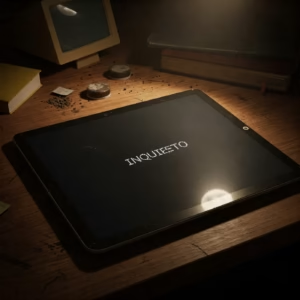
A receipt. Thermal paper. No tax ID. No address. No name.
Just a date from last month, a total of one hundred ninety-two euros and sixty cents, and a long numeric reference code.
I never made that fill-up.
I've hidden it away in a drawer. I haven't shown it to Carmen.
The Endless Waiting
And sometimes, at night, when I hit the highway and spot yellow lights flickering in the distance where nothing should be, I slow down. I grip the steering wheel tighter. And I pray I won't see, behind the glass of a lit storefront, a young man in white gloves arranging bottles of water, one by one, waiting for me to walk inside.
Because I know that somewhere, right now, he is there. Waiting for someone else.
And that next time, perhaps, it won't be me seeing him.
It will be him seeing me.
Did you survive this tale? Do not defy the dark alone. Subscribe to the YouTube archive to face the next mystery.
