The Moroi and the strigoi stand as the darkest, most deeply rooted personifications of Wallachian folklore in Romania; they are not mere monsters fairy-tale monsters, but restless souls and reborn dead who, according to Carpathian tradition, crawl back from their graves to torment the living and drain their lives drop by drop on cold, foggy nights.
The Origin of the Myth and the Earliest Chronicles
When one walks the steep trails of the Romanian Carpathians, beneath the towering shade of dense forests where sunlight barely penetrates, the air itself seems to thicken. Here, in this land scored by freezing winds and freighted with a millennial history of invasions, bloody struggles, and isolation, the stones and the trees seem to keep secrets that defy the logic of the modern world. Over the course of my research for Relatando.com, I have come to understand that Romanian folklore is no mere campfire diversion; it is a living archive of humanity's deepest fears, a testament to how our ancestors tried to make sense of the inexplicable. Among the most fascinating and terrifying legends that spring from this ancestral soil are the Moroi and the strigoi, two entities that inhabit the thin, brittle border between life, death, and oblivion.
To understand where these figures spring from, we must mentally travel back to the rural communities of Wallachia and Transylvania from centuries past. In those days, death was not an aseptic process unfolding behind the closed doors of a hospital. It was a deeply communal, visceral event wrapped in rigid rituals. When a person died a tragic, premature death, or if their corpse suffered accidental desecration or strayed from the precepts of the Orthodox Church, the dread collective dread was unleashed. It was firmly believed that the deceased's soul found no rest, or worse still, that the body refused to decompose, harboring a malignant, parasitic force.

The Moroi is often described in ethnographic chronicles as the direct precursor to the literary vampire, a tormented spirit that has not yet crossed to the other plane but which, due to unfortunate circumstances in life—such as being born with a malformation, an extra tooth, or having been a cursed illegitimate child—returns from the grave. On the other hand, the strigoi represents an even more sinister evolution: it can be the spirit of a Moroi that has consumed blood for an extended period, or a living person born with a caul over their face and who possesses a double soul, one of which leaves the body during sleep to join covens of witches and the living dead.
The earliest chronicles written by Western travelers and local monks in the seventeenth and eighteenth centuries gather chilling episodes that shook entire villages in Wallachia. In these yellowed documents, kept in dusty archives, are recounted the sudden deaths of livestock, inexplicable epidemics that decimated whole families, and a palpable sense of nocturnal suffocation among the inhabitants. The villagers, driven by panic, resorted to desperate measures: they exhumed the bodies of those suspected of being strigoi and sought unmistakable signs upon the corpse. A supple body, with rosy cheeks, overgrown nails, and stains of fresh blood around the mouth was irrefutable proof that the dead walked by night.
Signs, Encounters, and Documented Testimonies
To delve into the documented testimonies concerning the Moroi and the Strigoi is to plunge into a terrain where ethnography brushes against the psychological thriller and the purest horror. We are not speaking of fleeting sightings in the distance, but of intimate accounts from peasants who swore they had felt an icy presence at the edge of their beds, incapable of screaming or moving while a heavy shadow stole their breath.
I recall poring over the field notebooks of Romanian folklorists from the early twentieth century, who gathered stories from the old. One of the most recurring testimonies described nocturnal knocking at the doors and shutters of houses. No one answered when they opened, but by the following morning, the wine casks had run dry, the livestock were found bloodless at dawn with two small marks on the neck, and the weakest members of the family began to waste away without any apparent medical cause.
Grandfather used to tell us that if you heard your name called from the darkness of the forest after midnight, you must never answer, because it was no lost neighbor, but the Strigoi mimicking his voice to steal your soul before dawn.
This account, gathered in a small village near the Southern Carpathians, perfectly illustrates how the myth was woven into everyday survival. To combat these creatures, the documented methods were far from subtle. A wooden stake—frequently of hawthorn or ash—driven straight through the heart of the exhumed corpse was the standard procedure, often accompanied by decapitation and the burning of the heart, whose ashes were mixed with water and fed to livestock or ailing relatives as a preventative remedy.
In the judicial archives of Ottoman and Imperial Wallachia we also find fascinating records of trials and permits granted by local authorities to desecrate graves. The officials, though skeptical at first, found themselves overwhelmed by the pressure of entire communities teetering on the edge of collective hysteria. The reports detail with cold surgical precision how the villagers, armed with farming tools and torches, opened the tombs at nightfall, seeking to put an end to a nightmare that threatened to shatter the peace of the community.
Why Does This Enigma Both Fascinate and Frighten Us?
At this point, dear reader, we cannot help but pause and reflect. Why, in the very heart of the digital age, when science has mapped the human genome and we probe the farthest reaches of the universe, do we still feel such a genuine chill at tales of the Moroi and the Strigoi? The answer lies not in the physical reality of these monsters, but in the unfathomable depths of the human psyche.
The myth of the returning dead mirrors our most intimate and universal fear: mortality itself, and the dread that those we love—or we ourselves—might be forgotten, or left unable to find peace. The Moroi and the strigoi embody unresolved guilt, family rancor that stretches beyond the grave, and the predatory nature we sometimes suspect lurks in the deepest recesses of the human condition. We are terrified by the notion that death is not a definitive end but a chaotic state of transition, where the laws of the natural order come undone.
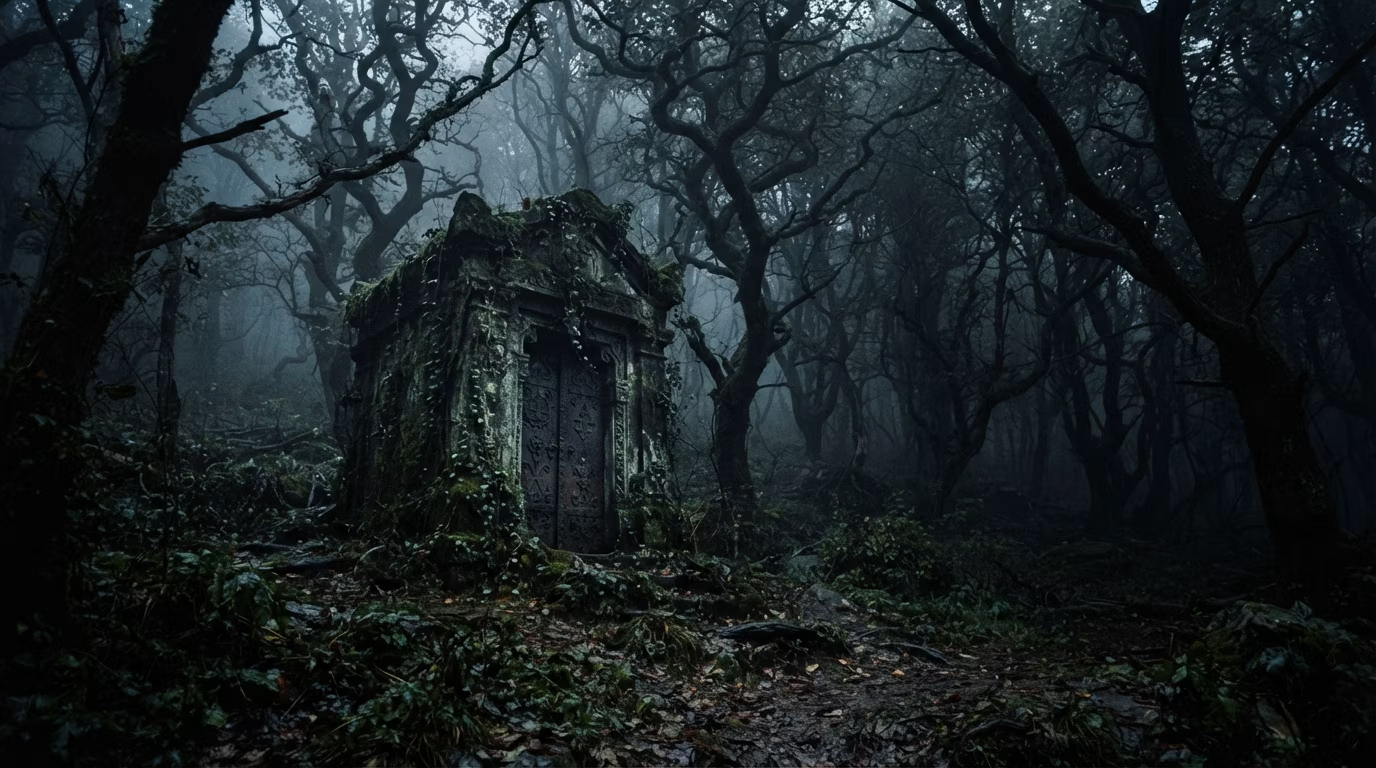
Beyond that, there is an undeniable aesthetic and cultural fascination at work. The Wallachian graves, shrouded in mist and marked by wooden crosses eaten away by the elements, are the perfect stage onto which we project our fantasies about the unknown. In investigating these phenomena, we are not merely after historical or ethnographic data; we are reaching for communion with an age when the world brimmed with mystery, when every shadow in the forest had a name, and when the human being felt himself part of a cosmos that was animate, perilous, and alive.
In the end, the Moroi and the Strigoi are still alive—not in the dark crypts of Wallachia, but in our collective imagination. They are the eternal reminder that no matter how hard we try to illuminate the world with reason, there will always be corners in the half-light that defy our understanding and force us to glance over our shoulder when we walk alone in the dark.
📜Investigation • Frequently Asked Questions
Documentary Archive and Analysis of the Occult • Relatando.com
What is the documented historical or folkloric origin?
The myth stems from the rural traditions of Wallachia and Transylvania, documented in seventeenth- and eighteenth-century chronicles that record the panic before epidemics, tragic deaths, and the belief in souls in torment that could find no rest.
How does it manifest, or what are its primary characteristics?
They are described as dead who return from the grave to torment the living, to steal vitality or livestock, leaving physical signs on the exhumed corpses—supple limbs, rosy cheeks, and traces of blood.
What cultural or psychological hypotheses account for this myth?
They embody the fear of death, unresolved guilt, the inexplicable health crises of the age, and the ancestral need of communities to give ritual meaning to mourning and to the terror of the unknown.
What contemporary accounts or chronicles exist on the subject?
There exist ethnographers' field notebooks and Ottoman and imperial judicial archives that record trials and permits granted to villagers for exhumations and drastic rituals against supposed Strigoi.
Do not extinguish the light yet...
If you have had the courage to make it this far, we have other dossiers that will test the limits of your sanity.

Terms and Figures of this Tale
To delve deeper into the legends, creatures, and dark concepts that inspire this account, consult their entries in our dictionary of the uncanny:


Tu correo no se publica ni se comparte con terceros: solo sirve para notificar la respuesta.