Introduction: The Threshold of Mystery
Seekers of truth and lovers of the unknown, I welcome you to a new file within our analytical archive. I am RelatandoCarlos, and today we plunge into the depths of South America's mythical geography to unravel one of the most terrifying, perverse, and fascinating phenomena of Chilean and Argentine folklore: the Legend and manifestation of El Chonchón (known in various remote districts as Tuco, Chuncho or Chueque).
Picture the scene: midnight drapes itself over a mountain valley swallowed by a near-sepulchral silence. The freezing Andean wind whispers through the groves when, suddenly, the air grows heavy. The estate dogs begin to howl with a desperate frenzy, clawing at the doors and staring up at the starry sky. A dry, guttural, rhythmic caw echoes through the air—a baleful whistle that seems to drill straight into the conscience of anyone who hears it: “Tué, tué, tué”. It is no ordinary nocturnal bird. It is neither owl nor barn owl hunting for prey. What glides above the roofs of the rural homes is an abomination born of traditional witchcraft: a severed human head whose ears have grown to monstrous proportions to serve as wings.
Unlike the conventional monsters that populate the cryptozoological bestiary, El Chonchón is neither a biological species nor a wild beast; it is the direct metamorphosis of the Kalku, the malevolent wizard or sorcerer of Mapuche tradition. In this exhaustive investigation, we will analyze everything from the etymology and ritual origins of this entity to the historical chronicles, documented cases of sightings, and the psychological undertow that renders this creature an indelible nightmare upon the human psyche.

Arcane Origin and Historical Evidence
To grasp the true nature of the Chonchón, we must retrace our steps to the ancestral cosmogony of the Mapuche people. In Mapuche magical thought, spiritual reality is cleaved between the forces of equilibrium (represented by the female or male machi) and the dark arts of the Kalkutun, practiced by the Kalku. The Kalku is an individual well-versed in the manipulation of blighted energies, malevolent spirits (anchimallén, huecufe) and venomous brews. Transformation into the Chonchón marks the absolute zenith of these sorcerers' necromantic power.
Etymologically, the word stems from the Mapudungun chunchu, a term used to designate the pygmy owl (Glaucidium nanum). Nevertheless, the mysticism of the myth swiftly severed the physical animal from the astral-physical entity the sorcerer transforms into. According to the tradition orally transmitted for centuries and recorded by colonial chroniclers such as Father Diego de Rosales in the seventeenth century, the process of severing from the body is an atrociously detailed ritual.
The sorcerer withdraws to his dwelling in the gathering gloom. Upon his bed, he greases his neck with ointments concocted from the fat of an unbaptized child, hallucinogenic herbs, and the secretions of venomous toads. As he recites forbidden incantations—prominent among them the explicit renunciation of the divine faith with the damning phrase "Neither God nor Holy Mary"—, his head begins to detach from his torso. The headless body remains lying on the bed, inert yet alive, locked in a profound trance akin to catalepsy. Meanwhile, the sorcerer's ears hypertrophy, transforming into fleshy, leathery fans capable of beating the air, and the head takes flight in the guise of the Chonchón.
One of the most striking historical episodes in which the figure of the Chonchón assumes a legal and documentary weight occurred during the famous Trial of the Recta Provincia between 1880 and 1881 in the Chiloé archipelago. The Recta Provincia was a secret, hierarchical society of sorcerers ruling the island population from the shadows. During the trial conducted by Chilean authorities, dozens of defendants testified under oath to the existence of methods to alter human physiognomy, explicitly mentioning the use of potions to 'fly through the air' in the form of human-headed birds to spy on their enemies, harvest ingredients for their maledictions, or journey to the mythical cave of Quicaví.
Manifestations and Nature of the Entity
From a phenomenological standpoint, chronicles and accounts converge with unsettling precision regarding the morphofunctional traits of this entity. The Chonchón is not invisible, though it prefers to cloak itself beneath the mantle of the dense night. Those who claim to have sighted it at close range beneath the flicker of a streetlamp or a field bonfire describe a harrowing apparition:
- Grotesque Morphology: A disproportionate human head of cadaverous skin, with eyes burning like red-hot coals. Its ears, monstrously overdeveloped, beat the air with a dense, heavy sound akin to the wings of a mature vulture or the slapping folds of wet leather.
- Parallel Ornithological Attributes: It bears small claws or scattered feathers at the base of its severed neck, from which a viscous, blood-stained substance sometimes drips. Its beak or mouth is armed with sharp teeth or a protrusible tongue used to drain the blood of sleeping victims.
- The Song of Omen: Its presence is announced by a distinct, bone-dry snapping or croaking sound. “Tué, tué, tué”. Hearing this sound is deemed an irrefutable omen of sickness, ruin, or imminent death for the household it circles above.
- Infrasensory Trace: The passage of the Chonchón is invariably accompanied by a sudden drop in ambient temperature, a stench of sulfur or organic decay, and an extreme, panicked restlessness in domestic animals.
The Chonchón flies in search of the sick to drain their 'vitality' (the pneuma or vital breath), or else gathers at nocturnal meetings of necromancers. Nevertheless, the creature possesses fundamental vulnerabilities rooted in sympathetic magic and popular faith.
A vast arsenal of counter-spells exists to bring down or repel the Chonchón. Chilean oral tradition dictates that upon hearing the «tué, tué», one must never curse the creature. Instead, the daring resident may shout: «Come back tomorrow for salt» or «Stop by tomorrow for bread». The following day, the first person to arrive at the house asking for those provisions will undeniably be the sorcerer in his human form, ensnared by the magical obligation of a given word. Another method of defense consists of tracing the 'Seal of Solomon' on the floor with a steel knife, driving a dagger into a wooden table, or reciting the prayer of La Magnífica backward; these acts cause the Chonchón to plummet clumsily to the earth, stripping it of flight and leaving it at the mercy of the hounds or purifying fire.
Documented Cases and Notable Encounters
Throughout my field investigations on expeditions across the Southern Cone, I have gathered diverse accounts of sightings that defy rational explanation. Below, I present three emblematic cases extracted from regional archives and direct testimonies that illustrate the persistence of this phenomenon.
Case 1: The Elqui Valley Incident (1932)
In the wine-growing regions of the Elqui Valley, rural farmworkers have maintained for generations an absolute dread of moonless nights. In the winter of 1932, on an estate near Vicuña, the Pardo family reported that for three consecutive nights, a persistent cawing hovered over the roof where their eldest daughter lay sick with tuberculosis. Exasperated and fearing for his firstborn's life, the father stepped out into the courtyard with a hunting shotgun and shouted into the void: "Tomorrow, come fetch your salt, you wretched thing!".
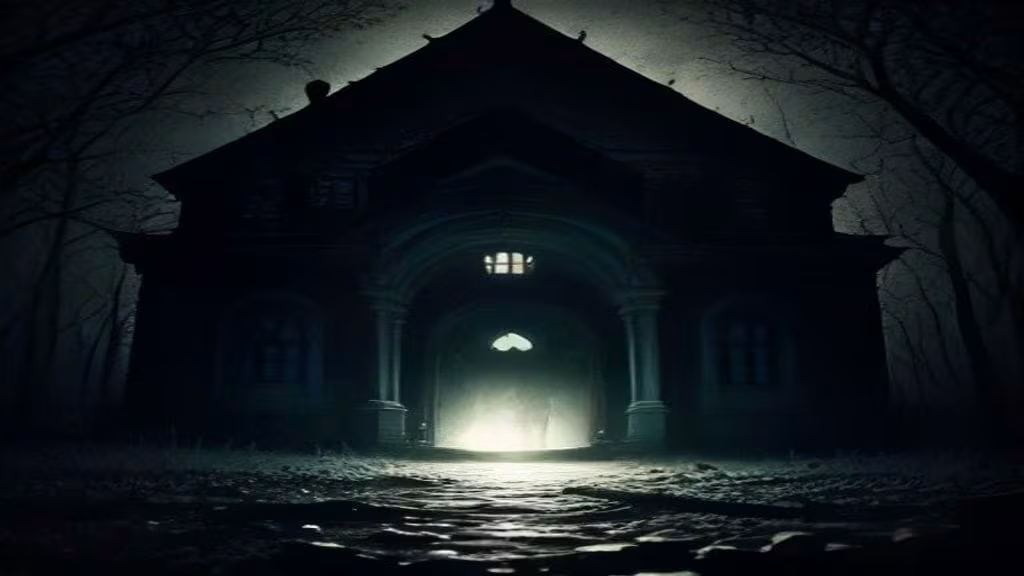
The following morning, before dawn, an old hermit who lived in the surrounding hills—and whom the village suspected of practicing dark folk magic—appeared at the estate's door. His face was strangely bruised and clawed, and in a trembling voice, he begged for a handful of fine salt. The master of the house handed it to him, but forbade him ever to approach again. Miraculously, that very night the croaking ceased, and the young woman's health began to mend. A coincidence, the skeptic might suggest? To the valley's collective memory, it was a pact fulfilled.
Case 2: The Discovery of the Lifeless Body in Curicó (1975)
One of the darkest accounts documented by local folklorists involves the destiny of the sorcerer's body. If, while the head flies in the guise of the Chonchón, someone happens upon the headless body of the warlock in his bed and alters its position, or turns it upside down face-down, the head will be utterly unable to reattach to the neck upon its return at dawn.
In a hamlet near Curicó, in 1975, a group of farmhands forced their way into the hut of a solitary laborer who had failed to show for work in two days. In
📜Investigation • Frequently Asked Questions
Documentary Archive and Analysis of the Occult • Relatando.com
What is the fundamental ontological difference between The Chonchón and other mythological creatures of South American cryptozoology?
Unlike wild beasts or purely mythical entities, El Chonchón possesses neither a biological nor a zoological nature. It is the physical manifestation of the necromantic transmutation of the Kalku—the Mapuche sorcerer who ritually decapitates himself using ointments to sever his head and deploy his ears as wings. It stands, therefore, as a perversion of human will and the dark arts within indigenous cosmology.
How is the term 'Chonchón' etymologically linked to real fauna and the syncretism of oral tradition?
Etymologically, the concept derives from the Mapudungun 'chunchu', a word designating the Andean pygmy owl of the southern forests (Glaucidium nanum). Nonetheless, popular imagination and colonial chronicles—such as the seventeenth-century records of Father Diego de Rosales—tore the biological creature apart from the astral entity, fusing the dread ancestral dread toward nocturnal birds of prey with the ancient terrors of Mapuche witchcraft.
What role do colonial historical chronicles play in validating and diffusing the myth of The Chonchón?
The colonial chronicles were vital in embedding the myth within the documentary annals of South America. Clerics, conquistadors, and chroniclers such as Diego de Rosales gathered the oral testimonies of the natives, recording with horror the alleged rituals of bodily severance and the psychic devastation this phenomenon wrought upon rural communities, fusing indigenous cosmology with subsequent Catholic interpretations of witchcraft.
What is the psychological background and impact of The Chonchón's characteristic cry upon the rural peasant psyche?
The onomatopoeic sound 'tué, tué, tué' is not merely an auditory folklore device, but a mechanism of psychological terror deeply rooted within Andean rural isolation. This rhythmic croak, traditionally associated with ill omens, impending deaths, or punishments visited upon the unwary, acts as a trigger for collective terror, transforming the night and the mountain wind into an experience of acute spiritual vulnerability.
Do not extinguish the light yet...
If you have had the courage to make it this far, we have other dossiers that will test the limits of your sanity.

Terms and Figures of this Tale
To delve deeper into the legends, creatures, and dark concepts that inspire this account, consult their entries in our dictionary of the uncanny:


Tu correo no se publica ni se comparte con terceros: solo sirve para notificar la respuesta.