Introduction: The Threshold of Mystery
There are tales that do not dissipate with the arrival of morning light; they cling to the damp timber of old farmhouses, to the snapping of branches deep within the dense woods, and to the freezing murmur of mountain streams. In the vast folkloric tradition of South America, specifically in the rural regions of Chile and western Argentina, few entities evoke a veneration so steeped in terror as El Culebrón. Far from being a mere snake of gigantic proportions, demonological scholarship and local cryptoanalysis agree that we are facing a chthonic force, a reptilian spirit of insatiable voracity, and the living embodiment of human greed.
For the investigator of the unknown, approaching the figure of El Culebrón demands venturing into a territory where fantastical zoology and ancestral witchcraft intersect. Rural chronicles do not describe it as a conventional animal of modern taxonomy, but rather as an amphibious creature caught between the earthly plane and liminal spheres. Men speak of a monster with a hypnotic gaze, covered in dense plumage or bristly hair, whose very presence alters the atmospheric pressure of the valleys and plunges nocturnal wildlife into a sepulchral silence. Is El Culebrón an undiscovered biological relic, a tulpa phenomenon nourished by centuries of collective suggestion, or the physical executor of dark pacts forged in the penumbra of the cordillera?
Arcane Origin and Historical Evidence
To trace the roots of El Culebrón, one must inevitably plunge into the etymology and cultural hybridization that followed the collision between indigenous cosmogonies and colonial Christianity. In the vernacular of the rural districts, the suffix "-ón" denotes not only colossal proportions, but also a profound burden of malice and terrifying majesty. Nevertheless, the theoretical genesis of this creature traces back to the ancient beliefs of the Mapuche and other indigenous peoples of the Southern Cone, where myths of primordial serpents such as Trentren Vilu and Caicai Vilu shaped the geography through cataclysmic battles between the earth and the sea.

With the arrival of the Spanish colonizers and the establishment of vast estates during the 17th and 18th centuries, the figure of the ancestral serpent mutated. It intertwined with the Judeo-Christian iconography of the serpent as a symbol of temptation and damnation. Thus emerged the sociological narrative binding the Culebrón to the great haciendas. According to manuscripts and oral tradition compiled by folklorists in the early 20th century, many landowners who had grown mysteriously rich owed their fortunes neither to agricultural toil nor legal trade, but to harboring and feeding a Culebrón within the damp subterrain of their sprawling manor houses.
The mechanics of the pact were as terrifying as they were methodical: the estate owner had to capture or rear the creature from its youth, feeding it not on hares or rodents, but on freshly milked cow's milk, warm animal blood, and—according to the darkest accounts—the sacrifices of newborns or stray farmhands. In exchange, the entity guaranteed endless harvests, sudden veins of gold in the hills, and absolute protection against thieves. Yet the ultimate price was invariably ruinous. When the master died without passing the beast down to an heir, the Culebrón, starved and incandescent with fury, would burst from its subterranean captivity, laying waste to the fields and devouring everything in its path in a chthonic orggy of destruction.
Manifestations and Nature of the Entity
The phenomenal accounts of El Culebrón gathered over more than three centuries display a bone-chilling consistency, characteristic of true cryptozoological enigmas. Physically, the entity is depicted as an ophidian of colossal proportions, its girth rivaling the trunk of a centuries-old oak and its length easily exceeding ten meters. Yet, what sets El Culebrón apart from any species of the family Boidae are its anomalous, hybrid traits.
Instead of conventional scaled skin, the creature typically bears a bulky head akin to that of a calf, a pig, or a wild feline, complete with short ears and a jaw capable of unhinging to swallow massive prey. Its back is not armored in polished keratinous plates, but cloaked in a dense pelt of dark, coarse bristles, or even mottled plumage that casts a sickly, metallic sheen under the moonlight. Its eyes, unanimously described by witnesses as twin burning embers or beacons of yellowish light, possess a mesmerizing power: whoever dared gaze directly into El Culebrón's pupils was instantly petrified, gripped by an absolute motor paralysis that rendered them helpless.
From a sensory standpoint, the creature's proximity is heralded by distinct environmental disturbances. Seasoned rural folk maintain that the air grows heavy and suffocating, thick with a characteristic stench of sulfur, rotting vegetation, and stagnant mire. The passage of the monster is not the silent slither of an ordinary serpent; as it cuts through the underbrush, the Culebrón drags its immense bulk with a subterranean rumble—a low-frequency vibration that shakes the foundations of homesteads and fractures the earth, leaving behind wide swaths akin to the gouges of a colossal timber dragged under immense pressure.
Documented Cases and Notable Encounters
Despite its legendary veneer, local journals, judicial chronicles, and cryptozoological accounts record evidence pointing to genuine encounters with this aberration. One of the most chilling cases dates back to the late nineteenth century in the interior valleys of Maule, Chile. A respected landowner, whose fortune had grown exponentially in the span of a few years, died suddenly. During the night of the wake, farmhands heard a guttural bellow erupting from the cellar of the great house, followed by the collapse of the adobe walls. By the following morning, not only was the master's corpse missing, but a deep trench over a meter wide wound its way from the mansion down into the depths of the adjacent hillside gorge. The livestock in the stables were found drained of blood and mutilated, bearing wounds unlike those of any known predator.
In the 1970s, during road construction in the Andean foothills, a crew of muleteers and heavy equipment operators reported a nocturnal sighting of an jet-black, serpentine mass crossing a dirt track. The primary witness, a veteran heavy-machinery operator, swore under oath that it took nearly two minutes for the creature's body to cross the road from side to side. The entity emitted a chest-freezing, hissing snort, its eyes reflecting the truck's headlights with an intense crimson glare. The trail it left in the earth displaced multi-ton boulders and crushed the sclerophyllous scrubland as though an industrial steamroller had passed over it.
Another prominent account hails from the rural expanses of Cuyo, Argentina, where the creature is known colloquially by regional variations of the same myth. During the nineteen-nineties, field researchers documented the harrowing case of a farming family plagued for weeks by an unseen subterranean entity. They reported ceaseless scratching beneath the home's plank flooring alongside a systematic decimation of their sheep flock. Subsequent site inspections uncovered collapsed tunnels bearing zero tool marks from human hands; instead, the compacted earth walls displayed a pattern reminiscent of gargantuan scales.
The Dark Side: A Psychological Analysis
Why does the myth of the Culebrón continue to exert such a profound dominion over the collective psyche? Viewed through Carl Jung's analytical psychology, the serpent stands as the primordial archetype par excellence. It represents the untamed unconscious—instinctual energy in its rawest, most dangerous state—and strikes directly at the human reptilian brain. The Culebrón embodies the archetypal shadow: that abyssal recess of the mind where forbidden desires for rapid wealth, unpunished power, and dominion over nature through dark pacts lie in wait.
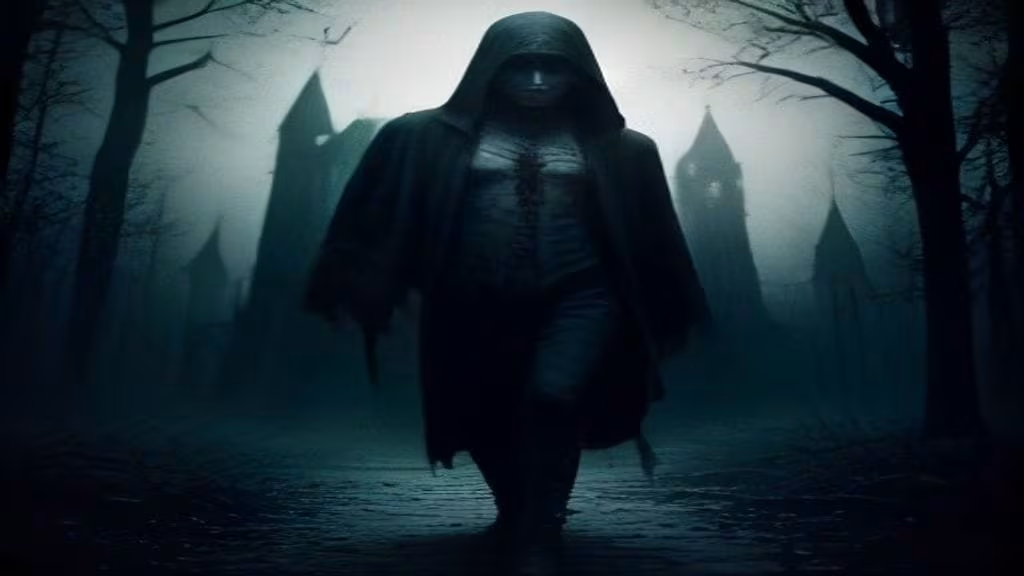
The demonic visage of the Culebrón and its deep association with greed are by no means accidental. It functions as a coded socio-moral warning. Within agricultural communities, where survival hinges on cooperation and deference to natural cycles, the individual who seeks to accumulate inordinate wealth outside of honest toil shatters the communal equilibrium. The Culebrón is the manifest punishment for such hubris: wealth granted by monstrosity is fleeting, ultimately consuming both the petitioner and everything in their orbit. The semantic horror this creature evokes lies in the absolute loss of control—the sickening realization that beneath the fertile soil we walk upon and till, an insatiable mass waits for the exact moment to rupture the surface and exact its toll in flesh and soul.
Conclusion: The Echo in the Darkness
When analyzing these myths from the perspective of the modern researcher, it is easy to dismiss the Culebrón as a mere superstition of bygone eras—an attempt by ancient peasants to rationalize the inexplicable or to justify the socioeconomic injustices of the old estate system. Yet, when one stands deep in the Andean foothills at midnight, far beyond the reach of civilization's lights, and the wind abruptly dies down only to set the dry leaves rustling with unseen intent, that rational perspective begins to fracture.
The shadows cast by the ravines seem to writhe with independent life, and the very soil beneath our footsteps assumes an unsettling, organic quality. Whether it lingers as an undiscovered biological relic lurking within the uncharted depths of the underworld, or manifests as a tulpamancer's creation born from dread, greed, and oral tradition, El Culebrón endures. It stands as the guardian of forbidden hoards and a grim reminder that within the rural dark, secrets endure which human reason has failed to tame. Listen closely to the stillness of the night; should the earth softly shudder beneath you and the air sour with sulfur, do not look back… for El Culebrón has already fixed its blazing eyes upon you.
📜Investigation • Frequently Asked Questions
Documentary Archive and Analysis of the Occult • Relatando.com
What is the true ontological nature of El Culebrón when viewed through the convergence of fantastical zoology and rural demonology?
Far from being a mere ophidian of colossal proportions, local oral tradition and cryptoanalysis frame El Culebrón as a telluric force and a reptilian spirit of insatiable voracity. Rural chronicles from Chile and western Argentina describe it as an amphibious entity straddling the earthly plane and liminal spheres, possessing a hypnotic gaze and a body sheathed in dense plumage or coarse bristles capable of shifting atmospheric pressure.
How was the ancestral myth of the primordial serpents reshaped following contact with colonial Christianity in the Southern Cone?
The theoretical genesis of this creature reaches back to ancient Mapuche and indigenous beliefs, where myths like those of Trentren Vilu and Caicai Vilu carved the very geography. Following the arrival of the Spanish and the establishment of vast estates, this ancestral serpent mutated, weaving itself into the Judeo-Christian iconography of the serpent as a symbol of temptation, thereby giving rise to the sociological narrative of El Culebrón bound to the great estates and pacts of illicit wealth.
In what ways did the figure of El Culebrón function as a sociological rationalization for the accumulated wealth of colonial landowners?
Throughout the seventeenth and eighteenth centuries, many landowners who amassed sudden and mysterious fortunes were singled out by the rural community. Oral tradition gathered by folklorists indicates that the opulence of these estate owners stemmed not from lawful trade, but from the possession and grim ritual of feeding a Culebrón within the cellars of their manor houses in exchange for material prosperity.
What interpretive schism divides researchers of the occult when attempting to classify this phenomenon within the rural hinterlands?
For scholars of folklore and the paranormal, the case of El Culebrón presents a multifaceted enigma: are we confronting an undiscovered biological relic omitted by modern taxonomy, facing a thought-form or tulpa fed by centuries of collective mountain lore, or dealing with the physical enforcer of dark pacts forged in the rural gloom?
Do not extinguish the light just yet...
If you have had the courage to make it this far, we have other dossiers that will test the limits of your sanity.

Terms and Figures of this Tale
To delve deeper into the legends, creatures, and dark concepts that inspire this account, consult their entries in our dictionary of the uncanny:




Tu correo no se publica ni se comparte con terceros: solo sirve para notificar la respuesta.