Introduction: The Threshold of Mystery
There are corners of the planet where the boundary between tangible reality and ancestral folklore is nothing more than a thin veil of salt-stiffened mist. The Chiloé archipelago, perched upon the cold, lashed waters of southern Chile, is one such threshold. Between the splintering groan of waves against sandstone cliffs and the incessant whisper of the Patagonian wind, emerges the most enigmatic, revered, and simultaneously unsettling figure of demonology and Mythology South American marine lore: La Pincoya.
To the uninitiated observer, La Pincoya is often peddled in tourist brochures as a benevolent mermaid or a deity of abundance. Yet to paranormal investigators and chroniclers of the dark, her true nature is far removed from a comforting fable. We speak of a liminal entity, a living oracle of the deep whose appearances trigger inexplicable ecological anomalies and whose presence awakens a primordial dread: the fear of the ocean's fickle cruelty and of those ancient intelligences that reigned in the abyss long before man ever learned to set sail.
Through this encyclopedic entry, we shall dissect the phenomenal anatomy of La Pincoya, exploring her roots in Huilliche shamanism, her documented historical manifestations, and the psychological resonance that transforms her into a terrifying archetype of human helplessness before the unleashed forces of nature.

Arcane Origin and Historical Evidence
To comprehend the origins of La Pincoya, one must plunge into the Mapuche-Huilliche cosmogony, which was gradually hybridized with the superstitions of Spanish sailors from the sixteenth century onward. According to oral tradition gathered by the earliest Jesuit missionaries in the province of Chiloé, La Pincoya is the daughter of the creature supreme sovereign of the sea, the Millalobo (a being half man and half golden sea-wolf), and a mortal woman named Huenchula. This genesis firmly establishes her status as a bridge between two mutually inaccessible worlds: the terrestrial crust inhabited by men and the abyssal deep ruled by arcane deities.
The earliest written records explicitly alluding to such entities date back to the colonial chronicles of the 17th and 18th centuries. Chroniclers such as Father Pedro de Córdoba noted with mounting unease how the island natives performed intricate ritual ceremonies upon the shores before setting out for shellfish gathering or navigating treacherous channels like the Gulf of Ancud. European sailors, skeptical by nature, began documenting encounters with a recurring apparition: a female silhouette of unearthly beauty dancing upon the bare rocks during dead low tides or amidst the most ferocious gales.
Etymologically, the word 'Pincoya' seems to derive from indigenous roots linked to the concept of aquatic metamorphosis and the steering of fish shoals (pincoy). Nonetheless, the nineteenth-century parish archives of Castro and Dalcahue record testimonies of sworn sailors who claimed to have witnessed luminous phenomena and hydrodynamic disruptions associated with the apparition appearance of an anthropomorphic figure upon coastlines where human presence was utterly impossible due to the lethal reefs.
Manifestations and Nature of the Entity
What is La Pincoya precisely, when stripped of folklore's romantic gloss? Those who claim to have witnessed her manifestation describe a young woman of a haunting, hypnotic beauty, her hair a cascade of golden blonde that shimmers even in the pitch of the deepest night. Yet this physical allure conceals a disturbing wrongness. Her skin bears the corpse-pale hue of the drowned, and her garments are woven not from human cloth, but from sargassum and living marine algae that seem to crawl over her body with a life of their own.
The nature of La Pincoya is eminently ritualistic and performative. She manifests almost exclusively within the intertidal zones, rising atop solitary crags or floating with deceptive ease upon the crests of the waves. The core of her phenomenon lies in her infamous Ancestral Dance, a sequence of bodily movements that act as an impenetrable cipher to the casual onlooker, yet remain entirely vital to the survival of the coastal settlements:
- The Dance of Abundance: When La Pincoya dances facing the ocean, stretching her arms toward the endless horizon, the locals know the waters will teem with fish, shellfish, and mollusks. It is a harbinger of prosperity, wealth, and yielding seas.
- The Dance of Scarcity and Death: Conversely, should the entity perform her movements with her back to the sea, staring intently toward the shore's dwellings or timberlands, the omen is ruinous. It signifies that the fish will abandon the nets, the storms will splinter the hulls, and famine will scourge the region for months.
The most terrifying aspect of this behavior is not the prediction itself, but the cold indifference with which the creature judges mortals. There is no explicit malevolence upon its face, nor is there mercy; merely the mechanical execution of a cosmological law inaccessible to human reason.
Documented Cases and Notable Encounters
Over the years, the dossier paranormal of Chiloé has accumulated numerous accounts that defy logical explanation. One of the most unsettling narratives dates back to the winter of 1942, when the crew of the sloop La Esperanza grew trapped within a dense fog near the Chacao channel. The captain, a seasoned sailor named Mateo Cárdenas, recorded in his logbook the presence of a bioluminescent glow enveloping a distant rock.
Approaching with cautious dread, the sailors observed a female figure of faultless proportions performing an erratic dance within the dark. The harrowing aspect of the testimony lies within the sound: despite the roar of wind and surf, every man aboard heard a song devoid of words—a low-frequency murmur that induced nausea, disorientation, and a Horror irrational dread gripped the crew. By dawn, the bay was choked with thousands of dead fish surfacing in the gray light, and the waters remained barren for three consecutive years. Cárdenas's logbook survives to this day as an unresolved enigma rotting in the local archives.
Another chilling account unfolded in the 1980s near the shores of Cahuach Island. A group of tactical divers and kelp harvesters swore they saw a barefoot entity pacing across the surface of the freezing brine in the dead of night. When they tried to close the distance by motorboat, the engine died with absolute finality and every navigation instrument simultaneously flatlined. The entity turned its head toward them, exposing eyes drenched in absolute blackness—void of whites, void of pupils—before plunging vertically into the depths without stirring a single ripple upon the water.
The Dark Side: A Psychological Analysis
From the perspective of evolutionary psychology and analytical demonology, the myth of La Pincoya strikes deep, raw nerves within the collective unconscious. Why should a creature capable of bestowing abundance provoke a fascination so chillingly close to horror?
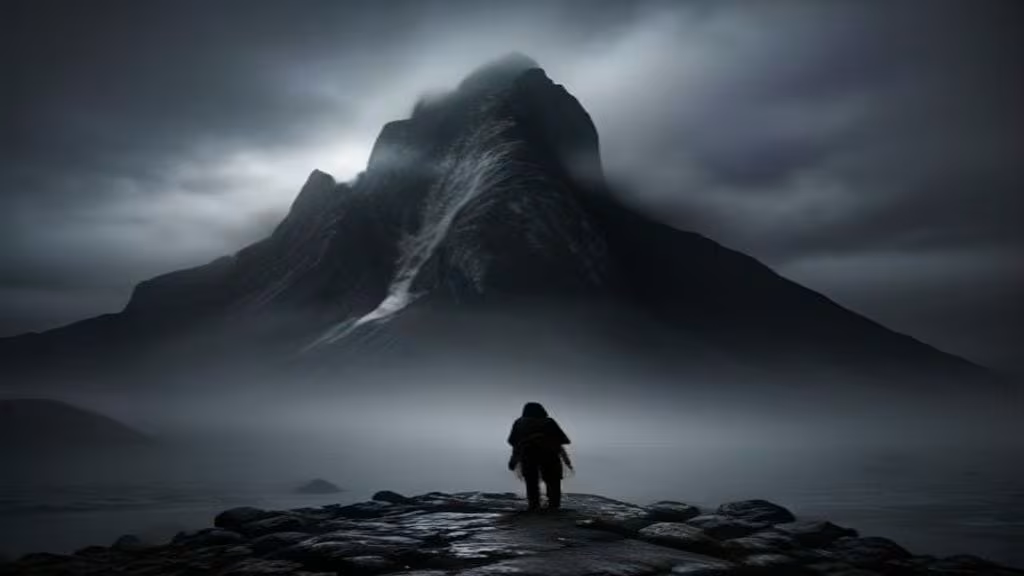
First and foremost, La Pincoya embodies the volatility of the environment. For coastal communities, the sea is simultaneously a cradle of life and an unburied graveyard. The figure of La Pincoya personifies this dark duality. The terror she inspires does not stem from an immediate physical threat—such as that of a monster devourer—, but rather from the Uncanny Valley sickening realization that an entire settlement's survival hangs upon the whim of a superhuman entity whose motivations remain utterly alien to human reason.
Secondly, there is the factor of sensory alienation. Her dance, her blank stare, and her uncanny capacity to bend the marine ecosystem to her will generate a crushing sense of cosmic insignificance, much like the prose of Lovecraftian horror. La Pincoya harbors no hatred for mankind; she simply operates on a scale where human life is utterly negligible. She is the mirror of the ocean: breathtaking to behold, yet unforgiving and fatal should you venture too deep into her abyss.
Conclusion: The Echo in the Darkness
La Pincoya remains one of the most haunting manifestations of cryptozoology and spectral folklore in South America. Beyond the rationalizing explanations that attempt to reduce her sightings to optical mirages, marine bioluminescence, or mere isolation-induced hallucinations on the edge of the world, the Legend persists with an unyielding, predatory force.
As an investigator and chronicler of the world's deep enigmas, I see in La Pincoya a vital, bruising reminder: there are domains on this Earth we have never truly tamed. The ocean still hoards its cold secrets, and on storm-lashed nights in the Chiloé archipelago—when the sea-mist blinds the lighthouses and the wind howls through the drowned cypress groves—old sailors deliberately keep their eyes averted from the coastal cliffs. They harbor the dread dread of stumbling upon the weed-entangled woman and discovering, to their absolute ruin, which way she is dancing.
📜Investigation • Frequently Asked Questions
Documentary Archive and Analysis of the Occult • Relatando.com
In what ways did the forced hybridization between Mapuche-Huilliche cosmogony and colonial Spanish Catholicism warp the original perception of La Pincoya?
The arrival of Jesuit missionaries in Chiloé during the 16th and 17th centuries birthed a brutal, enforced syncretism. While ancestral tradition conceived of La Pincoya as the offspring of the Millalobo and the mortal woman Huenchula—a liminal, sovereign entity of the abyss—the Inquisition and peninsular culture sought to demonize her or, paradoxically, sanitize her into a domestic European 'mermaid.' This ideological alchemy stripped away the terrifying complexity of a primordial, oracular deity, reducing her to a sanitized folkloric trope for Western consumption, though local shamans preserved their hushed reverence and terror in secret.
Why do paranormal investigators reject the tourist-brochure view of La Pincoya as a benevolent deity of abundance?
For the chroniclers of the shadows and scholars of deep folklore, portraying La Pincoya as a purely benevolent symbol ignores her true nature as a chaotic entity of primal terror. Her appearances are not mere blessings bestowed upon fishermen, but grim portents of the ocean's volatile cruelty. The presence of this creature evokes an absolute helplessness before the unbridled forces of nature, reminding humanity that the marine depths harbor ancient, capricious intelligences operating under logics utterly alien to human morality.
What do colonial records and Jesuit chronicles reveal about the ancestral rituals dedicated to the cult of La Pincoya in the Gulf of Ancud?
The chronicles of missionaries such as Father Pedro de Córdoba document with quiet bewilderment how the island natives performed intricate rituals on the shores of Chiloé before venturing into the treacherous waters of the Gulf of Ancud. These ceremonies were never mere prayers for safe passage, but propitiatory offerings designed to appease the fury of the Millalobo and court the fickle favor of La Pincoya. The Spaniards recorded these rites with a mixture of morbid fascination and inquisitorial disdain, bearing witness to the profound psychological and material subjugation the inhabitants held toward these abyssal deities.
How does the condition of being a 'bridge between two worlds' manifest in the phenomenal anatomy and mythical genealogy of La Pincoya?
The mythical genesis of La Pincoya—born of the union between Millalobo, king of the sea, and the mortal Huenchula—crowned her as the ultimate archetype of liminality. Phenomenally, her appearance upon the bare rocks during neap tides or feral storms acts as a physical and metaphysical threshold. This bridge between the inhabited earth and the inscrutable abyss renders her a oracle living conduit of marine fauna, capable of unleashing inexplicable ecological anomalies that defy scientific comprehension and recall the fragile boundaries of human existence.
Do not extinguish the light just yet...
If you have had the courage to make it this far, we have other dossiers that will test the limits of your sanity.

Terms and Figures of this Tale
To delve deeper into the legends, creatures, and dark concepts that inspire this account, consult their entries in our dictionary of the uncanny:

Tu correo no se publica ni se comparte con terceros: solo sirve para notificar la respuesta.